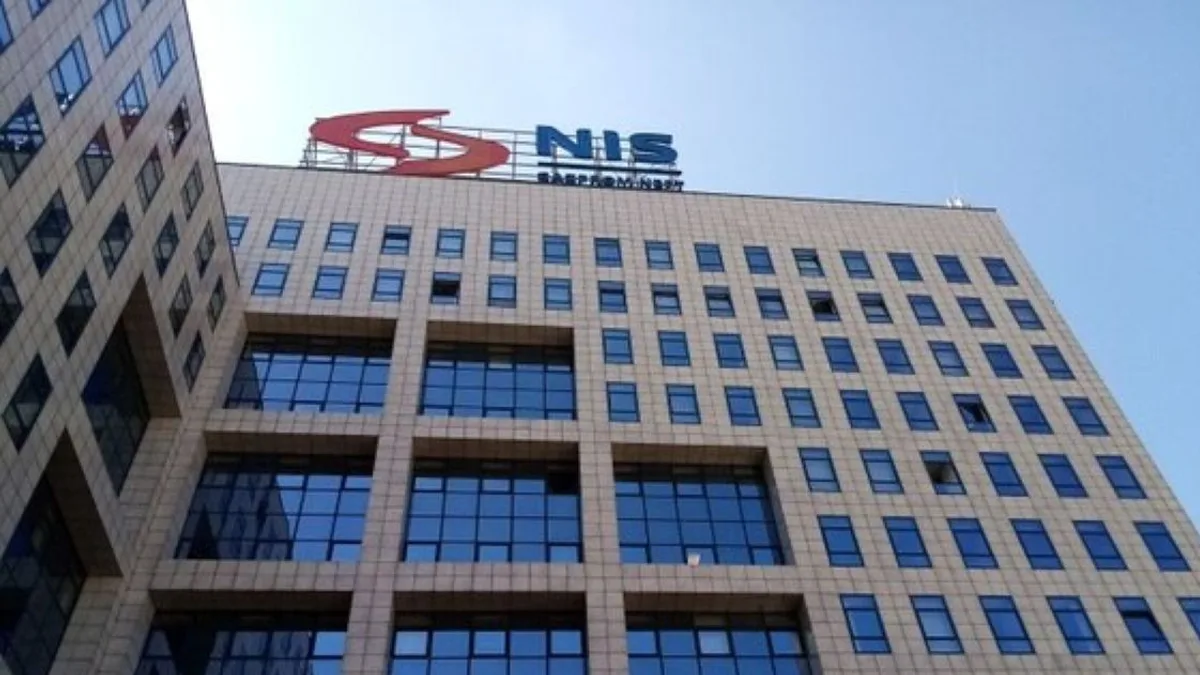
Serbia's Fuel at Risk as NIS Leans on Croatia by July 31
A jump in world oil prices after the Hormuz crisis raises import costs for sanctioned NIS, which now sources crude only through Croatia's JANAF pipeline as its OFAC license expires on July 31.

- The Pancevo refinery covers more than 80 percent of domestic demand for diesel and petrol.
- Under sanctions, NIS cannot buy Russian crude and imports it only via Croatia's JANAF pipeline, on a contract that runs through the end of 2026.
- The OFAC operating license has been extended to July 31, while talks over the 56.15 percent Russian stake continue.
- A government decree caps fuel prices, so any rise in world prices squeezes both the company's margin and the state budget.
The Pancevo refinery, the only plant of its kind in the country, covers more than 80 percent of domestic demand for diesel and petrol, and that very concentration leaves Serbia’s fuel market exposed to any disruption in the supply of crude oil. The latest disruption came from abroad: rising tension around the Strait of Hormuz pushed up the world price of oil, and the Petroleum Industry of Serbia (NIS) feels that increase more sharply than most buyers in the region.
The reason is legal rather than geographic. The company operates under sanctions imposed by the US Treasury, so it cannot buy the Russian crude that was its cheap supply base for decades. Instead, it imports only non-Russian crude, and does so through Croatia’s Adriatic pipeline (JANAF), on a contract that runs through the end of 2026. Every barrel is now paid at the full market price, with no preferential terms, and each rise on the exchange feeds straight into the import bill.
Why sanctions make every tanker dearer
When the source of raw material is narrowed to a single route, the buyer’s bargaining position weakens. NIS has no alternative to Russian crude in the form of sufficient domestic output, so it relies on market deliveries that track the world price in real time. It cannot easily pass higher input costs on to the consumer, because retail fuel prices in Serbia are capped by a government decree that is renewed periodically.
The result is a margin squeeze. When the import price rises while the retail price stays capped, the difference is absorbed by the company, and indirectly by the state budget through excise duties and dividends. For comparison, before sanctions cheap Russian crude kept refining costs low and left room for margin and product exports. That cushion is gone, so even a small move in the world price leaves a visible mark on quarterly results, while the room to maintain stockpiles narrows.
What happens if the license is not extended?
OFAC has extended to July 31 the operating license that lets NIS keep trading despite sanctions. That is a short horizon for a company whose supply depends on a foreign pipeline and foreign suppliers, because each extension of a few weeks makes it harder to contract deliveries over the long term. Ownership talks are running in the background: Russia’s Gazprom Neft holds a 56.15 percent stake, and Hungary’s MOL is named as a possible buyer of that package, which would change the company’s sanctions status.
If the license is not renewed again, JANAF could halt deliveries to Pancevo, and Serbia would be left dependent on more expensive imports of finished products rather than its own refining. A permanent fix mentioned in Belgrade is the construction of a new pipeline that would diversify supply routes, but such a project takes years and offers no relief in a summer when the deadline is short and the price is high. For a market where a single refinery covers four fifths of demand, this is not a technical detail but a question of the price at every pump. How long can the budget absorb the gap between the world price of oil and capped fuel before it spills over onto consumers?