Bessent asks Europe for diesel, NIS license runs to Oct. 30
Washington is weighing a diesel export ban as US prices hit $6.5276 a gallon. For Serbia, the NIS license and supply through JANAF decide the outcome.

The average price of diesel in the United States reached $6.5276 a gallon (about $1.72 a liter) on Tuesday, during UN General Assembly week, according to the AAA motorists’ association. With prices at that level, Treasury Secretary Scott Bessent called on European countries to make additional diesel stocks available right away, and President Donald Trump says he might ask Europe for them. For Serbia, which imports and refines crude through NIS, the story lands the same day an economist weighed in on the company’s new American license.
What exactly is Washington asking of Europe?
Bessent wrote on social media that European countries should “immediately make additional supplies available,” arguing that American farmers, truckers and businesses should not “bear the burden” while prices climb. Reporters then asked Trump whether he would really make that request of Europe, and he answered that he “might.” He is also weighing a ban on American diesel exports, which run between 1.2 and 1.5 million barrels a day.
According to Reuters, as relayed by Oilprice, Trump said during UN General Assembly week that he had asked his aides to make sure diesel is not shipped abroad. Bessent had earlier said the administration is assessing how effective such a ban would be and whether it would be partial or total. Congressman Tim Burchett introduced the export ban bill, and Senate Majority Leader John Thune backed it. Energy Secretary Chris Wright and Interior Secretary Doug Burgum oppose it, seeing a ban as a bad idea that would end up hurting the US itself. Alaska Senator Dan Sullivan is calling for a temporary pause in exports so reserves can be rebuilt before winter.
The backdrop is political and military. Biznis.rs reports that fuel prices have been rising around the world since the American-Israeli war on Iran began in February, when the Strait of Hormuz, which carried a fifth of the world’s oil and gas, was closed. Congressional elections come in November, and Trump is touring the country over the coming weeks to campaign for Republicans. Oilprice adds that Trump blames the rise in US prices on Ukrainian drone strikes on Russian refineries, after which Russia banned exports of its own diesel.
How is Europe responding?
British officials spoke with European partners yesterday about possibly releasing diesel reserves in response to a potential American ban. The European Commission said it is holding many talks and meetings on diesel, including “high-level contacts” with the American administration. Pressure is coming from Asia too: Chinese refineries halted exports of some oil products in October, as Beijing prioritizes supply to its domestic market.
Economist Veljko Mijuskovic told RTS that diesel is different from other fuels, because Europe has closed or converted about 30 of roughly a hundred refineries since 2009. In his assessment, this is not a repeat of the first wave of the crisis:
“Unlike the first phase of the crisis, when the global oil price was driven up by the psychological factor on the exchanges, we are now talking about real physical shortages. On top of that, certain countries, such as China and the Russian Federation, and now the United States is considering it as well, are limiting or banning diesel exports, which will significantly shrink global supply.”
Russia has extended its diesel export restriction to the end of October. Mijuskovic does not expect “any more serious global disruptions” if America does introduce a ban, and he warns that the consequences would come back to the American market itself: “Even if the United States were to make such a decision, the negative repercussions of that decision would come back like a boomerang to the American market. The economy is globally interconnected.”
What about NIS and JANAF?
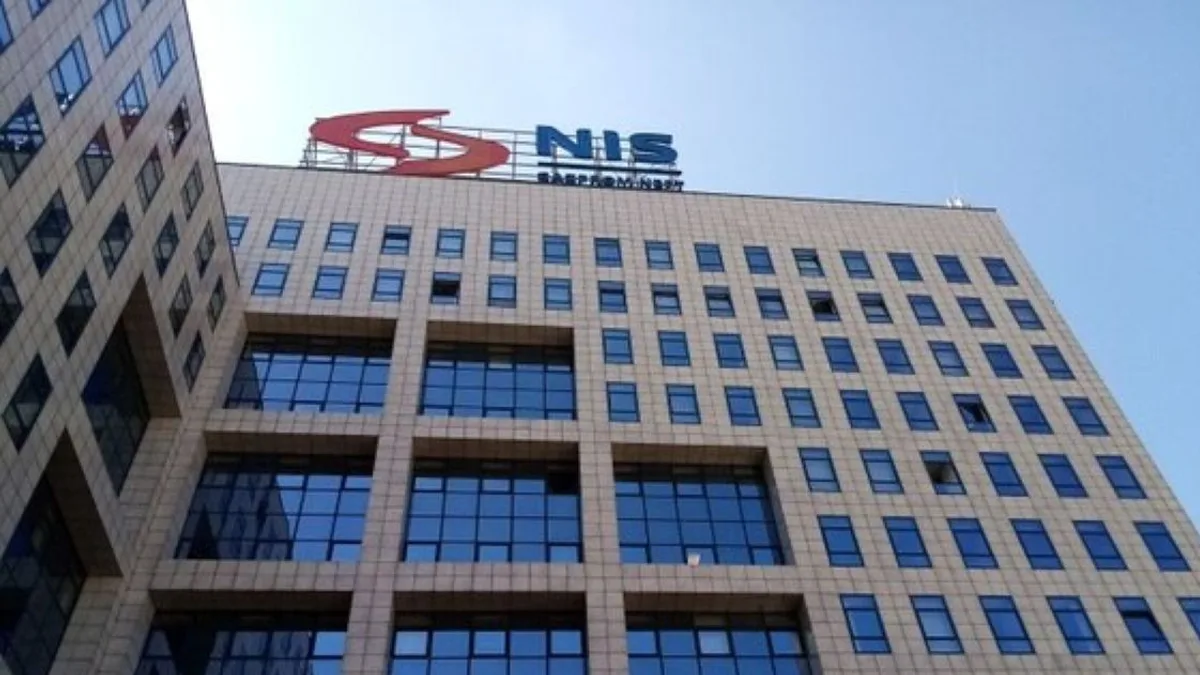
NIS has received a new American license and can operate normally until October 30, which lets it import and refine crude oil, carry out transactions and sell on the market. Mijuskovic sees that as extra time, not a solution:
“This is only a kind of respite. Nothing spectacular is expected from our side, since we have already done everything that could be done. This is a rather unenviable situation where we are waiting for the outcome of other people’s deals, specifically the Russian and Hungarian sides.”
According to RTS, an extension of the license for JANAF, the pipeline operator through which most of the crude arrives, matters just as much for NIS’s operations. The sources we reviewed do not say how long that license is valid. Mijuskovic describes the route this way:
“That is, as we would say, the lifeline of the supply process, given that the bulk of crude oil comes precisely through JANAF. What matters is that in the period ahead, besides resolving the NIS question, we have an additional task: to diversify supply routes. That means not only having alternative sources, but alternative routes as well.”
As a more favorable circumstance, he points to the extension of the gas arrangement with Russia until the end of the year. He does not forecast a deadline for the NIS negotiations because, as he puts it, they formally continue.
How long can the state hold prices down?
For domestic filling stations, Mijuskovic lists three tools: releasing part of the reserves onto the market, cutting excise duties and capping margins. Each carries a fiscal cost, because the state gives up part of its budget revenue. Biznis.rs ties the Iran war to February, while Mijuskovic says the crisis began in March and that at the time the talk was of endurance of six months at most:
“There is no free lunch. The state has so far shown an even greater capacity than was initially planned. All these measures are still being extended. When the crisis began in March, it was said that we could hold out for six months at most. Now we see that the level of endurance is higher.”
The NIS license is valid until October 30, and the Russian diesel export ban until the end of the same month.