Nis Has Two Film Festivals, Just Not Filmski Susreti
As the city and actors feud over the name and the tradition, Nis enters August with two parallel film programs, one with Van Damme on the red carpet, the other without him.

It felt more like weather for the shade than for work, but by mid August, downtown Nis was already busy. Crews were hauling in equipment and putting up a stage in front of the mayor’s building, while over at Nis Fortress a red carpet, a new fence, and rows of chairs were already in place. Anyone who stopped to ask what was going on would have gotten no clear answer, even though the real one is sixty years old: every August since 1966, Nis has hosted a film festival. This year, it has two.
Why Does Nis Have Two Festivals This Year Instead of One?
The sixtieth, anniversary edition of Filmski Susreti (Film Encounters) was supposed to be a celebration of the oldest film festival in Serbia, and the only one in this part of Europe dedicated exclusively to the art of acting. Instead, for the second year running, the event did not happen at all, because the City of Nis and the Actors’ Association of Serbia could not agree on how to run it. Last year’s standstill has now turned into an outright split: each side is putting on its own festival, in the same city, in the same August, just days apart.
The City of Nis and the Nis Cultural Center registered the Nis International Film Festival, running from August 25 to 30 with a lineup of 26 films, 12 of them premieres. Screenings are split across two venues, the Vilin Grad cinema and the Summer Stage at Nis Fortress, the very spot where the red carpet is normally rolled out every summer. The Actors’ Association of Serbia, meanwhile, is running its own Nis Film Festival from August 29 to September 3, with 21 domestic films made over the two seasons in which Filmski Susreti did not take place. Its screenings are set for the amphitheater on the Nis riverfront, by the Sabanov Monument, and at the Cine Grand cinema in the Delta shopping center. As N1 points out, the amphitheater sits in the municipality of Medijana, the only one in Serbia run by the opposition. In a story that has moved from cultural to political, even the geography is not accidental.
Van Damme on the Red Carpet, Actors by the River
The city festival landed its biggest card only after the actors had already announced their own dates: the arrival of Jean Claude Van Damme. The Hollywood action star will be the special guest at the opening ceremony on the Summer Stage, there for the regional premiere of “Jardinier” (“The Gardener”), in which he plays the lead. The symbolism is not subtle. The institution is bringing in a name with global reach, while the actors’ association is banking on continuity, on the twenty one domestic films it says were made precisely during the stretch when the official festival stood still.
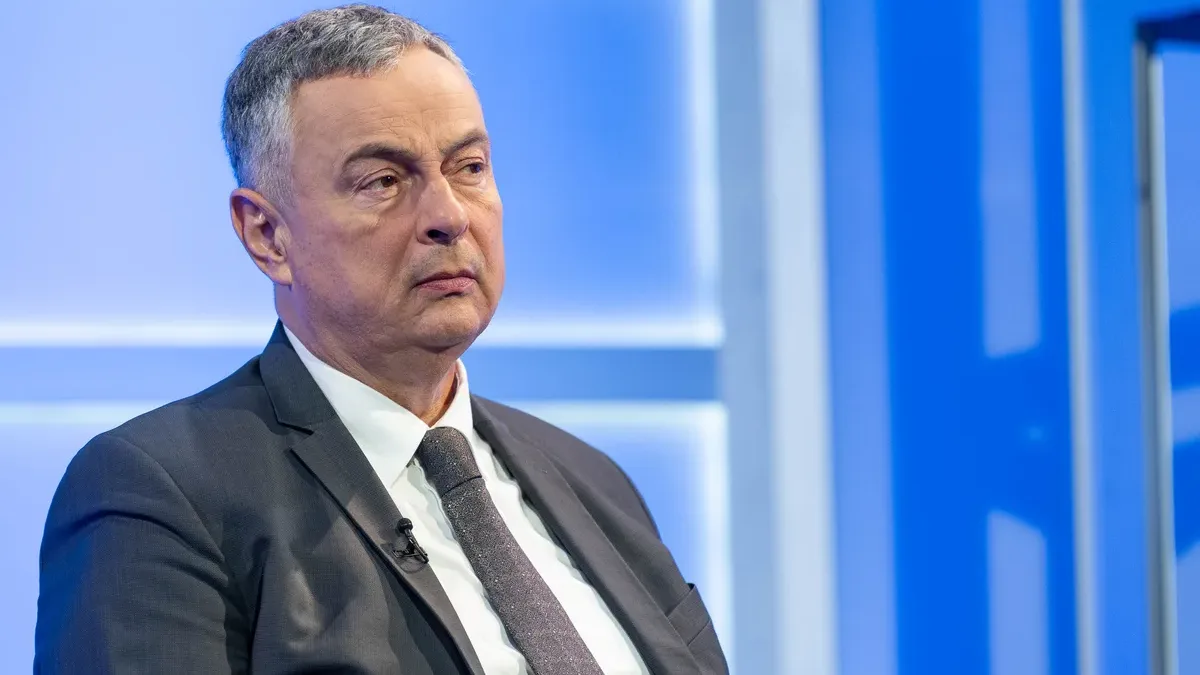
Petar Bencina, an actor and the president of the Actors’ Association of Serbia, explained to N1 why the group decided to hold its festival even without the city’s approval.
“We simply have that kind of strength, that readiness to take on the responsibility and to keep up the tradition and continuity of Filmski Susreti, regardless of the dire social circumstances we find ourselves in. Our responsibility also comes from a belief that by doing this, we will somehow position and preserve the standing of actors as one of the most important pillars of culture in this country.”
That is a defense of tradition, but the tradition Bencina is talking about is no longer purely artistic. It is procedural too: who gets to carry the name, who puts together the program, who stands on the stage from which, until last year, the city’s symbolic key used to be handed over.
What Exactly Broke Down
N1 journalist Ljubica Jocic points to what made Filmski Susreti special before it split into two separate festivals.
“This was a festival that actors loved for years, because it was dedicated to them. Every August they were given the Fortress and the city as a gift, through the symbolic handover of the city keys, and that was always an event for this city.”
That gesture, the symbolic handover of the Fortress and the city keys to the actors, is missing this year. It is not on the city’s program, because the actors are not part of it, and it is not on the actors’ program either, because they do not have the Fortress this year. Srpske Novine had already reported on the actors’ festival announcement, at a point when all that was known was that it would open with a film shot in the Radan mountain region. Now the other half of the story is clear too: that same August, the city is opening its own, bigger and more heavily promoted version, five full days before the actors even start their program.
Culture as a Line of Division
What used to be a question of programming has become, this year, a question of territory. The amphitheater by the Sabanov Monument went to the actors because it sits in a municipality the city does not govern, while the Fortress, city owned property, naturally stayed with the official festival. The split in venues tracks the split in political power, not any split in the audience, and that is a distinction no amount of talk about film counts or celebrity guests can paper over.
For the public, it means watching two festivals in the same city, days apart, each claiming to carry on the same tradition, when in practice both have broken it. An anniversary meant to mark six decades of continuity has instead become proof that the continuity is gone, no matter how famous a name ends up on which red carpet.