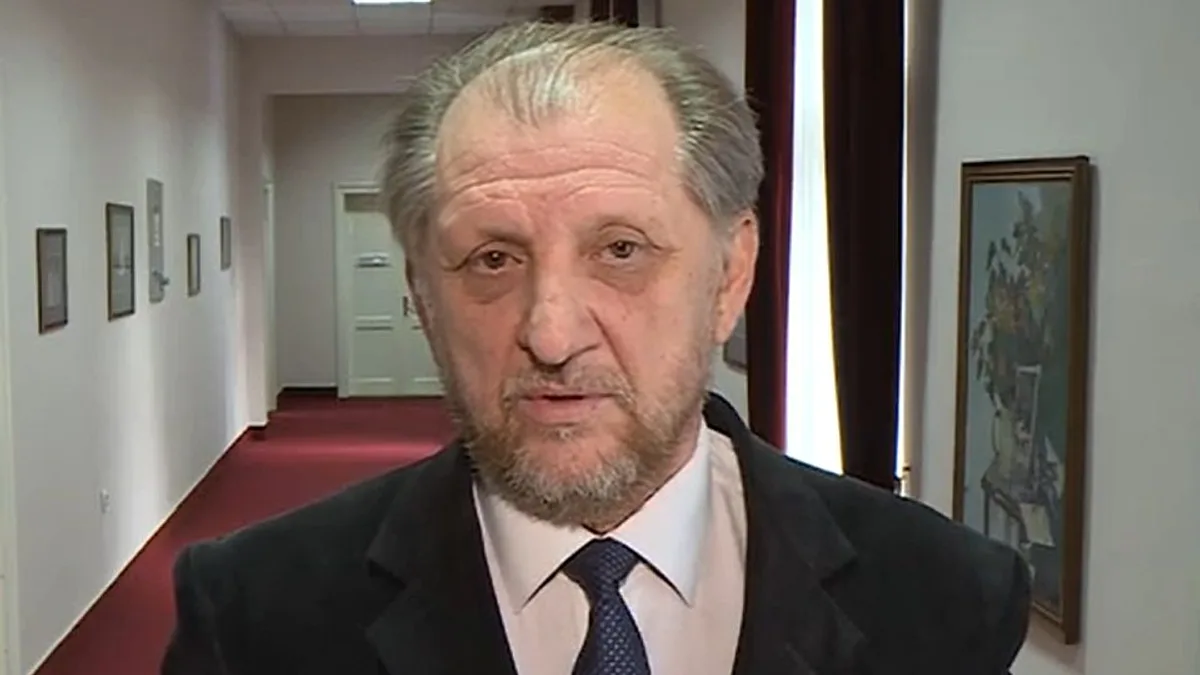
Slobodan Snajder, Croatian Faust Author, Dies at 78
Croatian playwright and novelist Slobodan Snajder has died at 78; his daughter, Tena Snajder, announced the news. Miljenko Jergovic calls him the most important Croatian playwright since Krleza.

The news arrived on Monday, August 31, on the same profile where Slobodan Snajder had been writing to his readers, alone, for the past year and a half. This time the post wasn’t signed by him but by his daughter, Tena Snajder, who wrote that her father, known to that community as Sac, had died the day before, on Sunday, August 30, 2026, at 78.
“With a broken heart, I’m writing to say that my dad, known here to everyone as Sac, passed away yesterday. You were the spark that made his last years brighter.”
She wrote this addressing the followers whose comments, she noted, her father had followed and valued until the very end. His death was also confirmed by the Croatian Writers’ Association. Snajder was born on July 8, 1948, in Zagreb, where he earned a degree in philosophy and English studies at the Faculty of Humanities and Social Sciences, and where, over a five-decade career, he built a standing rarely granted without reservation in Croatian literature. A few months before his death, Miljenko Jergovic described him this way:
“Slobodan Snajder is the most important Croatian playwright after Krleza, and the most internationally recognized Croatian playwright, full stop.”
An Editor Who Was Also a Writer
Snajder didn’t just write for the theater, he also built the space in which theater could be written about differently. He was one of the founders of the theater journal Prolog, launched in 1968, and its longtime editor in chief, leading the publication from 1971 to 1985. Alongside that work he wrote regular newspaper columns, first for Glas Slavonije, then for Novi list, and from May 2025 for Telegram, where he published every Monday without fail, the last time the day before he died.
The Brecht School and Plays About Rebels
His first plays, Minigolf in 1968 and Hysterical Fairy Tale a year later, followed by Merry-Go-Round of Love and Metastasis in 1974, established what would remain his lasting signature: politically engaged drama built on the poetics of Bertolt Brecht. Metastasis opened the way for a series of plays critics call biography dramas, texts about rebellious intellectuals and artists in conflict with the ruling ideology, from Kamov’s Deathwriting and Drzic’s Dream to Confiteor and The Bride of the Wind. The best known of them, Croatian Faust from 1981, remains the work most associated with Snajder’s name whenever Croatian drama of the second half of the twentieth century comes up.
War entered his work directly in the plays Consolation of the Northern Seas and Snake’s Skin, staged mostly in German-speaking countries and dealing with genocide, camps, and mass rape, subjects Croatian theater of the 1980s and 1990s wasn’t always ready to put on stage at home. He collected his criticism and essays in the book Joyful Apocalypse, and his prose in Book of the Small. As a novelist he moved beyond the stage: Morendo, from 2012, is a wartime love story told from a hospital ward, The Age of Brass, from 2015, follows a Volksdeutsche family’s fate from their emigration out of Germany in the eighteenth century to their expulsion after World War Two and has been translated into several foreign languages, and his last novel, The Vanishing Angel, came out in 2023.
What connects Snajder the playwright to Snajder the novelist is the same drive: to view history through an individual who resists it, even knowing he’ll lose. His characters are rarely heroes in the conventional sense, they’re witnesses who refuse to stay quiet, and that stubborn refusal to accept the official version of events is why Jergovic places him right behind Krleza, not as a courtesy but as a measure of how long one writer managed to stay uncomfortable.
Croatian theater has lost the voice that, for half a century, gave it language for subjects it didn’t want to hear, and that loss, as Jergovic put it, is permanent.