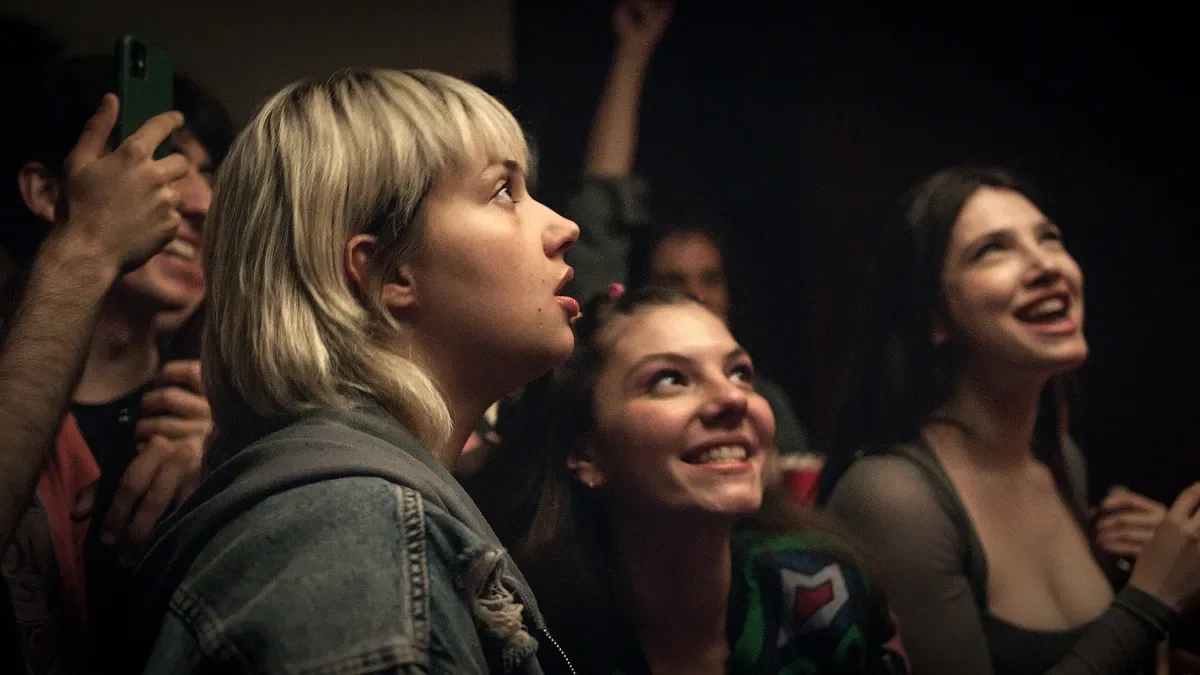
Zafranovic opens 53rd Fest, Jasenovac survivors on stage
The 53rd Fest opened at Sava Centar with the premiere of Zlatni Rez 42: Djeca Kozare, and after the screening the audience rose for the camp survivors and the children of Kozara.
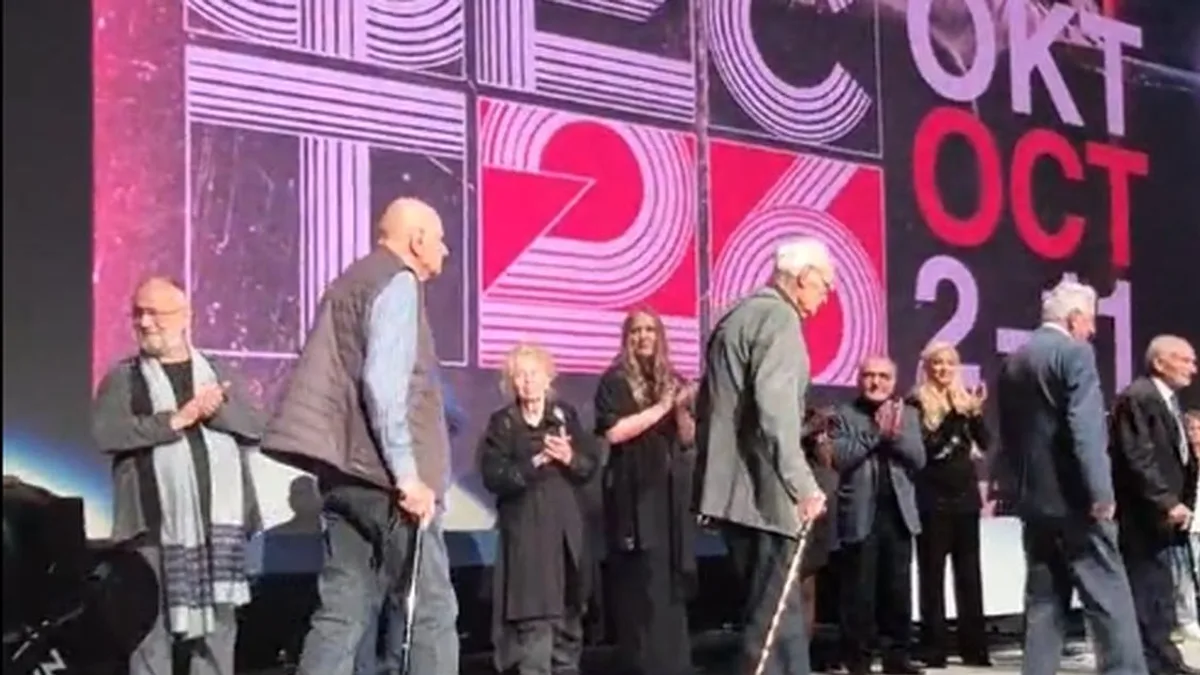
The audience in the Blue Hall of Sava Centar rose to its feet for six people the host called to the stage on Friday evening, right after the screening of Zlatni Rez 42: Djeca Kozare (Golden Cut 42: Children of Kozara). She named them one by one: Slavko Milanovic, Jelena Radojicic, Gojko Roncevic, Stojan Subotic, Vlajko Kaurin and Milanko Cekic, president of the Association of Victims and Descendants of Jasenovac. That is how the 53rd Belgrade International Film Festival, Fest, opened on October 2, 2026. It runs until October 11.
The host, whose name the reports do not give, introduced them with these words: “They are the last living witnesses of the suffering, former camp prisoners and children of Kozara, people who carry within themselves the memory of the most terrible camps in the history of these lands.” Telegraf reports that the audience greeted the survivors of the Jasenovac camp with a standing ovation.
Who came on stage
Before the survivors, the film’s team walked out to continuous applause. They included the youngest leads Milica Stankovic (Zora), Vuk Trnavac (Bajo), Nemanja Stankovic (Micko) and Ilija Milosevic (the blond boy), followed by Tara Malic, Dea Medakovic, Eva Ras, Mina Sovtic, Katarina Radivojevic and Ana Sakic, as well as lead producer Aleksandra Martinovic, director of the Multimedia Directorate at Telekom Srbija. So Radivojevic and Sakic were on stage as part of the cast, not in the audience.
On the red carpet before the program began, guests posed for photographers, according to Telegraf. They included Matija Beckovic, Dusan Dule Savic, Iva Strljic, Marko Djuric and Ivana Zigon.
Zafranovic spoke twice
Director Lordan Zafranovic addressed the audience before the screening and after it. Before the film he warned viewers: “I want you to somehow prepare yourselves for a film that is quite heavy.” Two outlets did not carry his words identically, and Telegraf records a variant: “a film that is extremely heavy, but lasts as long as it had to last.” He thanked his co-writer Arsen Diklic and said he had been coming to Fest for more than forty years. Republika’s report adds that he first came in 1971, before finishing the academy, when he watched great auteurs, Fellini among them.
The reports differ on when the film was chosen to open the festival. According to Republika, Zafranovic said: “I am glad the film is being shown here; the selector watched it seven or eight months ago and immediately asked me to have the film shown at Fest.” Telegraf records the same remark differently: “The selector made the decision a month and a half ago to show the film here.” He opened the festival with the words: “With that honor of the festival in my heart, I declare this beautiful festival open!” Republika also has him saying: “That cosmos gave me strength, as if it had written some of these things itself, and I was only an instrument.”
After the screening he took the floor again, visibly moved, and spoke of the film as work that took years:
This film has been my years-long investigation of that evil of Jasenovac. And somehow it is an occasion for forgiveness. In a way I cannot kneel and ask you for forgiveness. But… but I can with this film. That is the only thing I can do.
He described the film as “a kind of warning, a kind of… cry against evil.” He thanked the crew and those who were not in the hall, saying they “helped me just the same, who are also great artists, but… were prevented from coming.” He added that the shoot lasted “long, too long,” and that he fought first with finances, then with assorted production problems.
Letters from Mikhalkov and Kusturica
Letters from directors Nikita Mikhalkov and Emir Kusturica were read at the opening. Mikhalkov wrote:
My dear Serbian friends, I have watched Lordan Zafranovic’s film “Zlatni Rez 42: Djeca Kozare” and I can say that it is an extraordinarily important historical and artistic work. We can only imagine how hard it is for such a work to make its way through contemporary cinema, and how much a work like this will provoke reactions from those who committed such atrocities. All the more necessary, then, that we watch this film and live through it. Such a work is for the Serbian people, but also for the entire Slavic world, a beacon by which we should steer. The very existence of this film is a true artistic and civic feat of its director. I congratulate Lordan Zafranovic and all of you on this exceptional achievement.
Kusturica wrote in his message:
Lordan made a film as if he were 23 years old. He let it rip with everything he has, it is a cry! This is a distinctly auteur film and a sublimation of Lordan’s entire body of work, from his amateur days onward. I have never seen a film like this; it is a return to auteur and real cinema, Lordan has given mise-en-scene back to directors. In the way he understood film mythology, this film is mythology. With this work Lordan paid tribute to the Serbian people in the most magnificent way, as nobody has done until now, and the Serbian people deserve it.
Program, juries and awards
Artistic director Dragan Jelicic presented this year’s program: more than a hundred films in ten selections and ten gala screenings, with retrospectives of American independent film from Sundance, British cinema and the work of Paul Morrissey.
The word at this festival is and will be free and cinematic. Before the audience are more than a hundred films in ten selections, with ten big gala screenings. Besides the competition programs, there are attractive retrospectives devoted to American independent film from the Sundance festival, as well as to British cinema and the work of Paul Morrissey.
Jelicic added that three films will be shown every night in a late slot at around 11 p.m. The juries were introduced as well. In the European competition the jurors are Jani Bojadzi, Boris Trbic and president Jasmin Durakovic. The main competition is judged by Salin Salim Salini, Martin Milinkovic and president Rasa Radovic, and the Fest Focus program by Slavica Rogan, Rujana Jeger and president Djanluka Kurti. The traditional awards will also be given: the Politika newspaper’s “Milutin Colic” award for best Serbian film, the “Nebojsa Djukelic” Foundation award for best regional film, and the Belgrade Film Critics Society’s “Slobodan Novakovic” award for best debut film.
What the opening reports do not mention
Before the opening we wrote about the festival’s preview and about Beader’s call for a boycott. The Telegraf and Republika reports from the opening say nothing about a protest or a boycott, so there is nothing to add on that for now.