Sabac Theatre Actors Say They Have Nothing to Perform
Actor Milos Vojinovic says the Sabac Theatre ensemble got no repertoire at the start of the season, and that about ten actors have not been on the main stage in 18 months.
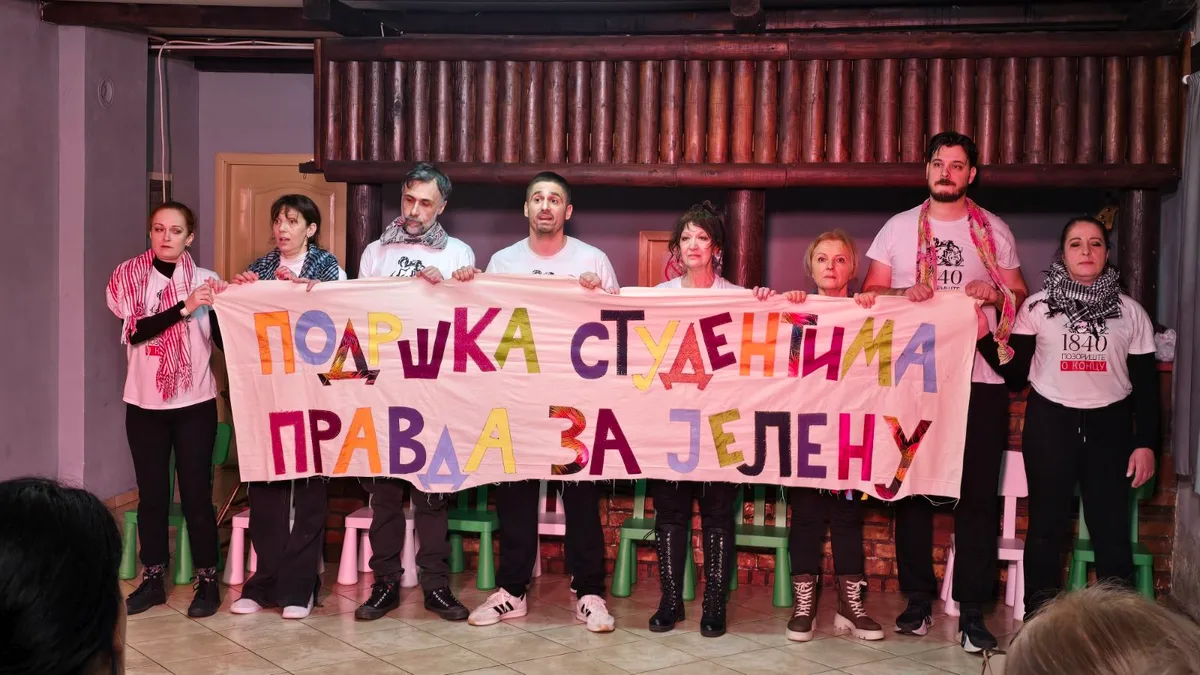
About ten actors at the Sabac Theatre, according to one of them, have not set foot on the main stage in more than a year and a half, and now, at the start of the new season, the ensemble has not even received a repertoire. Actor Milos Vojinovic said so on October 3, and the Independent Cultural Scene of Serbia (NKSS) singled out the case as an example of a wider picture in the country’s culture.
Vojinovic described what the season looks like from the inside:
“We did not get a repertoire. That should have happened 10 days ago. We do not know what we will be doing. Some new actors are appearing on the stage, they are working, we are happy for them, but we cannot do anything.”
What exactly is being claimed, and what is unconfirmed?
The actor told N1 that the ensemble has been left without a stage, in these words:
“Most of the actors, about ten of us, I think, have not had the chance to step onto our stage for more than a year and a half. In some statements the director even called a colleague’s pregnancy and the maintenance of a high-risk pregnancy ‘sabotage’.”
Two details rest on that statement alone: the figure of about ten actors, which the speaker himself softens with the words “I think”, and the duration of a year and a half. The daily Danas, which carries the same story, writes only that the situation has lasted “more than a year”. The speaker’s name is also spelled two ways: N1 gives it as Vojinovic, while Danas and Sabacke Novosti write Vojnovic. There is no independent confirmation of those two details.
Nor is it claimed that the theatre has no repertoire at all. Vojinovic is talking about the ensemble: it was left without a repertoire, and some new actors, he says, are appearing on stage. The Sabacke Novosti portal at the same time carries the October 2026 repertoire of the Fokus stage and an announcement for the play “Uputstvo za upotrebu glumice” (An Actress’s User Manual), performed on October 2. Danas adds that, because of the conflict within the company and a boycott by some of its collaborators, the main stage has mostly hosted guest productions and monodramas. The theatre management’s response to the actor’s claims has not been published in the available reports.
Where does the dispute at the Sabac Theatre come from?
According to Sabacke Novosti, disagreements with the management and with the city, as the founder, began in January 2025, when the ensemble publicly backed the students’ demands. Since then, the same sources say, monthly repertoires have been cancelled, along with a premiere the actors had been working on and the “Pozorisno prolece” (Theatre Spring) festival, and outside collaborators refuse to work in Sabac under the current management.
In early February 2025, program organizer Jelena Ivetic was declared redundant. Most of the company publicly backed her and demanded that the new job classification be annulled at once, that Ivetic be reinstated and that director Aleksandra Delic be dismissed. In February 2025 the Association of Dramatic Artists of Serbia supported the employees’ demands and called for the decisions that preceded the dismissal to be annulled. According to N1, the actors are convinced that the director is taking revenge on employees for their support of the protests.
On the health of the ensemble, Vojinovic said:
“I think we are in much, much worse health than we were two years ago. Of course, I cannot prove that it is because of this situation, but it is obvious that we are under a great deal of stress.”
The play the actors wrote about themselves
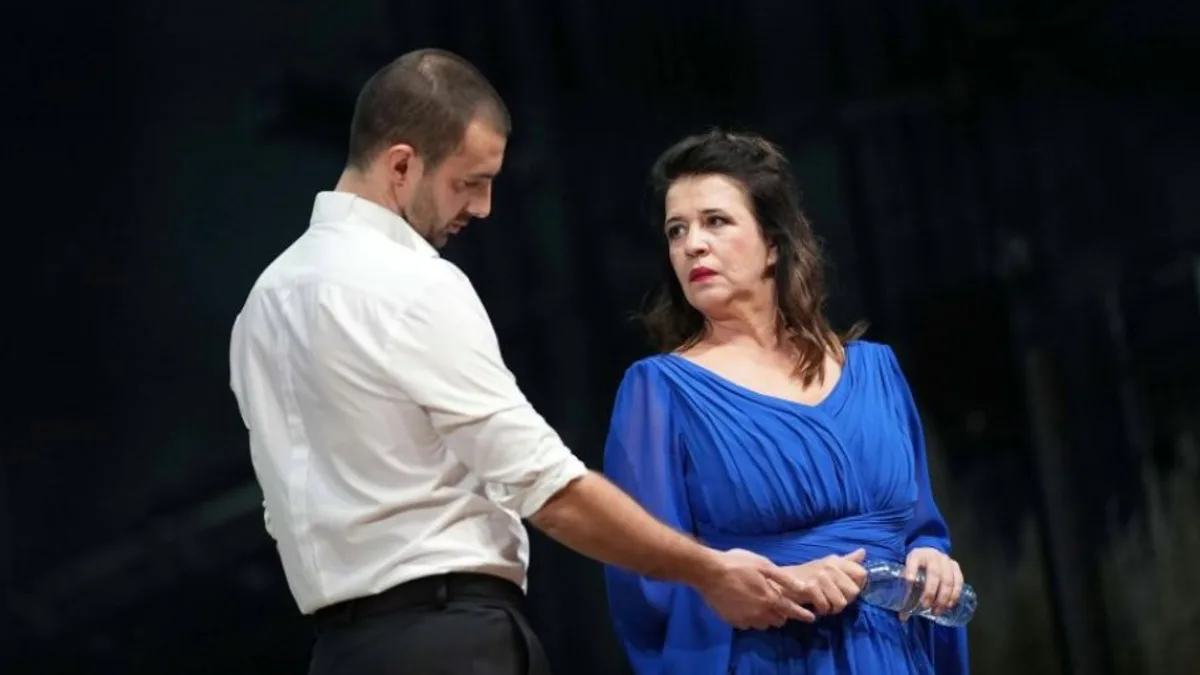
The actors turned their experience into a play. “This Is Not a Play” began as a documentary project built almost entirely on their own real statements and those of others. The actors themselves are credited with the script and direction, and Strahinja Barovic wrote it down. It was performed twice, at the premiere, outside the Sabac Theatre’s premises, a year after Jelena Ivetic was dismissed.
After the performance, Vojinovic explained what it meant to them:
“I do not know if this is a play, it is what we had to share with you, to remind ourselves how we feel, what is happening to us and to live through it together, and that is what theatre is for.”
One of the actresses, a leading member of the ensemble, said she had never done such personal material before and that the audience cried at the premiere: “The audience cried with us at the premiere, and not because it is something sad, but because this is the truth.” Barovic said of the same work: “We are all the authors, I only wrote down what happened, and a lot happened.”
Tours across Serbia have been announced, and dates are already set in Belgrade and Zrenjanin.
What does the independent scene say?
NKSS singled out the Sabac Theatre as one of the examples in its analysis titled “The Destruction of Culture and the Culture of Resistance in Serbia”. According to that analysis, many calls for cultural funding were late or never held, some festivals have ceased to exist or were held without money, and cultural workers in smaller towns are being fired, left without contract extensions and without engagements.
Pedja Cveticanin of NKSS told N1:
“Party loyalty is not something unknown under previous regimes, but now it has been taken to total absurdity.”
Cveticanin added:
“Here, for the first time, the regime has a clearly defined cultural policy, only that policy, unfortunately, is the destruction of culture.”
Marijana Cvetkovic of the same association said that in some fields all creative work has collapsed and that “there are no basic conditions for creative work anymore”, which, as she put it, is the case with a large part of the visual arts scene, the entire dance scene and a large part of independent theatre production. Virdzinija Djekovic Miketic described what happens to people in small communities: “A kind of atmosphere of fear and pressure is created, in which it turns out that everything those people have done over the years has no value whatsoever.”
NKSS also points to the other side: alongside the crisis, acts of resistance are growing, and it cites the Nis Film Festival and Ne: Bitef as examples. The Sabac actors’ play belongs in the same line, as a work that travels from town to town and, as N1 writes, wins audiences over with resistance.