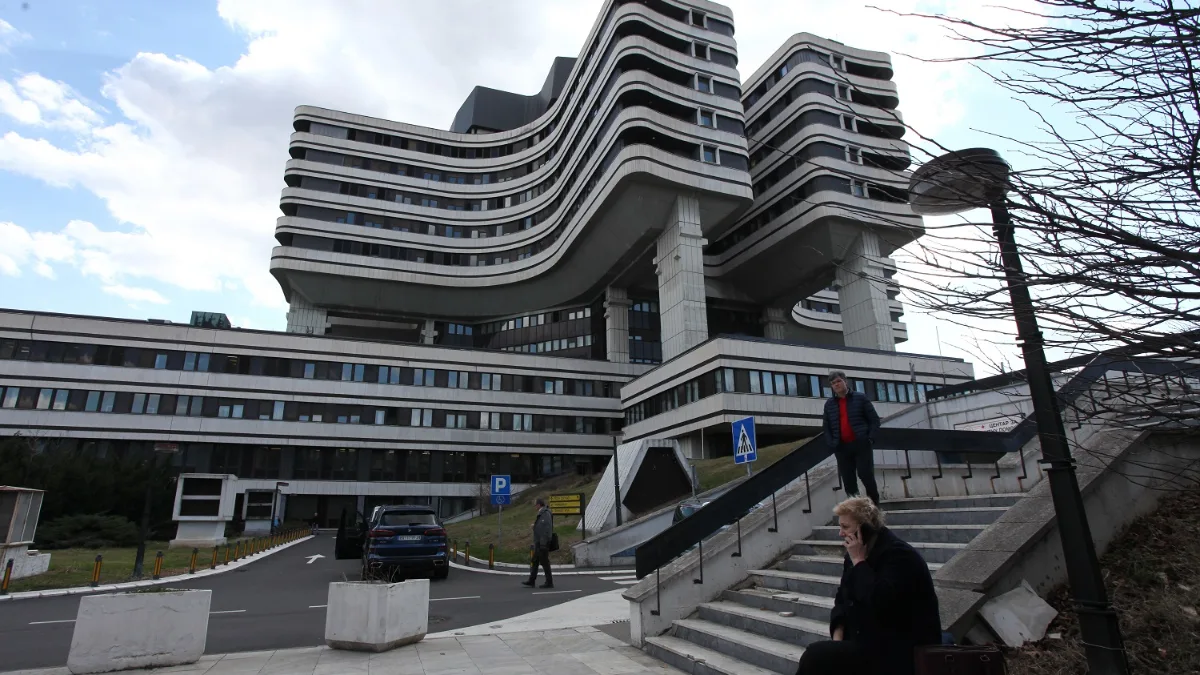
Cyber Knife at VMA: Which Tumors and How to Get Referred
The robotic radiation system has been running at VMA since October 1. Which tumors it treats, who pays and what a referral needs, per the VMA deputy chief.

Who can get the Cyber Knife, and how? Since October 1, 2026, this tumor radiation system has been available to citizens of Serbia at the Military Medical Academy (VMA), and the state pays for the treatment. Colonel Dr. Ivan Lekovic, deputy chief of VMA, spoke about it for RTS and called the new system a big step forward for Serbian medicine.
What exactly is the Cyber Knife?
The name sounds like surgery, but this is radiation. Lekovic explained how the device works:
“It is a computerized robotic arm that can direct an extremely focused beam of radiation from hundreds of different positions. That robotic arm rotates around the patient and can reach a metastasis or a tumor as small as one millimeter, deep in the tissue, without damaging the rest of the tissue.”
In other words, the beam arrives from many directions, and the goal is to hit a tiny lesion while sparing the tissue around it. Lekovic described it as one of the most advanced systems for treating cancer patients.
Which tumors does it treat?
According to Lekovic, the system can be used for tumors of the:
- brain
- head and neck
- lungs
- pancreas and liver
- prostate
How do you get a referral, and who pays?
The treatment is paid for by the state. Lekovic said it is enough for the patient’s home health institution, meaning the local branch of the Republic Health Insurance Fund (RFZO), to issue a referral based on a decision by a medical board. So two things are needed for a referral: the board’s decision and the referral itself.
Before you set out, keep in mind what the RTS conversation did not cover: there is no information on waiting times or on how many patients the system can take. Those questions go to the home institution and the board handling your case.
What else is new in lung surgery?
Lekovic mentioned a second novelty. In August, VMA performed Serbia’s first anatomical lung resection using a minimally invasive surgical technique and minimally invasive anesthesia. He also explained why this departs from the usual approach:
“When a patient has a lung tumor and a lung resection is performed, the patient would have to go under deep anesthesia with tubes, or the chest would have to be opened. That team, led by Professor Maric and Dr. Dusica Stamenkovic, an anesthesiologist, performed it in Serbia for the first time.”
The operation is done through three small openings, without opening the chest, without tubes and without a ventilator. According to Lekovic, the method matters for patients with more serious accompanying illnesses. VMA doctors trained for the procedure at the National Respiratory Center in China.
How much went into the building, and how many patients come?
Lekovic said that over the past two and a half years, seven to eight times more has been invested in infrastructure than in the previous seven to eight years. Flat roofs were waterproofed and the air conditioning system was rebuilt, with two air handling units and two cooling towers replaced. Elevators are due for replacement, and floor replacement is under way.
He put the scale of the job in numbers: VMA covers about 180,000 square meters, with 6,000 rooms and 850 bathrooms. He explained why air conditioning matters using an operating room as the example:
“You must have specific conditions in the operating room, where the temperature has to be 18 degrees, with filtered, sterile air. The same goes for the hematology unit. Good conditions mean a lot to everyone, both the staff who work there and the patients.”
Between 70 and 150 patients are admitted for inpatient treatment every day. The day before the conversation, 66 patients were admitted through the Emergency Center alone. On Wednesdays VMA is the on-call hospital for Belgrade, but that day it takes in patients from all over Serbia. Lekovic says the Emergency Center sees 500 to 600 patients on an average Wednesday, sometimes 700, with 60 to 70 admitted for inpatient treatment and around ten operations:
“It is a very challenging day for us, one that we have managed to handle for years.”