NASA: Perseverance Finds Three Water Episodes on Mars
A study in Communications Earth & Environment finds that rocks in the Margin Unit, on the rim of Jezero Crater, show signs of three separate encounters with water, NASA's Perseverance rover has found.

NASA’s Perseverance rover has found rocks on the rim of Jezero Crater on Mars that carry the marks of three separate encounters with water, according to a study NASA and the Jet Propulsion Laboratory (JPL) published on Monday, September 21, 2026, in the journal Communications Earth & Environment. The finding overturns an earlier assumption about the origin of carbonate in that zone and points to a more complicated history of water on early Mars than scientists had expected.
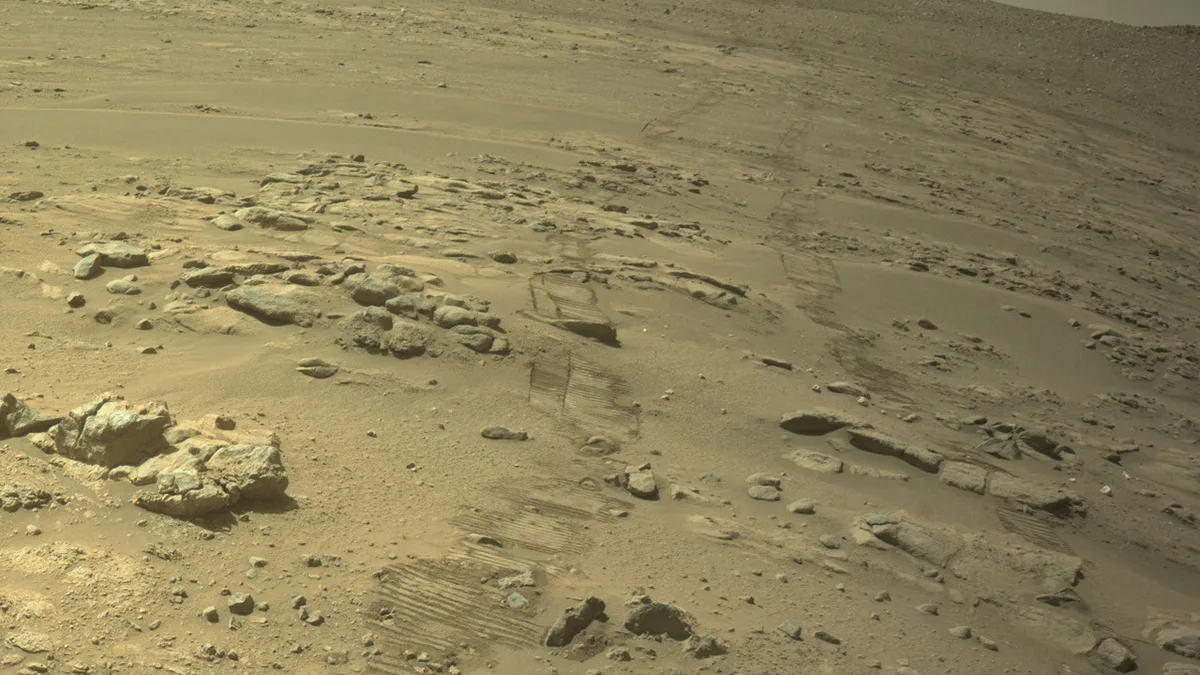
The rover reached a geological formation called the Margin Unit, on the inner edge of Jezero Crater’s rim, in September 2023. The zone traces the shoreline of what was once an ancient Martian lake, so scientists expected to find sedimentary rock: layered deposits that, on Earth, tend to preserve traces of ancient microbial life well. Orbital images had already shown a strong carbonate mineral signal in the area, which only reinforced that expectation. Instead, the rover ran into igneous rock.
Before we reached the Margin Unit, the leading hypothesis, drawn from orbital observations, was that the carbonate seen from orbit formed through contact with the lake that once existed in Jezero Crater. But we now know that this location became something of a crossroads for water systems. The findings from the Margin Unit matter because Jezero Crater sits within one of the largest exposed carbonate surfaces on Mars, so what we learn here reaches far beyond this crater.
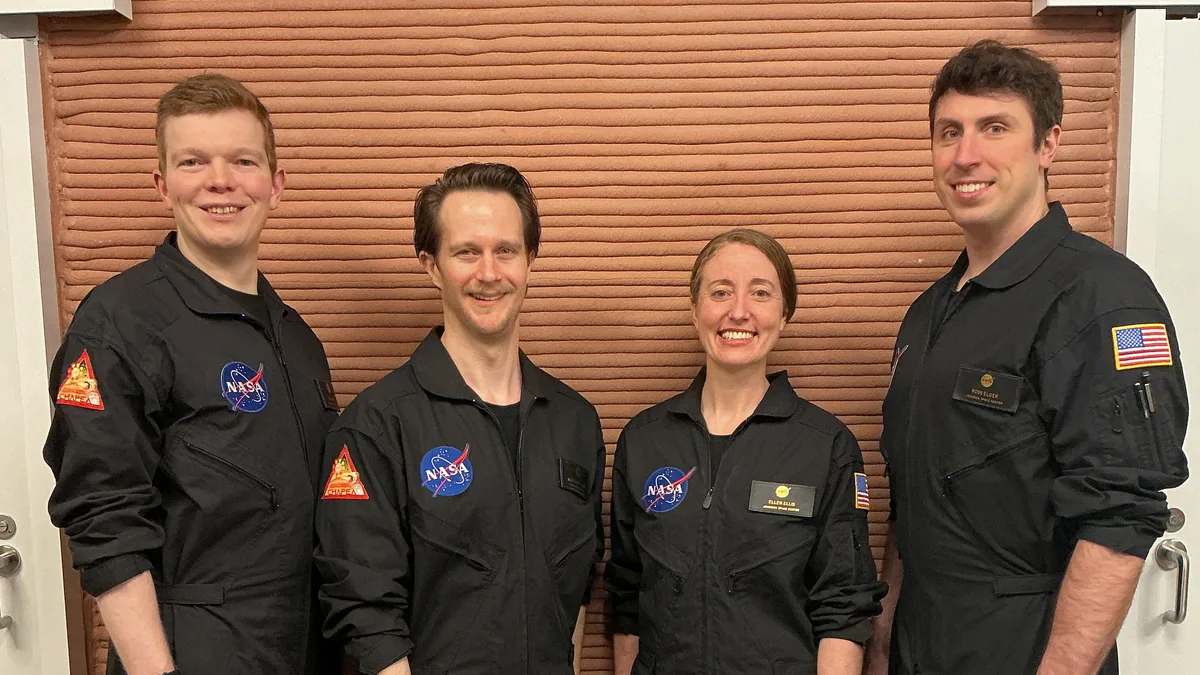
The statement is signed by Candice Bedford, a researcher at Purdue University in West Lafayette, Indiana, and the study’s lead author, in a NASA release. Eleni Ravanis, a planetary scientist at the University of Hawaii at Manoa, is a co-author.
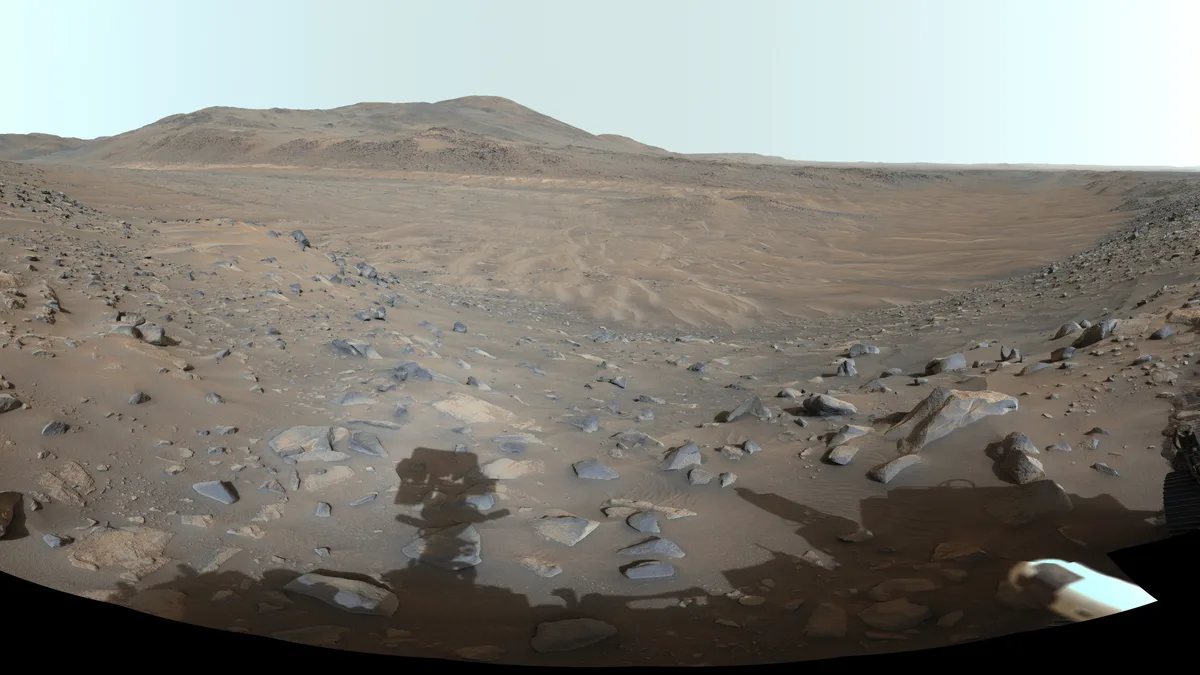
The data came from SuperCam, an instrument mounted on the rover’s mast that fires a laser at rock from as far as 6.5 meters away and reads the chemical makeup from the resulting plasma’s spectrum. Perseverance used it to analyze more than 185 targets in the bedrock, across roughly 265 meters of elevation change within the Margin Unit. The rover captured a panorama of the terrain, named Turquoise Bay, between October 8 and 16, 2023, weeks after arriving at the site.
The analysis showed that rock in the higher parts of the Margin Unit is coarse grained and crystalline, rich in olivine, a magnesium and iron mineral, and carries almost no trace of contact with water. Lower in the formation, on what was once the lake bed, the olivine has already fractured, with silica sitting between the grains.
Three episodes of water
The first episode: carbon dioxide rich groundwater reacted with olivine and filled cracks in the rock with carbonate, in the lower reaches of the Margin Unit. Those carbonate veins now stick out from the surrounding rock, because the softer material around them has eroded away over time.
The second episode is likely tied to the lake that once existed in the crater.
Some rocks from the Margin Unit also contain silica. When olivine converts to carbonate, silica can be left behind, and there is more of that silica in rocks that once sat below the waterline.
The third episode: heated groundwater formed veins of calcium sulfate and fluorite, about 25 centimeters thick, in the eastern part of the Margin Unit. Fluorite typically forms when hot water circulates through volcanic rock, which points to a later, thermal event in the site’s history.
If I’ve learned anything after ten years of working with Mars rovers, it’s that Mars keeps surprising us. Rarely do things turn out to be what we expect based on orbital data, Bedford said.
The team was able to establish the order of these three episodes, but not their age. The study does not say exactly when each one happened or how much time passed between them, and it does not prove the existence of life, microbial or otherwise, only that the conditions for chemical reactions with water were present in that zone on more than one occasion. Jezero Crater sits within one of the largest exposed carbonate surfaces on Mars, so Bedford’s team expects the Margin Unit findings to help reconstruct the climate and habitability of early Mars well beyond the crater’s boundaries. SuperCam, the instrument behind the analysis, is jointly run by Purdue University, Los Alamos National Laboratory, and the French institutes IRAP and CNES in Toulouse.