Swift Telescope Back to Full Power Before October Reentry
NASA restored Swift's third instrument and its automatic slewing, but the telescope is falling faster after a private rescue mission failed. Atmospheric reentry could come as early as October.

On September 25, NASA announced that its Swift space observatory had switched its third science instrument back on and resumed the automatic slewing that points its telescopes at new gamma ray sources. The gamma ray instrument, the Burst Alert Telescope (BAT), has been recalibrated and has been recording radiation since September 18, and on September 21 NASA also restored the feature that lets Swift interrupt its own daily observing plan and redirect its two remaining telescopes toward a newly detected source. Getting back to full operation comes at a price: it speeds up the satellite’s fall toward Earth, a descent that began after a private rescue mission fell through.
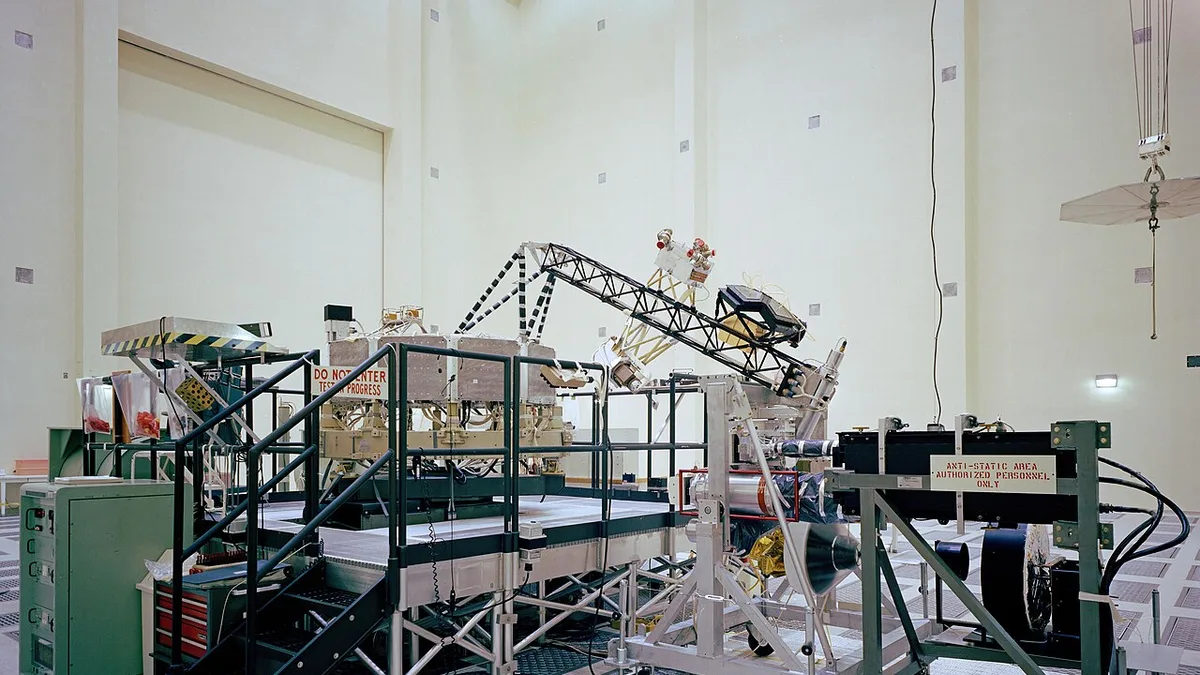
The Neil Gehrels Swift Observatory launched in November 2004 with a dry mass of 613 kilograms, and for two decades it has watched gamma ray bursts, the most powerful explosions in the universe. BAT, which can cover 16 percent of the sky at once, was switched off in April 2026 to save power while the team tried to push the satellite into a higher orbit. From December 2025 to February 2026, roughly a quarter of its planned targets were chosen so that the angle of its solar panels would cut atmospheric drag, and by February the entire observing schedule had shifted to that mode, suspending the automatic slewing toward gamma ray sources altogether.
The rescue attempt did not work. Arizona based Katalyst Space Technologies was hired to build the LINK spacecraft, launched July 3, 2026, with the job of grabbing Swift and towing it into a higher orbit, roughly 373 miles up. The spacecraft was built in nine months, but after launch it ran into attitude control trouble and began tumbling uncontrollably, and NASA called off the rescue in August.
“This isn’t the outcome we were working toward, but that doesn’t change why this mission was worth attempting,” NASA Administrator Jared Isaacman said after the agency abandoned the rescue.
NASA’s astrophysics division director, Shawn Domagal-Goldman, explained why the risk had been known from the start.
“We knew this was a high risk, high reward mission, a first attempt of its kind, developed on an unprecedented timeline dictated by the sun’s activity.”
Even after the failed rescue, the team keeps tracking LINK, hoping the data from this mission will help whoever attempts something similar next.
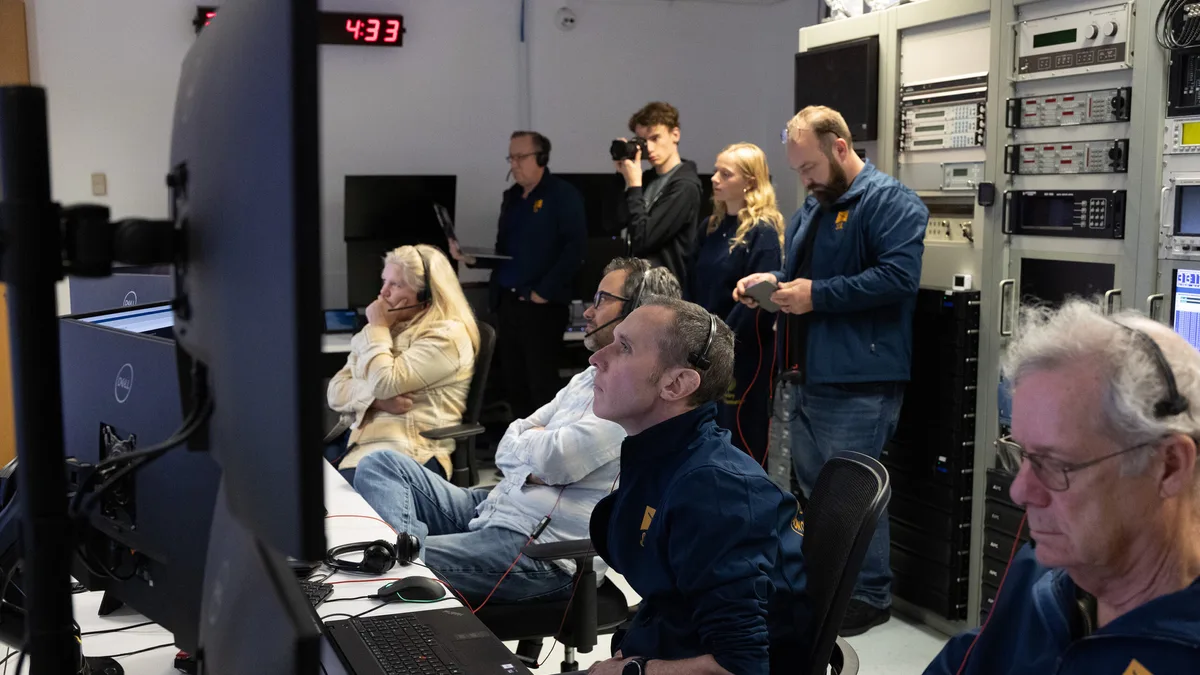
All three instruments are running again: BAT, the X-ray Telescope (XRT) and the Ultraviolet/Optical Telescope (UVOT). The daily observing plan is still put together by the team at Penn State, in University Park. But the return to normal operations has also sped up the fall: Swift is now about 325 kilometers above Earth, and NASA expects it to drop below the 300 kilometer threshold in early or mid October, after which working with the satellite becomes difficult and observations will likely stop.
When and where will Swift come down?
The exact date and location aren’t known. NASA astrophysics spokesperson Alise Fisher said reentry will not happen before October.
“Swift will likely not enter the atmosphere before October,” Fisher said.
Swift’s orbit is inclined 21 degrees, so debris could land anywhere between 21 degrees north and 21 degrees south latitude, most likely in an ocean. NASA expects most of the spacecraft to burn up in the atmosphere, but some parts, such as its optical lenses and titanium fuel tanks, could survive reentry.
What this episode does not change: in 2022, Swift recorded the brightest gamma ray burst ever observed, nicknamed the BOAT, and that scientific result remains part of its legacy no matter how the mission ends. A similar approach has also been floated as a possible way to one day extend the life of the Hubble Space Telescope, whose orbit is also decaying due to heightened solar activity, but for now that remains only a suggestion, not a decision.