

Moon Passes Mars Oct. 5, Jupiter Oct. 6: What Serbia Sees
The waning crescent passes Mars on October 5 and covers Jupiter the next day, but that occultation is not visible from Europe. What is left for observers in Serbia.
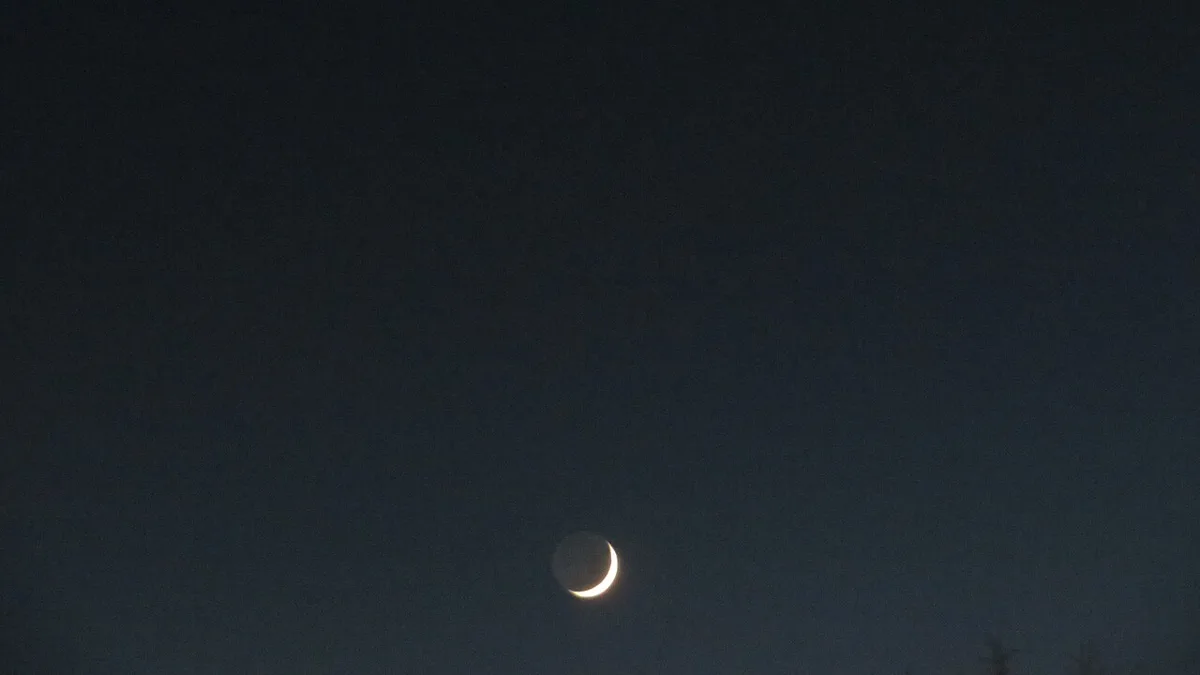
Before dawn on Monday, October 5, 2026, the waning Moon passes between two planets. The crescent is 29 percent illuminated and sits 3.3 degrees below and to the left of Mars, and 12.9 degrees above and to the right of Jupiter. The next day the Moon moves on to Jupiter, but the occultation announced for that morning cannot be seen from Europe.
What does the morning sky look like?
On October 4, the day before, the Moon was 40 percent illuminated, so the crescent visibly thins and shifts eastward from one night to the next. Mars and Jupiter are 16.5 degrees apart, down from 16.9 degrees on October 3. Mars is closing in on Jupiter, and their conjunction, the moment of closest apparent approach in the sky, comes on November 16.
Jupiter is about 10 degrees above and to the right of Regulus, the brightest star in the constellation Leo, and it outshines every star in the sky that morning, Sirius included. Orange-red Mars sits a little more than 10 degrees below and to the right of Pollux, one of the stars of Gemini. The planet is crossing Cancer toward the open star cluster known as the Beehive, and on October 5 the Moon will be next to that cluster.
One source puts the Moon close to 50 degrees above the horizon on October 5, in the east-southeast, but it does not say which observing location it uses. For Serbia the altitudes may differ.
Why can’t Europe see the Jupiter occultation?
An occultation is the moment when the Moon, moving across the sky, covers a planet. According to a calculation cited by Star Walk, the Moon will cross Jupiter on October 6 between 08:14 and 12:32 GMT, which is 10:14 to 14:32 Serbian time. The Moon will be 20 percent illuminated, and the event is visible from parts of the Americas and Africa. Europe is not on that list.
For an observer in Serbia, that means a close Moon and Jupiter pairing before dawn on October 6, without the covering itself. For events like this, Star Walk notes that the exact time depends on location, so the window of almost four hours spans all the places from which the event can be seen, not the moments for any single one.
What comes next before the end of October?
The Austrian astronomy portal astronomie.at lists the other dates:
- October 10: new Moon, so the nights are free of moonlight
- October 13: Vesta at opposition, visible with binoculars
- October 22: peak of the Orionid meteor shower
- October 28: the Moon passes over the Pleiades
After Saturn, which is at opposition today, this is the next sight on the calendar, and it only takes an early start and a look to the east.
What these figures do not tell you
The angular separations, the Moon’s illumination and the dates come from three sources that agree on them, but they were not calculated for Serbia. Altitudes above the horizon, the moment the planets rise and the moment contrast fades with the dawn all depend on location, on obstacles at the horizon and on timing. The listed occultation hours do not mean anything will happen visually over Serbia, since the event is documented as visible only from the Americas and Africa.


