Srpska Assembly Defends Cvijanovic Veto on Commission
The National Assembly of Republika Srpska holds a special session on Zeljka Cvijanovic's veto of the appointments to the Commission to Preserve National Monuments, with both ruling parties and opposition backing it.

- The National Assembly of Republika Srpska met in a special session on July 7 to weigh a veto by Serb Presidency member Zeljka Cvijanovic against the appointments to the Commission to Preserve National Monuments.
- Cvijanovic says the decision was proposed without a quorum by two Presidency members, Denis Becirovic and Zeljko Komsic, with no member from Republika Srpska.
- The agenda holds two items: the veto and a declaration on protecting the vital national interest of the Serb people in Bosnia and Herzegovina.
- Both the ruling bloc and the opposition in Srpska have pledged to back the veto, creating a rare parliamentary consensus.
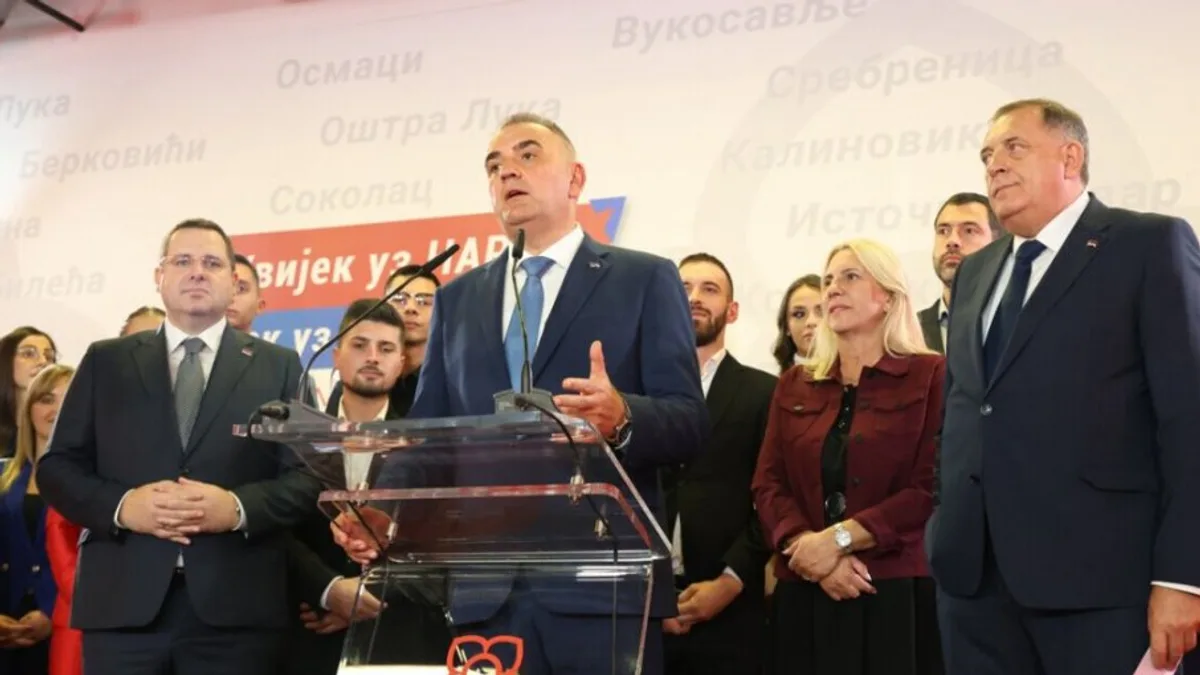
The National Assembly of Republika Srpska convened today, July 7, in a special session in Banja Luka to consider a veto lodged by Serb Presidency member Zeljka Cvijanovic against the decision to appoint the Commission to Preserve National Monuments. The body rules on the status of cultural monuments across the whole of Bosnia and Herzegovina, so every appointment carries political weight.
Cvijanovic justified the veto by arguing that the decision is destructive to the vital national interest of Republika Srpska. In her account, the appointments were proposed without a quorum by Denis Becirovic and Zeljko Komsic, the two other Presidency members, and without a single representative from Republika Srpska. The proposed lineup, she said, includes Zoran Mikulic and Mirzah Foco, along with two foreign members put forward by UNESCO.
Why does Banja Luka see this as a constitutional, not a cultural, issue?
Republika Srpska President Milorad Dodik stressed that the heart of the matter is not culture but constitutional competences. The message from Banja Luka is that no body at the state level may be filled without the consent of all three constituent peoples, and the absence of a member from Republika Srpska is read as an attempt to bypass the entity on questions that directly concern it.
The two foreign members of the commission are the Italian professor Francesco Bandarin and professor George Okello Abungu of Kenya, both internationally respected in the field of cultural heritage protection. Their professional records, however, are not in dispute. Banja Luka contests the procedure by which the decision was reached, not the names of the foreign experts, and that is precisely the line of argument deputies are carrying into the debate.
Alongside the veto, deputies also took up a declaration on protecting the vital national interest of the Serb people in Bosnia and Herzegovina. That places the single case of the monuments commission within the broader frame of relations between Banja Luka and the state-level institutions, ties long strained by disputes over jurisdiction.
A rare consensus between government and opposition
What sets this session apart is that both the ruling parties and the opposition in Republika Srpska have pledged to support the veto. In a parliament that is otherwise deeply divided, questions about the entity’s constitutional standing regularly bring deputies together across party lines, and a wide majority is expected this time as well.
For the opposition, it is a chance to show consistency in defending Republika Srpska’s competences while keeping a critical stance toward the ruling majority on other matters. For the government, a unified parliament strengthens the argument that the veto is not a party move but an institutional response. The final vote and the wording of the declaration will show how firm that consensus is once the debate shifts from principle to concrete steps.
It remains an open question how the assembly’s decision will affect the further work of the Commission to Preserve National Monuments and relations within the Presidency of Bosnia and Herzegovina. Do you see the dispute over the commission as primarily a question of culture or of jurisdiction?