DS Cedes Election Board Seats to Student List
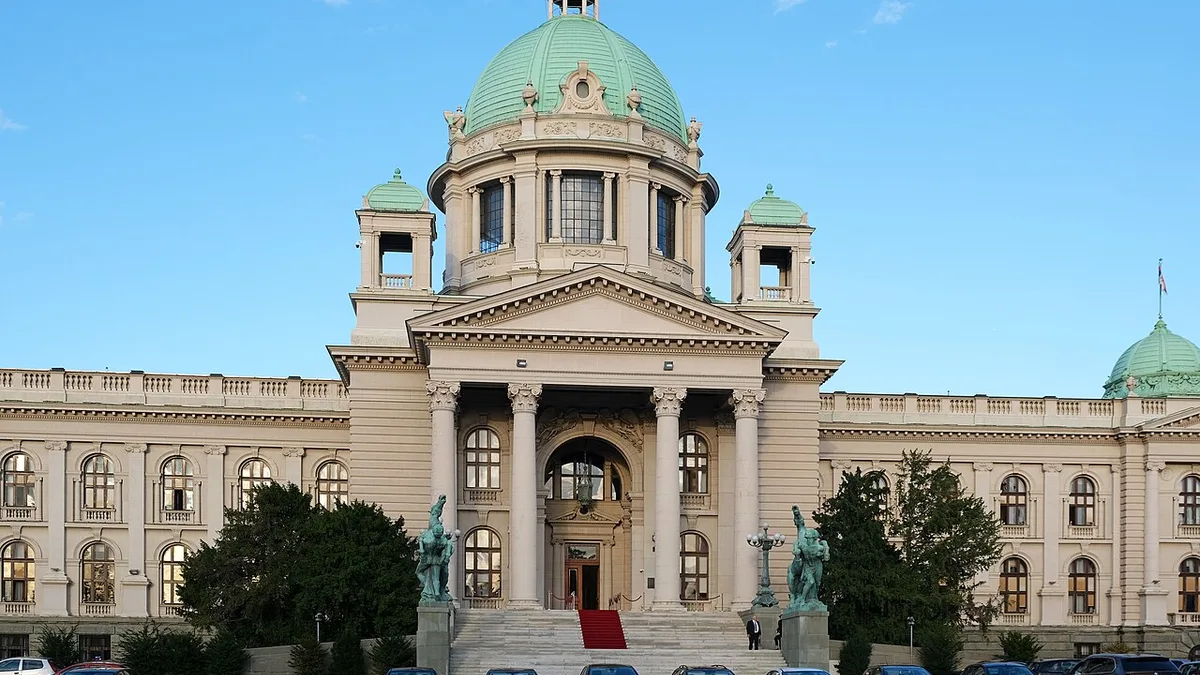
The Democratic Party has renamed its parliamentary group in Serbia's National Assembly and says it will hand over every election board seat the group is entitled to under law to the student list.

The Democratic Party announced on August 27, at 3:20 p.m., that it had renamed its parliamentary group in Serbia’s National Assembly to “MPs with the Students: For Election Oversight.” The party says the goal is to secure as many seats as possible for the student list in the permanent composition of election boards, and the fullest possible oversight of the election process.
It is the first time an opposition party has changed the name of its parliamentary group as a concrete electoral move rather than simply a gesture of support. The Democratic Party had already publicly backed the student list, but this is the first time it has spelled out the actual mechanism for turning that support into a presence at polling stations.
What does the law say about allocating election board seats?
The party bases the decision on Article 36 of the Law on the Election of Members of Parliament. According to the Democratic Party, that article requires that the number of chairs, members and deputy members in the permanent composition of election boards allotted to a given parliamentary group be “proportionate to its representation in parliament on the day the decision calling the election takes effect.” In other words, representation is not measured on election day, nor on the day the group is formed, but on the day the election is officially called, and as of August 28 that date is still unknown.
That produces the deadline the party itself has flagged: joining the parliamentary group after the election has been called will no longer affect the number of election board seats. The Democratic Party has therefore called on any MP willing to help the students to join the “MPs with the Students: For Election Oversight” group before that date is set, because once it is, the window for influencing the allocation closes.
The party’s statement reads:
“The larger a parliamentary group, the greater its legal share in the allocation of election board seats. Every seat that falls to our parliamentary group on that basis will be made available to the student list.”
The Democratic Party also stressed that joining the group carries no party obligations. It does not mean joining the party itself, does not create a coalition, does not require any alignment of programs, and does not change anyone’s political or ideological views. The only common ground, the party says, is agreement that the existing parliamentary mandates be converted into as many people as possible who will safeguard voters’ will at the polling stations.
The move builds on the party’s existing stance toward the student list. Srpske vesti has previously reported that LSV leader Nenad Kostres announced his party was close to backing the student list as well. Now, alongside political declarations from other actors, the first concrete technical mechanism has appeared for turning that support into control of the election process on the ground, inside the election boards themselves, where the votes are actually counted.
How is the opposition reading the move?
On the same day, August 27, People’s Movement of Serbia MP Aleksandar Ivanovic said his party was ready for elections. Ivanovic described the government’s 6,000-dinar payment to adult citizens as pre-election marketing rather than social policy, saying it was not aimed at those who need help the most. He also said People’s Movement of Serbia had proposed increasing the social welfare fund by 4 billion dinars.
Two statements on the same day, the Democratic Party’s technical move on election boards and People’s Movement of Serbia’s assessment of the government’s social measure, show that a good part of the opposition is preparing for early parliamentary elections before they have even been officially called. For both parties, the election cycle, though formally not yet underway, is already being treated in the corridors as if it had started.
The date the election is called remains the key unknown in the whole story. Until it is set, the Democratic Party’s parliamentary group stays open to any MP who wants to join it, and the number of election board seats it ultimately hands over to the student list will depend on how many of them do so before that day arrives.