Smederevac Replies to Four REM Council Members' Letter
The REM Council chair says claims of irregularities must rest on verifiable facts. Four members ask the EU and OSCE to put the deadlock on record.

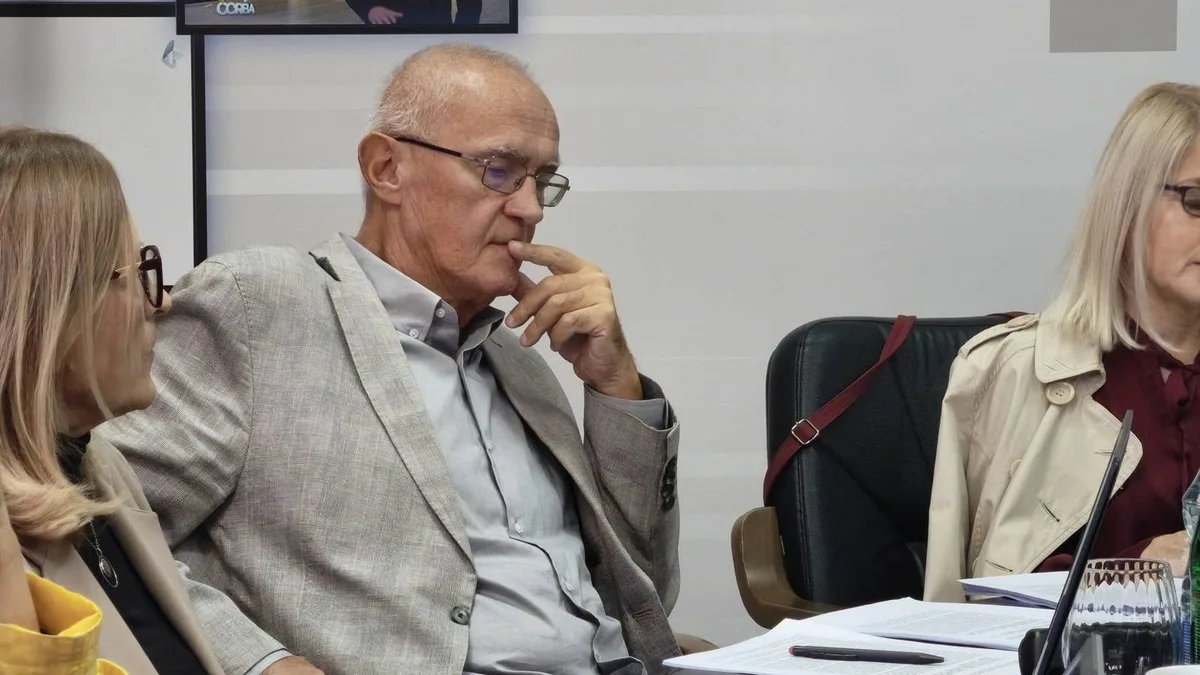
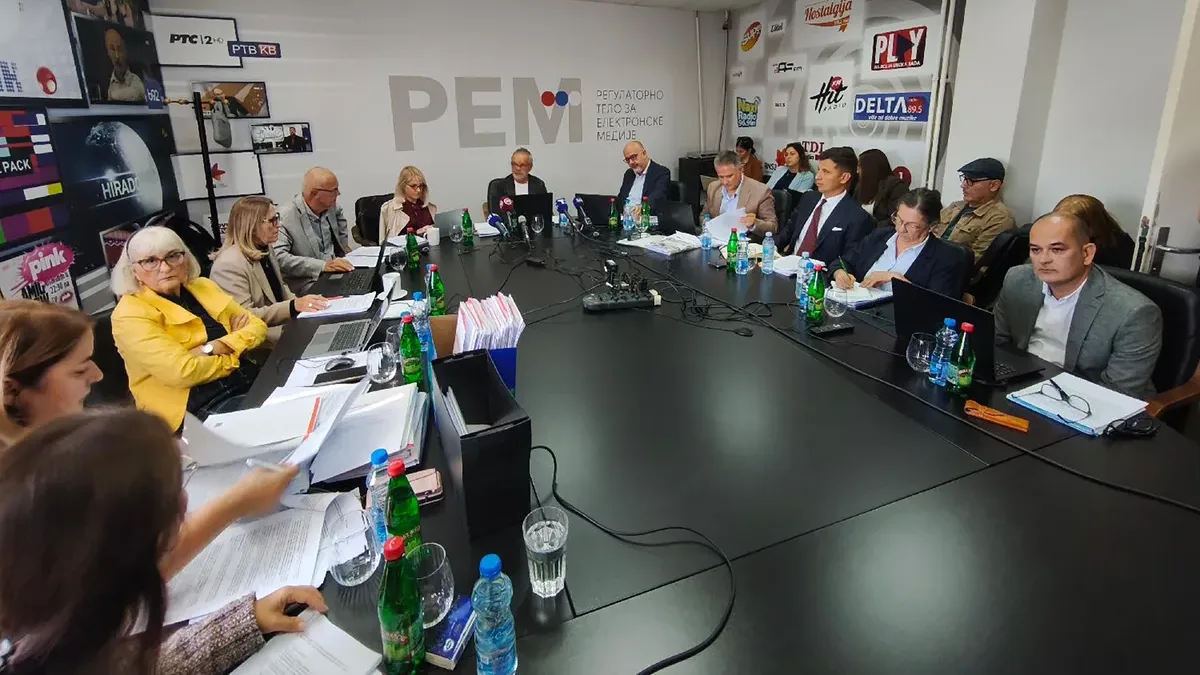
The chair of the Council of the Regulatory Authority for Electronic Media (REM), Stevica Smederevac, published a statement on October 2, 2026, replying to a letter that four members of the same Council sent to international institutions and diplomatic missions. The letter, reported by Insajder, says REM has been formally constituted but its work is in effect blocked, and that this affects the electoral process. Smederevac rejects the claims of irregularities, of outside influence on individual members, and of an instruction that would fix the outcome of a vote in advance.
What did the four Council members write in their letter?
The letter is signed by Dubravka Valic Nedjeljkovic, Ira Prodanov Krajisnik, Mileva Malesic and Rodoljub Sabic. They say they returned to the Council so that Serbia would not enter the campaign without a functioning regulator, and that the Council first accepted Sabic’s proposal to add the Informer television channel to the group of 11 programs whose campaign coverage is monitored. The decision came at an extraordinary session on September 28, and the signatories describe how the road to it unfolded:
“All eight members of the Council then stated in writing that Informer should be included in the monitoring sample. Yet at the moment when the formal decision was to be taken on September 28, four members changed their position. The vote ended in a four to four tie.”
According to the letter, this points to direct political influence. The signatories add: “Our participation in the work of the Council should not be read as confirmation that the problems that accompanied its election have been resolved.” They ask the European Union, OSCE/ODIHR and other actors observing the elections to record this development formally and take it into account in every assessment of the electoral process. They also announce further steps: “We will continue to use every available legal mechanism to demand that REM carry out its duties under the law.” The letter ends with the sentence: “You must not use our participation as proof of the democratic legitimacy of the elections.”
The addressees include the head of the EU Delegation to Serbia, Andreas von Beckerath, the head of the OSCE Mission to Serbia, Marcel Pesko, the OSCE Representative on Freedom of the Media, Jan Braathu, the European Commissioner for Enlargement, Marta Kos, the European Parliament’s rapporteur for Serbia, Tonino Picula, and the head of the Council of Europe Office in Belgrade, Janos Babity, as well as other embassies and institutions.
What does Smederevac say in reply?
The statement says that since the new Council was constituted, “serious claims about irregularities in the work of the Regulator” have been heard in public. Smederevac writes that such allegations “must be based on verifiable facts and, where there are grounds, considered in the appropriate institutional procedure.” The statement mentions neither Informer nor the claim that all eight members had earlier agreed in writing to widen the sample.
REM says campaign monitoring began on September 10, before the new Council was constituted, on a sample of 11 media service providers. In report number 1154/26, the Supervision and Analysis Service found that, with its current staff and technical capacity, it cannot include additional programs without risk to the monitoring already under way. As a new request, the statement cites one of September 26 asking that the public broadcaster of a national minority be monitored.
On the outcome of the September 28 session, Smederevac writes that the proposal did not win the required majority, “and so no decision was made.” He states the principle this way:
“Public debate and criticism must not limit that independence or create an expectation that the outcome of an independent regulatory body’s decision must be determined in advance.”
He adds that the views of individual members on the conditions for free and fair elections are only their own views and are not “the position or decision of the REM Council.” The monitoring sample, according to the statement, does not define the scope of the Regulator’s powers, and action on complaints and on its own initiative applies regardless of whether a provider is included in the sample.
What is on the agenda on October 6?
The first regular session of the new Council is scheduled for Tuesday, October 6, 2026, at 11 a.m., at 5 Nikola Pasic Square, on the fourth floor. The session is public and streamed live on REM’s YouTube channel. Anyone who wants to attend in person should register at office@rem.rs. Smederevac says the session will take up matters within the Regulator’s remit in line with the law and the Rules of Procedure.