Serbia's RIK Assigns Diaspora Voters, Members Walk Out
Serbia's Republic Electoral Commission adopted an amendment on polling stations abroad, with no new stations added. Member Dusan Dincic says 13 members left the session.
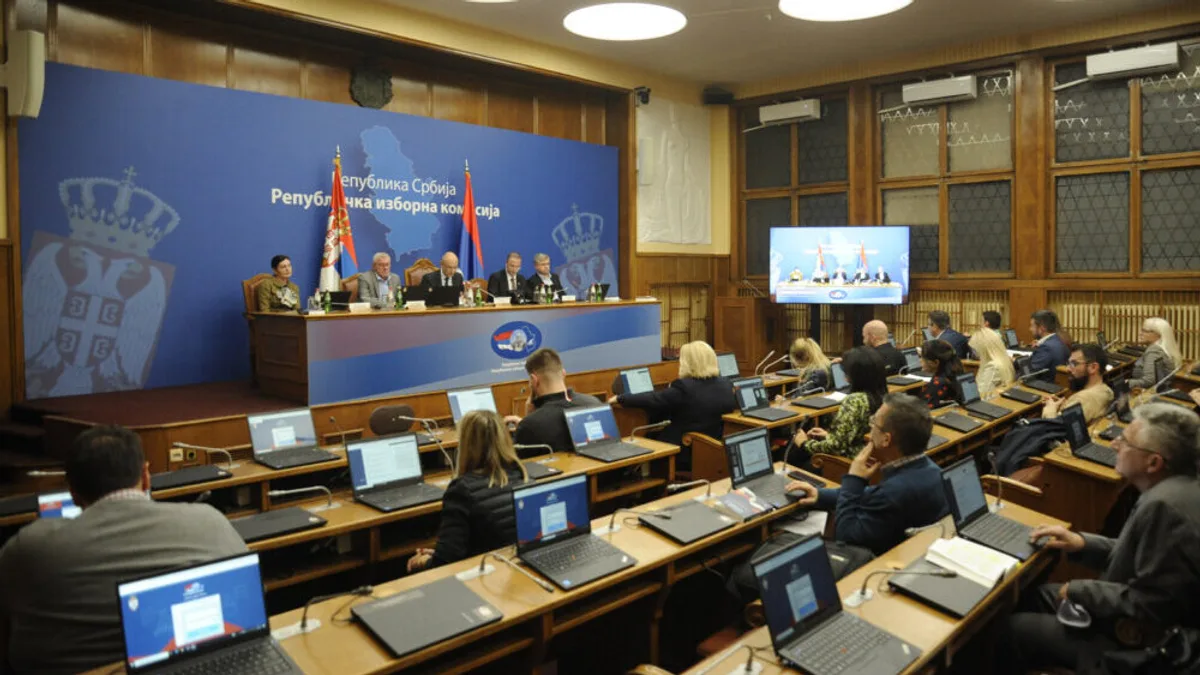
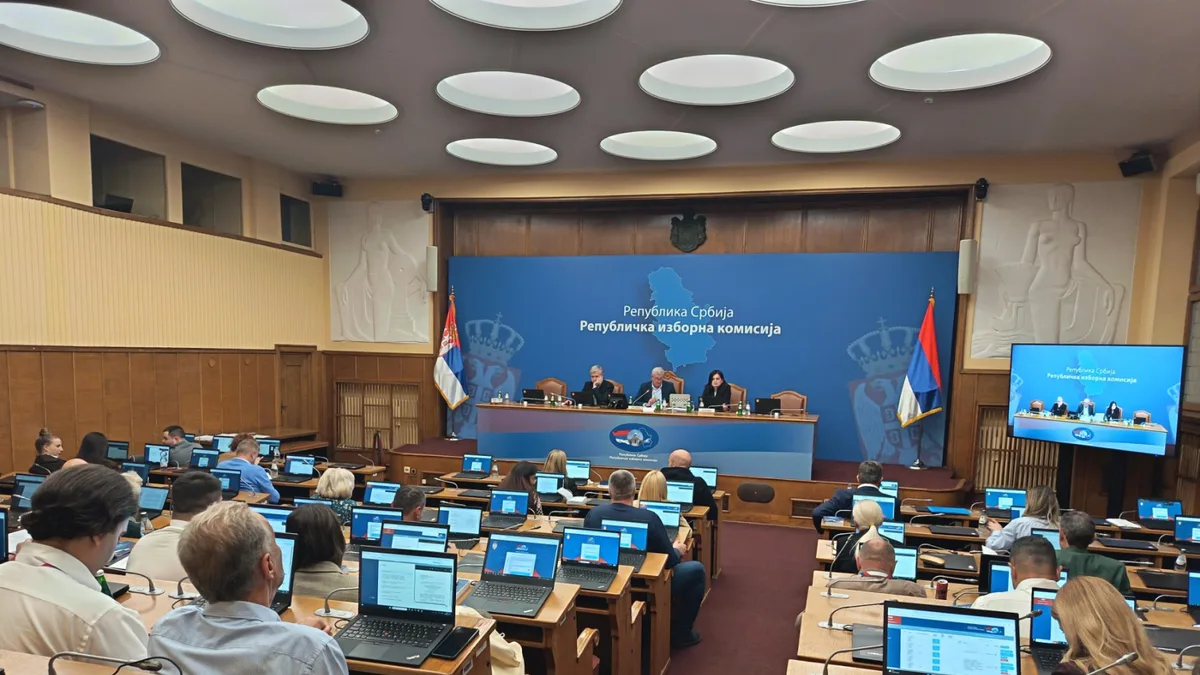
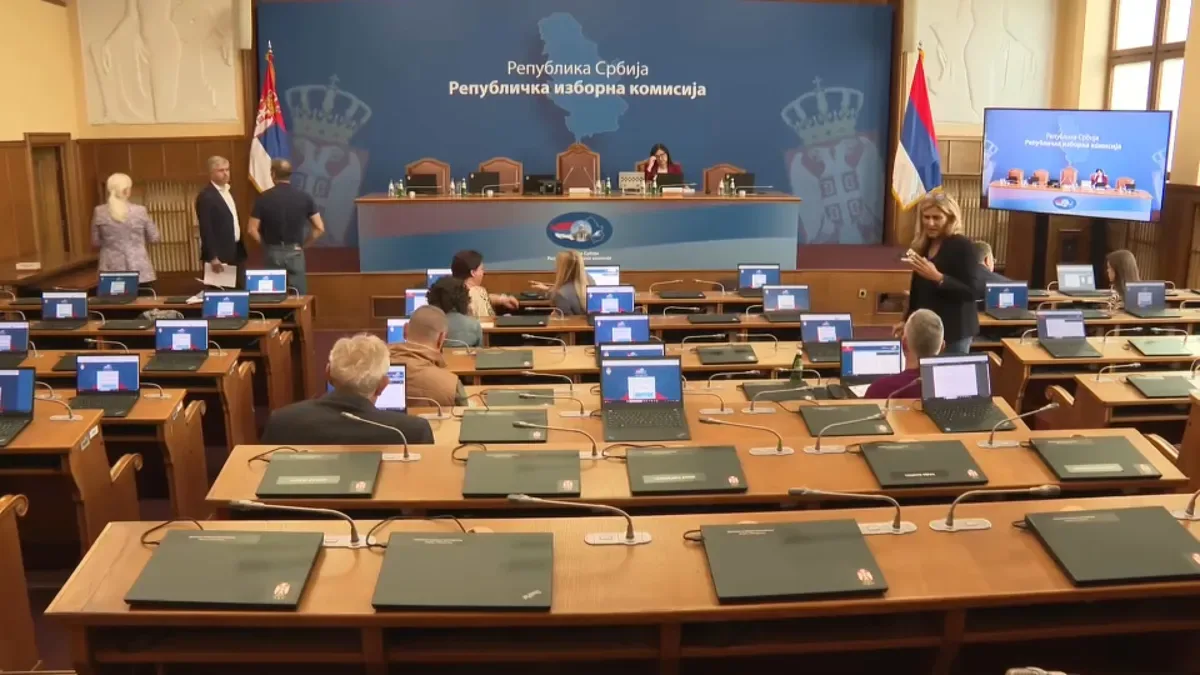
The Republic Electoral Commission (RIK) adopted an amendment on Wednesday evening, October 7, to its decision on polling stations abroad, assigning diaspora voters to the 93 stations already designated, with no new ones added. The decision passed with 21 of 24 members voting in favor; 32 members were present when the session opened. Some members left in protest, and RIK member Dusan Dincic says 13 of them did.
We previously reported on the dispute between RIK and the Ministry of Foreign Affairs over polling stations abroad and on the Student List’s objection. We had not yet reported the decision, the 21-to-24 vote or the walkout.
What exactly does the decision on polling stations abroad change?
The amendment does not add polling stations. It defines the coverage of those already designated, meaning which voter votes at which station. RIK chairman Vladimir Dimitrijevic said this is needed so that the Ministry of Public Administration and Local Self-Government can process applications received through diplomatic and consular missions.
“We have to map the polling stations so that voters can be assigned. The Ministry of Public Administration and Local Self-Government is already working under our decision, but we need this so that our voters abroad get the chance to vote,” Dimitrijevic said.
Explaining the adopted decision, Dimitrijevic added that it can be changed later:
“Until the voter list is closed, the decision can be amended if additional polling stations are designated, and there is nothing wrong with that. This is now the coverage of polling stations so that the Ministry of Public Administration, based on voters’ applications at diplomatic and consular missions, can process the applications received so far at all,” the RIK chairman said.
Voting will take place at 93 polling stations in 37 countries. In the 2023 election, there were 81 stations in 35 countries. The weekly Vreme gives examples of the new layout: voters from Slovakia are sent to Vienna, from Cologne to Dusseldorf, and from Vancouver to Toronto, which, according to the paper, is a four-and-a-half-hour flight away. The same paper writes that 28 of the 93 stations are in Bosnia and Herzegovina.
The registration figures differ: Vreme cites a record 106,000 registered diaspora voters, while the Student List, in its objection filed with RIK, speaks of about 111,000.
Why did some members walk out of the session?
RIK member Ivan Sebek, the Student List’s representative, asked at the start of the session for the item to be removed from the agenda as premature. According to a post by Students in Blockade on X, it was the fifth item. Sebek argues that the amendment offers only a redistribution of voters and does not solve the problem of opening additional stations. His request was based on the work of RIK’s working group on voting abroad, which includes representatives of two ministries.
“Today we had a working group meeting attended by both the Ministry of Foreign Affairs and the Ministry of Public Administration and Local Self-Government. It was not finished, and it was agreed at today’s meeting that this session would continue tomorrow before noon, by 12:00, when they will meet our requests with the complete data we asked for,” Sebek said.
He also addressed Dimitrijevic directly: “Unless you know something I don’t.”
According to Dincic, the Ministry of Foreign Affairs was asked to say how many people are registered at each station, why certain stations were not opened, and whether Germany was asked for consent to voting outside diplomatic and consular missions. He described to Insajder what happened at the session:
“At the very beginning of the session, since the chairman of the Republic Commission has that authority, we asked that the chairman of the Republic Electoral Commission remove that item from the agenda, wait for tomorrow’s working group session, and then schedule RIK again tomorrow early in the afternoon, when this decision could be made. He said he could not do that, that work has to start, and so on. In any case, the thirteen of us, members and deputy members of the Republic Electoral Commission, had agreed that we did not want to take part in something like that. So we stood up and left the session of the Republic Electoral Commission, as a protest against, let me say, the political violence being carried out through the sessions of the Republic Electoral Commission,” Dincic said.
The figure of 13 comes from Dincic. Reports from the session say only that some members left. Dincic adds that the representative of the DSS stayed because of the item on Kosovo and Metohija, and then left as well.
Students in Blockade said on X that the Student List’s representatives left first, followed by the rest of the opposition:
“After the agenda was adopted regardless, the Student List’s representatives left the session, followed by the other opposition representatives. Voters deserve a solution,” Students in Blockade said.
How did the majority in RIK respond, and what comes next?
Dimitrijevic said it was not proper for the members to walk out, because the session had been called four hours earlier and they could have asked for a change to the agenda before it began. Before the vote, he warned about the deadline:
“If we do not adopt this today, the entire process of closing the voter list will be jeopardized,” Dimitrijevic said.
According to him, the whole procedure would be at risk if the decision was not made by the evening of October 9. He added that if anything changes in the talks with the Ministry of Foreign Affairs, it will be possible to assign voters differently.
At the same session, RIK designated 28 polling stations for voters who will be doing military service, a military exercise or training in Serbian Army units and institutions on October 25. It also set the schedule by which parliamentary groups propose members of polling boards for the stations where voters from Kosovo and Metohija cast ballots, and appointed members to the expanded RIK on the proposal of the lists “Majka Srbija - Gruda” and “Albanian Coalition”.
Talks with the Ministry of Foreign Affairs were set to continue today, Thursday, October 8, by 12 noon, when the ministry was supposed to deliver the requested data. Dincic says there will be no backing down from the demands and that members will keep insisting on all data about the disputed polling stations abroad.