EU says Serbia's election does not change Kosovo dialogue
The European Union says the October 25 election results do not change the basis of the Belgrade-Pristina dialogue, while Ilija Srdanovic announces a constitutional review of the agreements.
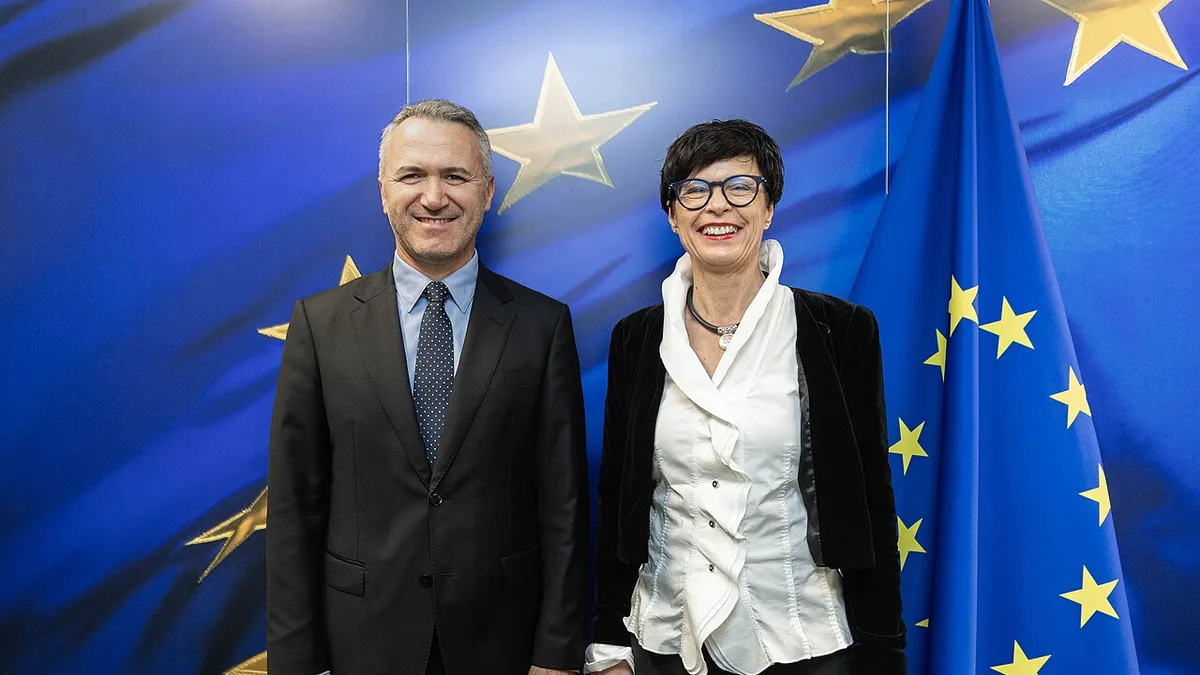
The European Union told Radio Free Europe (RFE) that the results of Serbia’s parliamentary election change neither the basis of the dialogue with Pristina nor the obligations the parties have taken on. The spokesperson who gave the statement was not named, and the news agency Beta carried the story on October 28.
“The results of the parliamentary elections in Serbia do not change the basis of the EU-mediated dialogue or the obligations the parties have undertaken,” an EU spokesperson in Brussels told RFE. The statement went on:
“The EU-mediated dialogue does not depend on individual political leaders. All existing obligations remain in force, including those arising from the Agreement on the Path to Normalization from 2023 and its Implementation Annex (the Ohrid Agreement).”
In the quoted sentences, the spokesperson names the 2023 agreement and the Ohrid annex. The 2013 Brussels Agreement is not mentioned in that part of the statement.
What does Brussels expect from Belgrade after the election?
According to RFE, officials in Brussels stress that it is too early at this stage to speculate about possible changes to Serbia’s negotiating position or their consequences for the dialogue. The EU expects Belgrade to keep engaging constructively, honor existing obligations and contribute to progress toward normalizing relations with Pristina.
What did Ilija Srdanovic tell the same outlet?
The same RFE article carries the position of Ilija Srdanovic, the top candidate of the Student List, which won the October 25 snap parliamentary election by a wide margin. Srdanovic told RFE that continuing the dialogue on Kosovo is a core part of the list’s program. He confirmed that the new government will respect internationally agreed obligations, with the caveat that all platforms must comply with Serbia’s Constitution, so agreements signed by earlier officials, the Brussels Agreement among them, could be reviewed for constitutionality.
The two statements came from different speakers, and it is RFE that links them. According to that newsroom, the EU thereby signaled indirectly that there is no room for revisiting agreements already reached, along with readiness to work with the new leadership in Belgrade to ensure continuity and keep up momentum in the process. That is RFE’s assessment, not the spokesperson’s words.
What are the Brussels and Ohrid agreements?
The Belgrade-Pristina dialogue began in March 2011. The Brussels Agreement of April 2013 was the first to set out principles for normalizing relations, including the creation of an Association of Municipalities with a Serb majority in Kosovo. The Agreement on the Path to Normalization was reached in Brussels in February 2023, and the implementation annex was agreed in Ohrid in March of that year. According to RFE, the agreement provides for good-neighborly relations, mutual recognition of documents and national symbols, Serbia dropping its opposition to Kosovo’s membership in international organizations, and an appropriate level of self-management for the Serb community, along with implementation of all earlier agreements.
Why has the high-level dialogue stalled?
The leaders of Kosovo and Serbia last met on September 14, 2023. Ten days later, on September 24, an armed group of about thirty Kosovo Serbs, led by the then vice president of the Serb List, Milan Radoicic, killed Kosovo police officer Afrim Bunjaku and barricaded itself in the Banjska monastery. Three of the attackers died in an exchange of fire with Kosovo police.
The then EU foreign policy chief, Josep Borrell, described the attack as terrorist, and the EU has repeatedly called for the arrest of everyone responsible, Radoicic included. Kosovo Prime Minister Albin Kurti makes any resumption of the dialogue at the high political level conditional on Radoicic’s extradition from Serbia. Radoicic has taken responsibility for the armed attack in Banjska. The Student List has so far not stated a clear position on Banjska or on Radoicic.