Nis Students Call Out Politicians Claiming Their Win
Students in blockade from Nis say election support buys no favors in return, and promise to publish the names of the politicians they mean soon.
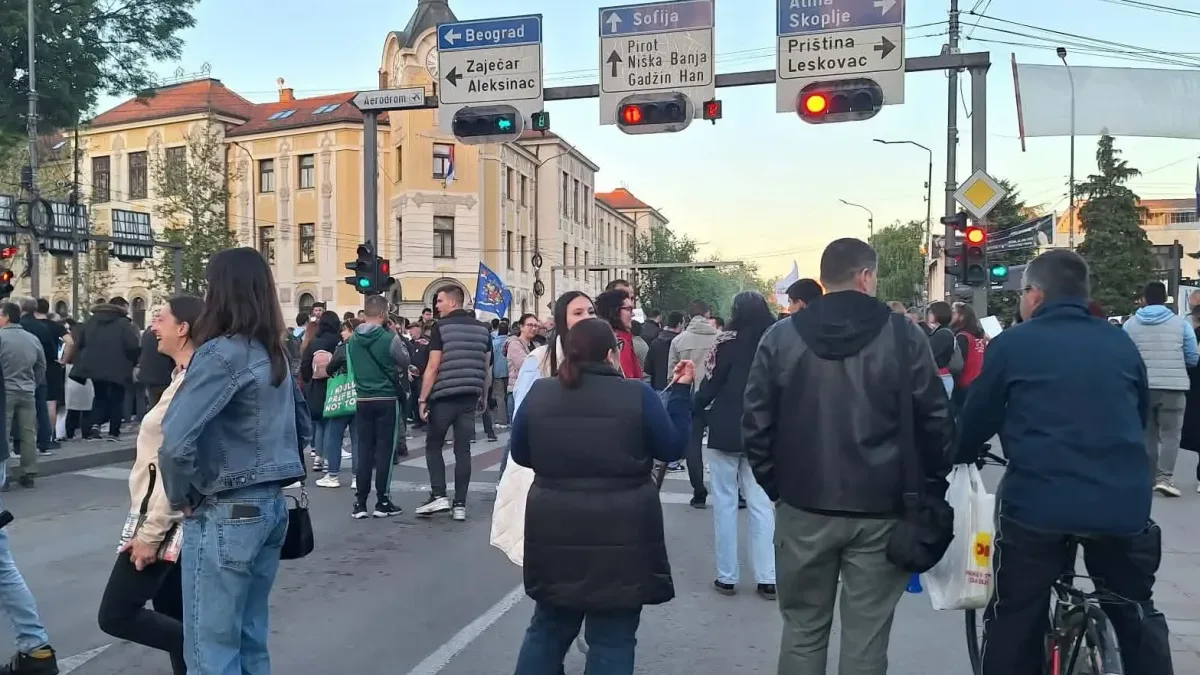
Students in blockade from Nis said that individuals and political groups are trying to use the Student List’s victory for personal and party interests, and announced that they will publish the names of those they have in mind “soon.” The portal Resetka carried the statement, titled “Who wins when students win?”, on November 4, and TV Zona Plus and Danas followed on November 5.
The statement names no one: no person, party or office. That is why the published reports contain no response from the people targeted, and since they were not named, none could have been requested.
What are the students saying about the support they received?
The student movement says the support that certain political actors freely gave the Student List during the election process was their own choice, not a stake placed in expectation of a reward. The movement also rejects claims by some political actors in Nis that a long-standing cooperation existed with them, and stresses that it is not a political party or anyone’s extended arm.
The students phrased the first message of the statement this way:
“We do not tolerate any attempt by individuals and groups to politically capitalize on the victory of the Student List, using it as an opportunity to pursue personal and party interests.”
The word opposition does not appear in the statement, which speaks of “certain political actors from Nis.” The opposition framing in Danas’s report comes from that paper’s headline.
Which staffing deals are at issue?
The students warn of attempts at bargaining, false representation and imposing staffing decisions, which in some cases, they say, also reaches into university autonomy. The statement describes no specific case.
On what exactly they will not allow, the students said in the same statement:
“The support that certain political actors freely gave the Student List during the election process does not constitute a political stake that entitles them to any kind of favor in return, political trading or appropriation of the results. We do not allow attempts at bargaining, false representation and imposing staffing decisions, which run contrary to the core principles of the Student Movement and, in some cases, to the autonomy of the university. Every such case will be reported to the competent authorities, and those responsible will be prosecuted in accordance with the law.”
The students, then, do not claim that anyone explicitly asked them for a favor. They close off in advance the possibility that anyone’s support could be cashed in, and promise to report every such case to the authorities.
Why did the statement appear now?
The sources differ on the trigger. Danas reports that the statement followed speculation on some Instagram profiles about the supposed makeup of the future city government in Nis. Resetka does not mention that detail, and the statement carried by all three newsrooms does not state it.
The most direct part of the message comes at the very end and is addressed to those left unnamed:
“We know, and you yourselves know who you are. The people will soon know too.”
The students then remind readers that the Student List received historic support, and with it great responsibility, and that they will not abandon the promises made to citizens. The movement says it was born out of a wish to return the state to its citizens, to free institutions from political influence and to make the law equally binding on everyone.
What happens next?
The students gave no deadline. They promise the names “soon,” which means the politicians they call out, if the movement does publish them, will get a chance to respond only then. Until that point, what remains is a statement in which the movement sets the standard by which it asks to be judged:
“We promised a state with different rules, not different rulers.”
The movement added that it sees its goal as a state in which, as they put it, “institutions serve the public interest, not the interests of individuals and political organizations,” and that it will not take justice into its own hands, because it has fought for justice and the rule of law since day one.