Russian Strike on Kyiv Kills 14 Ahead of NATO Summit
Russia fired 351 drones and 68 missiles at the Ukrainian capital overnight, the second mass strike in four days, as Kyiv runs short of interceptors.

- Russia fired 351 drones and 68 missiles at Kyiv overnight into Monday, killing at least 14 people in the city and three in the surrounding area.
- All 29 ballistic missiles hit their targets because Ukrainian defenses lack enough interceptors.
- The Podilskyi district was hit hardest, with damage recorded across four city districts.
- This is the second mass strike on the capital in four days, timed to a NATO summit that Donald Trump is attending.
For Serbia, which has spent a third year balancing its European ambitions against an open diplomatic channel to Moscow, every new wave of violence in Ukraine is not a distant headline, because the war’s continuation directly shapes energy prices, the Black Sea grain corridors and the security architecture of the continent where Belgrade is still seeking its place. Russia’s overnight strike on Kyiv, which killed at least 14 people in the city and three in outlying areas, sent a message legible even from Balkan capitals: the war is nowhere near an end, and Moscow chose the very moment when transatlantic partners gather to show that it holds the initiative.
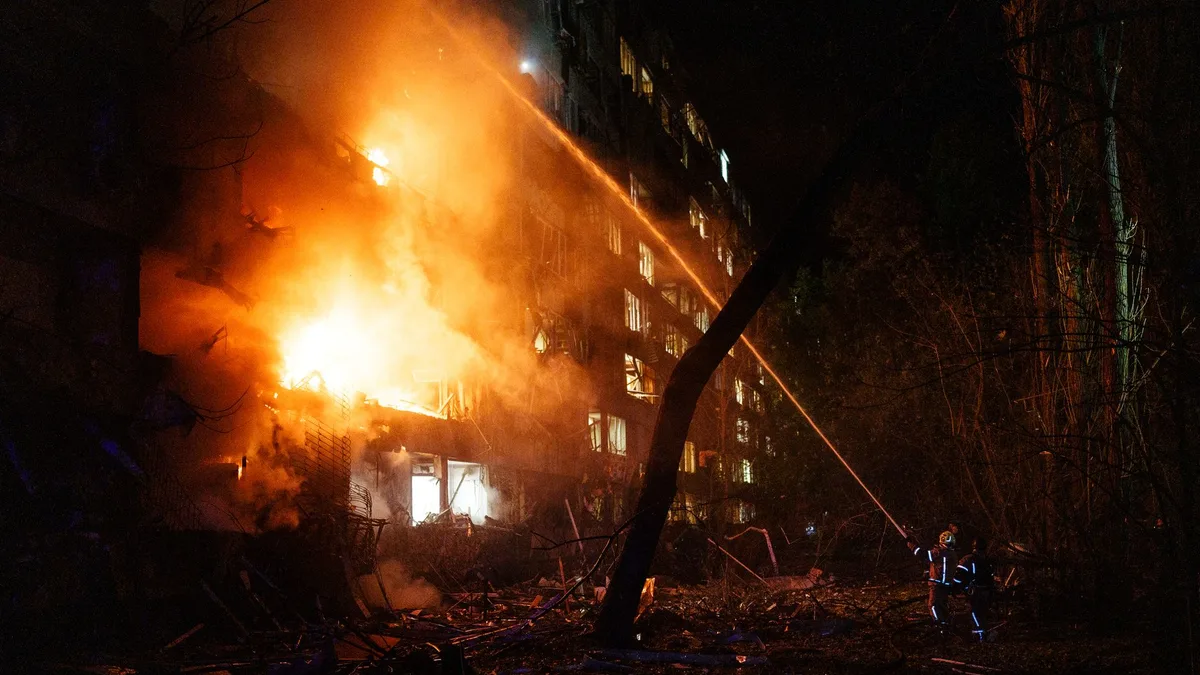
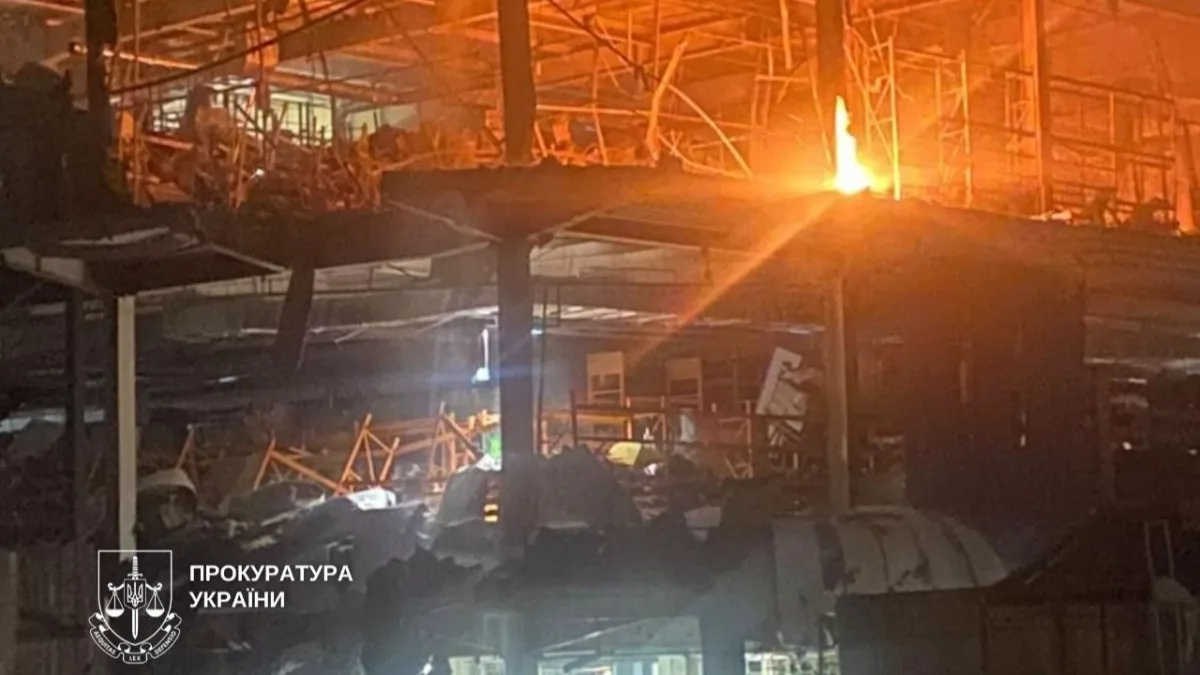
Ukrainian authorities said Russia launched 351 drones and 68 missiles during the night, in the kind of combined assault that Ukrainian air defenses are finding harder to intercept. The Podilskyi district took the worst of it, with damage across four city districts where rescue crews spent hours pulling people from the rubble of residential buildings. Dozens were wounded, children among them, and the death toll may shift, as it usually does with strikes of this scale, as the debris is cleared.
A city short of interceptors
The figure that most alarms Ukraine’s leadership is not the total number of projectiles launched, but the fact that all 29 ballistic missiles struck their targets. Unlike slower drones and cruise missiles, ballistic missiles can only be brought down by advanced systems, and Kyiv openly admits its stock of interceptors is running low. This is a structural problem that no single delivery can solve: without a steady flow of air-defense munitions from Western stockpiles, the Ukrainian capital remains exposed to precisely the class of weapon against which improvised fixes do not help.
The attack comes just four days after the July 2 strike that killed around 30 people, meaning Kyiv has been turned into a target for mass bombardment twice in under a week. The shrinking gap between strikes suggests Moscow is not easing off but accelerating, betting that grinding down Ukrainian defenses and civilian morale will yield the political concessions it cannot win on the front line.
What does Moscow’s message mean for Europe and Serbia?
The timing is not incidental. The strike was carried out on the eve of a NATO summit that US President Donald Trump is attending, at a moment when the Alliance is once again weighing how long the West is prepared to fund Ukraine’s defense. The signal from the Kremlin is plain: while allies gather around the table, Russia can still pick its targets and its tempo, and the interceptors on the other side are missing. For European capitals, that turns the debate over ammunition and air-defense systems from a technical matter into a test of credibility.
Belgrade watches this dynamic from a distance, but not from the sidelines. The war’s continuation keeps pressure on energy prices, slows the region’s stabilization and deepens the gap between the sanctions regime the European Union expects and the political calculus Serbia pursues. The longer strikes of this intensity last, the narrower the room for neutrality becomes. Does Europe have the political will to give Kyiv the shield it plainly lacks, or will the next mass strike find the city just as exposed?