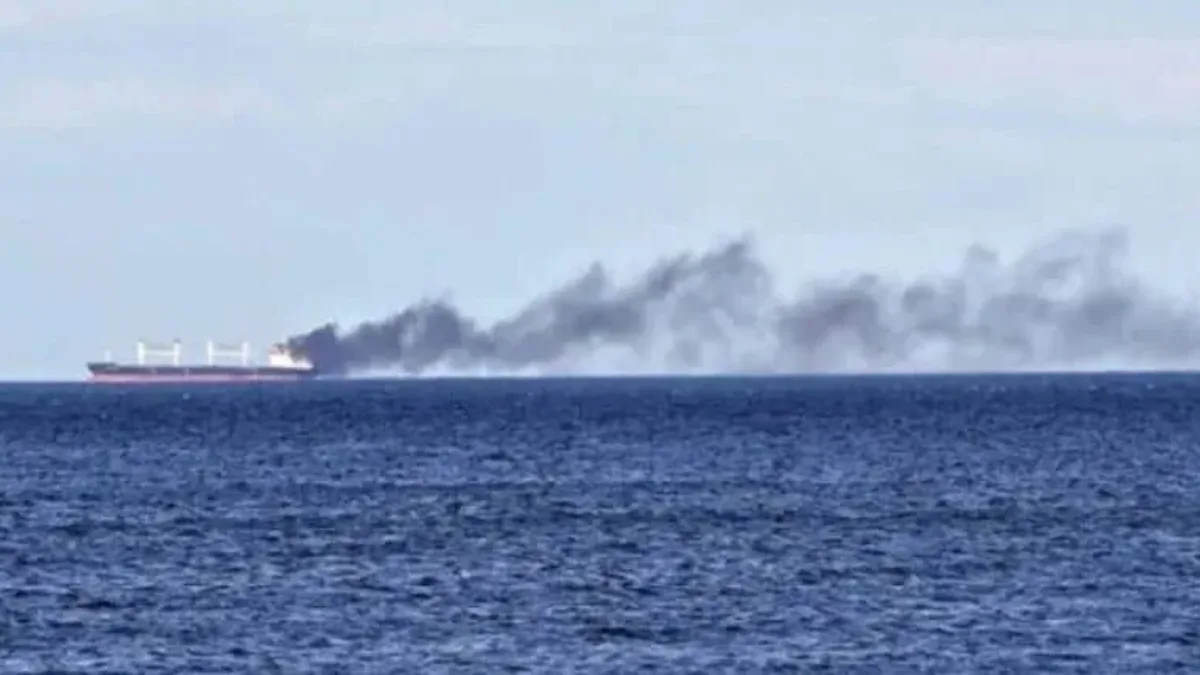
Ukraine drones hit Russian refineries and nine shadow tankers
In a single night, Kyiv struck the heart of Russia's war economy: refineries in Saratov and Nizhnekamsk are burning, a Transneft pumping hub was hit, and nine shadow-fleet tankers were damaged on the Azov and Black seas.
- Ukrainian drones struck refineries in Saratov and Nizhnekamsk, plus a Transneft pumping hub near Ufa, in one night.
- Kyiv's General Staff says nine tankers of Russia's shadow fleet were hit on the Azov and Black seas.
- At least one person was killed and several wounded in Saratov, the regional governor confirmed.
- Estimates suggest Ukrainian strikes have knocked out roughly a quarter of Russia's refining capacity.
The war that Serbia follows with particular attention, because the price of fuel across the continent hangs on Russian oil and its transport routes, entered a new phase on the night of July 7 to 8, one in which Kyiv is no longer aiming at the front but at the wallet that funds it. Long-range Ukrainian drones struck refineries, an oil-pipeline hub and a fleet of tankers all at once, in a coordinated barrage that reached several Russian regions and stretches of two coastlines.
Saratov region governor Roman Busargin said one person was killed and several wounded in the attack on the local refinery, one of the oldest crude-processing plants in the Volga region and, because of its capacity, a standing target for Ukrainian planners. Thick black smoke rising over the plant, filmed from nearby buildings, became the visual summary of Kyiv’s new strategy this morning.
What exactly was hit in one night?
The targets went well beyond Saratov. According to Kyiv and Russian sources on the ground, the TAIF-NK refinery in Nizhnekamsk, Tatarstan, was also hit, while a Lyutyi-type drone damaged the Transneft-Ural pumping hub near Ufa, a node through which a significant share of Russian pipeline traffic flows. The Borisoglebsk military airfield was struck and caught fire, and bridges in the Belgorod region that Kyiv says were used for military transport were damaged as well.
The most sensitive part of the tally comes from the sea. Ukraine’s General Staff said nine tankers of the so-called shadow fleet were hit, a collection of vessels of murky ownership and insurance through which Moscow evades Western sanctions on oil exports. The strikes, the statement said, were carried out on the Azov and Black seas, in a belt that until now behaved like Russia’s rear rather than a war zone. If the figure holds, it is one of the most serious single blows to Russian energy exports since the war began.
Why does this reach the European market too?
The answer is simple arithmetic. By available estimates, Ukrainian strikes have over recent months disabled roughly a quarter of Russia’s refining capacity, pushing Russian exports increasingly toward crude oil and the fragile logistics of the shadow fleet. Every tanker taken out of service and every pipeline hub in flames means less supply on the world market, a variable Belgrade cannot ignore no matter how geographically distant the war appears.
Unlike earlier isolated incidents, this attack is concentrated and systematic: it targets the chain that links the wellhead, the refinery and the ship. By afternoon the Kremlin had not issued a consolidated damage report, itself telling, since official Moscow has in the past worked hard to portray such attacks as failures. European chancelleries have so far reacted with restraint, but diplomatic channels are already gauging how far a campaign like this will shift both sides’ bargaining position before autumn.
One question stays open, and it concerns every driver in the Balkans: how long can Russia’s war economy sustain a rhythm in which its refineries, hubs and tankers burn faster than it can repair them, and will consumers far from the front, as before, end up paying part of the bill?