Putin, Xi, Modi, Pezeshkian Meet in Bishkek for SCO Summit
The Shanghai Cooperation Organization opened a two day summit in Bishkek, bringing Russia, China, India and Iran together for the first time since the US and Israeli war on Iran began.

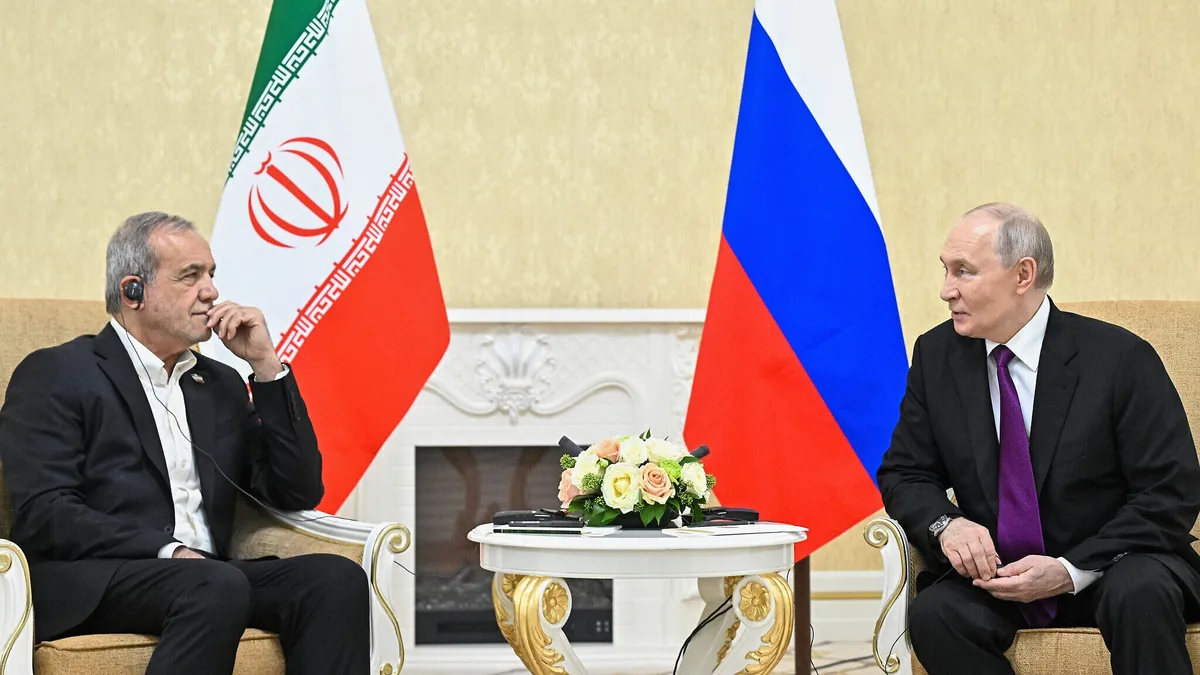
While Serbian diplomacy continues to balance talks with Brussels against its traditional ties to Moscow and Beijing, a two day summit of the Shanghai Cooperation Organization opened on Monday, August 31, in the Kyrgyz capital of Bishkek. The summit runs through September 1, marking the organization’s 25th anniversary. For the first time since the United States and Israel went to war against Iran, Russian President Vladimir Putin, Chinese President Xi Jinping, Indian Prime Minister Narendra Modi and Iranian President Masoud Pezeshkian are gathered in the same place.
Xi Jinping and Masoud Pezeshkian arrived in Bishkek on Sunday, while Vladimir Putin’s arrival was announced for Monday. Narendra Modi landed in the Kyrgyz capital on Sunday evening, where he was welcomed by Kyrgyzstan’s cabinet chairman, Adylbek Kasymaliev. The summit’s plenary session is being chaired by Kyrgyz President Sadyr Japarov, and Pakistani Prime Minister Shehbaz Sharif has also confirmed his attendance. Turkish President Recep Tayyip Erdogan is expected as well, even though Turkey is not a member of the organization. In total, around ten heads of state are expected in Bishkek.
Who Is in the Shanghai Cooperation Organization?
The Shanghai Cooperation Organization has ten full members: Russia, China, India, Pakistan, Iran, four Central Asian states and Belarus. Alongside them, the bloc counts 15 dialogue partners, including the United Arab Emirates, Saudi Arabia, Turkey and Egypt, as well as two observer states, Afghanistan and Mongolia. According to figures cited by news agencies, the organization’s members account for more than 40 percent of the world’s population and roughly a quarter of the global economy.
Kremlin spokesman Yuri Ushakov announced that Putin will hold separate bilateral talks in Bishkek with both Pezeshkian and Xi. His meeting with Modi will be their first face to face encounter since December 2025, when the two met at the annual India Russia summit in New Delhi. A separate Modi Xi meeting has not yet been officially scheduled, though the Chinese president is expected in New Delhi in mid September, for the BRICS summit on September 12 and 13.
Xi Jinping described relations between China and Kyrgyzstan as a “golden period,” while Beijing signaled that the summit should open a new chapter of cooperation within the bloc. The gathering is set to close with the adoption of the so called Bishkek Declaration, which is meant to set the Shanghai Cooperation Organization’s priorities for the period ahead.
Why Is Iran in the Spotlight?
The summit is taking place four and a half years after Russia’s invasion of Ukraine began, and six months after the United States and Israel went to war with Iran, factors that make this year’s gathering in Bishkek more politically sensitive than previous ones. Russia and Iran, two of the world’s most heavily sanctioned states, have significantly deepened their military and economic cooperation in recent years, and President Trump has previously warned Moscow and Beijing against arming Tehran.
For Iran, membership in the organization carries practical weight as well. International relations expert Mohammad Hassan Najmi assessed that Tehran sees alliances like this as a way to ease the pressure of sanctions.
“Iran believes that membership and active participation in these alliances can allow it to circumvent American and European sanctions.”
Najmi added that the bloc’s concrete benefits remain uncertain, since in times of crisis such alliances rarely allow Iran to actually resolve its own difficulties.
For Belgrade, which is neither a member of the organization nor a candidate for partnership, the Bishkek summit is above all a measure of how far Russia and China, two countries with which Serbia maintains close ties despite its EU integration process, are willing to build an alternative architecture outside Western institutions. How much of that bloc remains symbolic, and how much of it turns into concrete mechanisms, is a question the Bishkek Declaration, expected by the close of the summit on Tuesday, may help answer.