Brazil Election: Lula and Flavio Bolsonaro in First Round
Lula is seeking a fourth term, Flavio Bolsonaro leads the right, and polls see them almost tied. Polls close at 10 pm Central European Time.
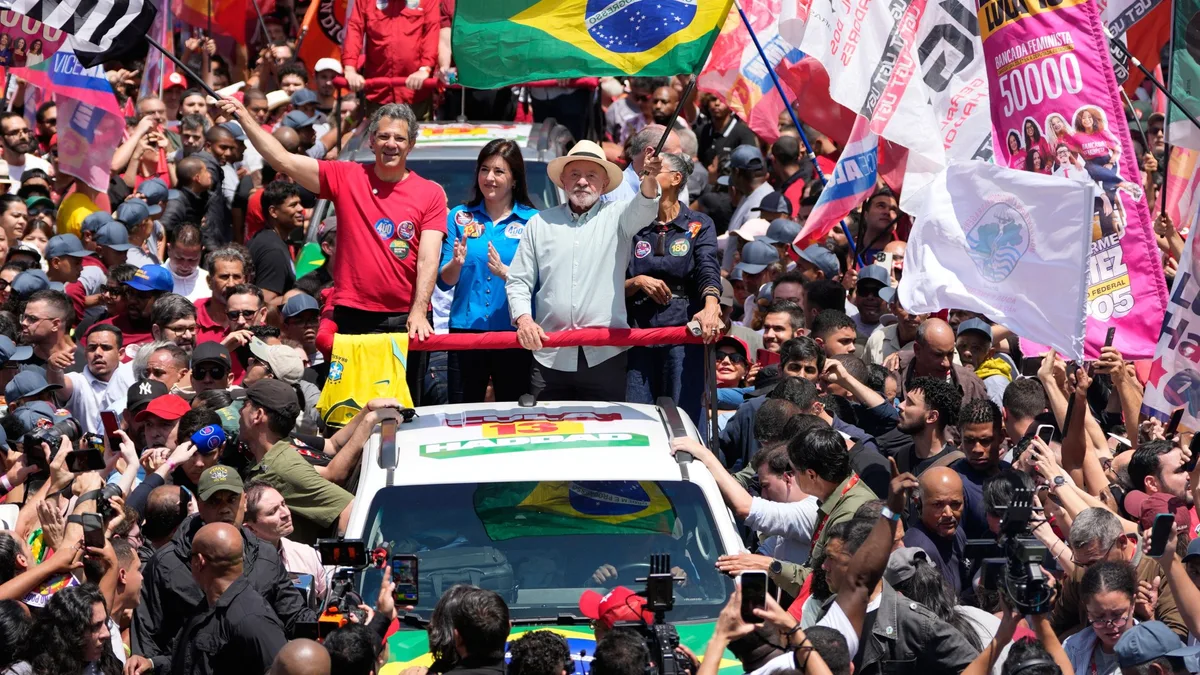
Brazilians vote for a president today, and for readers in Europe the clock matters: polls open at 1 pm Central European Time, close at 10 pm, and the first reliable results arrive only during the night. In the first round, on October 4, 2026, incumbent President Luiz Inacio Lula da Silva (80) of the Workers’ Party faces Senator Flavio Bolsonaro (45) of the Liberal Party. We previously reported on the US decision to suspend consular services in Brazil ahead of the vote, and Washington has since become one of the campaign’s flashpoints.
What is on the ballot, and how many votes does it take to win?
More than 158 million registered voters are eligible to vote. Al Jazeera puts the figure at almost 160 million. Brazilians are choosing:
- the president
- 27 governors
- 54 of 81 senators
- all 513 members of the Chamber of Deputies, as well as state legislatures
To win in the first round, a candidate needs more than 50 percent of valid votes, and blank and spoiled ballots are not counted. If nobody clears that bar, the top two candidates meet in a runoff on Sunday, October 25. According to the Rio Times, every Brazilian presidential election since 2002 has gone to a second round.
What do the polls say?
The latest Datafolha survey, from October 3, gives Lula 45 percent of valid votes and Flavio Bolsonaro 42, according to the Rio Times. In a simulated runoff the result is 47 to 46. A Quaest survey published the same day has it at 46 to 45. Neither poll puts either man close to the 50 percent threshold.
MercoPress cites an earlier Quaest survey, published on Monday: Lula 39 percent, Bolsonaro 34, and a runoff tied at 42 percent. Five percent of voters were undecided, and ten percent said they would vote blank, spoil their ballot or stay home. The remaining candidates, Augusto Cury, Ronaldo Caiado, Renan Santos and Romeu Zema, together hold about 12 percent, according to the same source. The Rio Times puts them at roughly 10 percent of valid votes.
Political scientist Leonardo Paz of the Getulio Vargas Foundation told Spain’s El Pais, as reported by MercoPress:
The vote has already crystallized for at least 80 percent of Brazil’s population; the question is what the remaining 15 or 20 percent will do.
Turnout could be decisive. Voting is compulsory, but in the 2022 first round about 21 percent of voters stayed away, the most since 1998. Analysts, MercoPress reports, warn that abstention could be higher this year and would hurt Lula most, since his support is concentrated among poorer voters who most often do not turn out.
How did the candidates close their campaigns?
Lula ended his campaign on Saturday, October 3, with a march through Sao Paulo. He told his supporters:
Tomorrow we will win the election in the first round.
Al Jazeera also reports that he described today’s vote as a choice between “democracy and barbarism” and warned of Washington’s “interference”. Donald Trump has not formally endorsed Bolsonaro, but has said he is watching the election “very closely”.
Flavio Bolsonaro rode in a motorcycle convoy through towns in the state of Sao Paulo, then spoke at a rally in Rio de Janeiro, where he held up a portrait of his father. His father, Jair Bolsonaro (71), is serving a 27-year sentence for plotting a coup after his 2022 election defeat. Flavio said:
I am confident that everything is ready for us to win this election in the first round.
Al Jazeera adds that he is under investigation over the financing of the film “Dark Horse” about his father, which was paid for by a jailed banker, and that he has promised to seek his father’s release if he wins.
According to Quaest’s September poll, voters’ biggest concern is violence (31 percent), followed by corruption (20) and the economy (19).
When will the result be known?
Official counting begins when the polls close. In Brazil, polling stations are open from 8 am to 5 pm Brazilian time, which is 1 pm to 10 pm in Central Europe. In 2022, about 97 percent of votes were counted by roughly 9:30 pm Brazilian time. The same pace tonight would mean 2:30 am Central European Time on Monday.