

Hormuz Stays Closed as Ghalibaf Demands Seven US Conditions
Mohammad Bagher Ghalibaf says the Strait of Hormuz will not reopen without seven conditions from the Islamabad memorandum, while Abbas Araghchi speaks of a seven-day window.
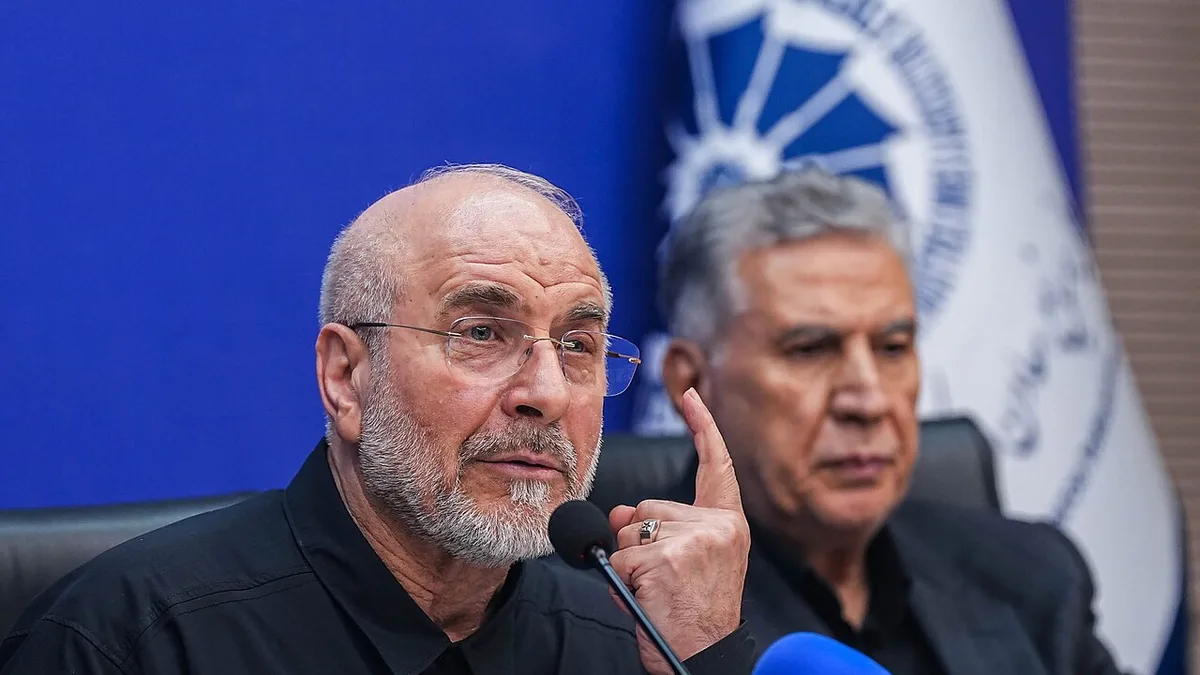
The Strait of Hormuz will not be reopened until seven Iranian conditions are met, Mohammad Bagher Ghalibaf, speaker of the Iranian parliament and Tehran’s chief negotiator, said on Sunday, October 4, 2026. The closed waterway is already shifting Europe’s energy market: the G7 agreed to release 100 million barrels of oil and diesel from reserves, and a former head of the oil markets division at the International Energy Agency said Middle Eastern diesel is not reaching Europe.
The statement was carried by Iran’s Nournews, and according to RTS, which cites the Tasnim agency, Ghalibaf repeated the same message to lawmakers at Sunday’s parliamentary session. The conditions are based on the Islamabad Memorandum of Understanding, an interim agreement between Iran and the US reached in June 2026 with Pakistan’s mediation.
What did Ghalibaf tell Washington?
Ghalibaf confirmed that the Americans sent new proposals through intermediaries, even though they say otherwise in public:
The Americans, who say something different in the media, recently put forward proposals through intermediaries. But they must understand that the period of dragging out the process and dictating unilateral demands is over.
He then laid out Tehran’s position, leaving no room to negotiate even the order of steps:
The position of the Islamic Republic of Iran is completely clear and firm, and the Strait of Hormuz will not be opened until our seven conditions, based on the Islamabad Memorandum of Understanding, are met.
Addressing lawmakers, Ghalibaf described American statements as “cognitive warfare”: one day the enemy presents itself as the side seeking talks, the next it threatens destruction. He also said how Iran makes its decisions:
We base our actions on the real behavior and conduct of the enemy, not on rhetoric and false dichotomies in the media.
What are the conditions, and where do sources differ?
The Maltese portal Newsbook reports that the conditions were relayed by Qatari mediators and include:
- an end to the war on all fronts
- the release of frozen Iranian assets
- the lifting of the US naval blockade of Iranian ports
- an end to American interference in Iran’s internal affairs
- an end to cooperation with Iran’s adversaries
- a halt to all attacks on Iranian territory
Newsbook speaks of seven conditions but lists six. Arab News and RTS list none, so the seventh condition cannot be established from the available sources. According to Newsbook, Donald Trump publicly rejected the Iranian proposal on September 26, 2026.
What did Araghchi say about the seven-day window?
Foreign Minister Abbas Araghchi told foreign ambassadors and diplomats in Tehran that, if accepted, the Iranian proposal would allow the strait to open within seven days. The conditions for reopening, he explained, are tied to obligations the US would have to accept. At the same time, he warned:
If they turn to military solutions again, we are more prepared than before and will do everything necessary to defend ourselves.
Iranian Foreign Ministry spokesman Esmaeil Baghaei said that reopening the strait is Iran’s main concern.
What is happening around the strait in the meantime?
The British maritime trade operations service UKMTO reported that a ship in the Strait of Hormuz was hit by a projectile from an unknown attacker, damaging the engine room. The time of the incident was not given, and the crew is safe, according to RTS.
American officials discussed next steps in the war with Iran at Camp David. Vice President JD Vance chaired the meeting, and Trump did not reveal what measures Washington will take. The Pentagon is also sending the aircraft carrier Theodore Roosevelt to the Middle East, where there are already two American carriers. The strike group carries more than 7,000 sailors and 2,000 marines, and its arrival is expected in November. It is unclear whether it will replace one of the existing carriers or reinforce American forces.
Iran’s parliamentary National Security Committee has drafted a bill that would bar ships of Israel and of countries Tehran considers hostile from passing through the strait. Other vessels would need a permit from the General Staff of the Iranian armed forces. We have reported before on the tankers that were hit and on the preparation of that law.
Moscow and Yemen
Dmitry Medvedev, deputy chairman of Russia’s Security Council, stayed in Tehran on the orders of Vladimir Putin and said trade between the two countries grew by more than 20 percent last year. On Russia’s stance toward Iran, he said:
We will never sacrifice our relations with the Islamic Republic of Iran, no matter what anyone asks of us.
The war is also spreading to Yemen. Forces of the internationally recognized government struck Houthi positions in Sanaa and announced reinforcements for Taiz province. The Houthis claim they hit the Aramco facility in Riyadh with ballistic missiles and drones, while Saudi coalition spokesman Turki al-Maliki calls that claim misleading.


