Sanchez calls snap election in Spain for November 29
In an address with no questions from reporters, the prime minister urged voters to mobilize, three days after Congress struck down two housing decrees. The regular vote was due in summer 2027.
Spanish Prime Minister Pedro Sanchez announced this morning, October 5, a snap parliamentary election for November 29. The decision came three days after the Congress of Deputies rejected two government housing decrees on Friday, October 2. The regular vote was not due until summer 2027.
For a Serbian audience, Spanish politics is not just somebody else’s domestic affair: Spain is among the European Union member states that have not recognized Kosovo’s independence, so its election cycle matters for Serbian foreign policy too. Sanchez has been in power since 2018, is 54 years old, and is among the longest-serving leaders in Europe.
What led to the decision to call an election?
The decrees fell on the votes of the Popular Party, Vox and the Catalan party Junts. The first would have extended protection from eviction to 2030, regulated seasonal and room rentals, barred investment funds from buying homes until 2028, and extended by two years any lease expiring before December 31, 2028. The second would have introduced automatic renewal of leases.
Both were drawn up after a wave of protests sparked by the eviction of 87-year-old Marikarmen Abascal, who could not pay a rent increase. Hundreds of people gathered outside Congress, many of them from a tent camp in Madrid’s Puerta del Sol square.
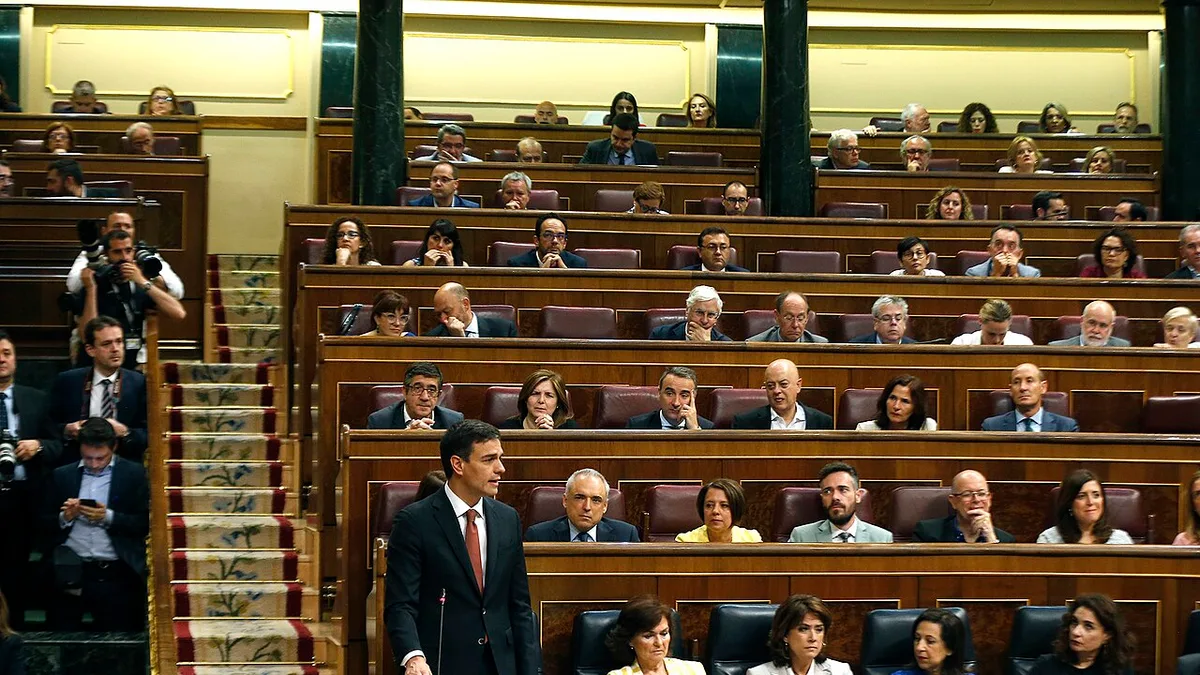
Before the vote, Sanchez took the floor with a last appeal to the deputies of the Popular Party, Vox and Junts. He urged them to be brave, warned that the damage to society would be enormous if the decrees fell, and added:
“History will judge you sooner than you think, and more harshly than you imagine.”
Junts stuck to its “no” vote even after Housing Minister Isabel Rodriguez offered to amend the texts and process them as a bill. Junts deputy Monica Sales replied to Catalan president Salvador Illa, who had called the Junts decision incomprehensible and irresponsible:
“It is incomprehensible and irresponsible to ask us to vote for bad decrees that would be a defeat for Catalans, just to avoid a defeat for the Socialist Party.”
Sources in the Socialist Party admitted before the vote that they saw the protests and the expected defeat of the decrees as an opportunity, and that November 29 was among the dates under consideration. Sanchez’s team insisted at the time that it was not considering that option for now.
What did the prime minister tell voters?
After two days of reflection and talks with party and government leaders, Sanchez addressed the public without taking questions from reporters. He said he had decided to convene an extraordinary cabinet meeting at which the election would be called, and that he had informed King Felipe VI. He thanked those who had backed the government:
“I want to thank the other parliamentary forces for their generosity, and thank the social majority that has shown the best of itself. I know that this majority is watching what happened in Congress with indignation.”
He accused the opposition of blocking measures that benefit the country and of using regional and municipal power to boycott policies. He also said he had had to work with a Congress in which, in his words, many “absurdly confuse reaching an agreement with betrayal, and obstruction with victory.” He called on voters to decide: “You, the Spanish people, must decide what role you want to play, whether you will join the far-right wave that brings regression wherever it governs, or whether you will make sure Spain remains a stronghold of social justice.” He asked for a parliament with a “much broader progressive majority” and for “broader popular support” for the government to be “renewed.” In the same speech he said Spain had become a “global example of peace, feminism and prosperity.”
How often does Spain hold elections?
This will be the sixth time in eleven years that Spaniards choose a new Congress. Since the 2011-2015 term, when Mariano Rajoy and the Popular Party were in power, no parliament has served a full term. The previous election was held on July 23, 2023. Sanchez lost it, but managed to secure a majority to form a government. Before that, voters went to the polls in November 2019, in a repeat vote after Sanchez’s failed attempt to be elected prime minister in July of that year.
The election date is November 29. The cabinet meeting at which the decision would be formally adopted has been announced, but its date has not been given.