Continental Reportedly Brought Lasivita, Blair to Banja Luka
Semafor reports that a Washington firm, paid $238,750 by the Republika Srpska government through August, helped bring Trump advisers to Bosnia before the elections.
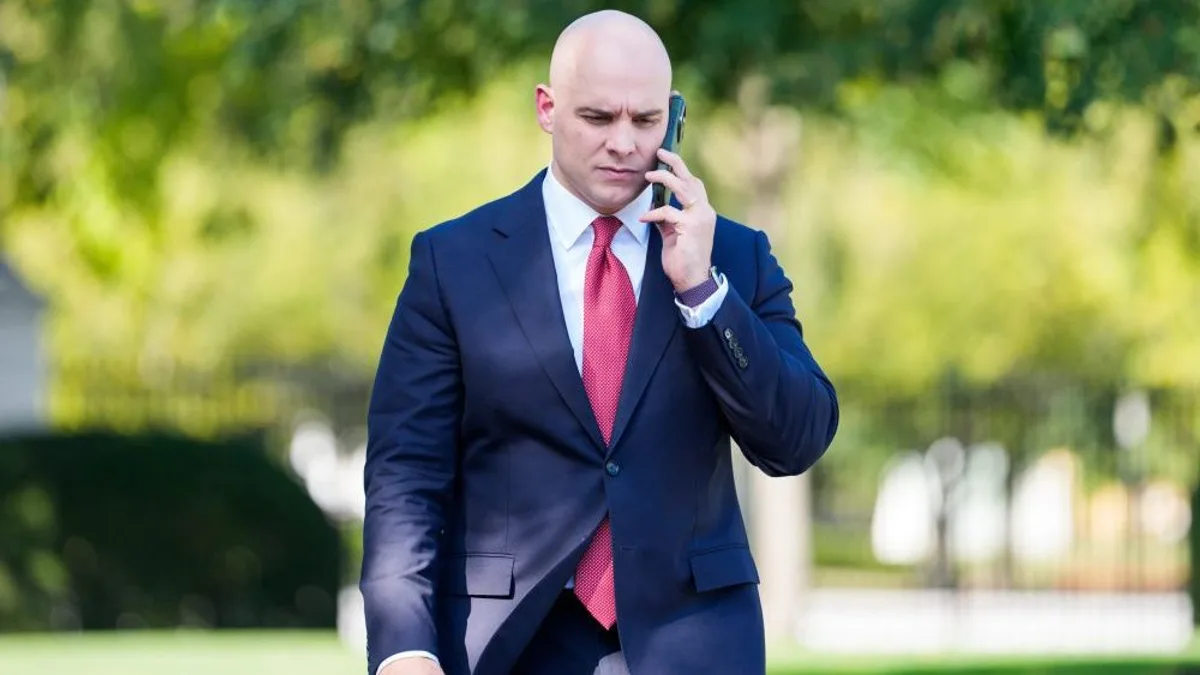
For the first time, the firm through which Chris Lasivita and James Blair, political and election advisers to US President Donald Trump, reached Banja Luka ahead of Bosnia and Herzegovina’s general elections on October 4 has been named. The amounts the Republika Srpska government paid for lobbying in Washington have also been made public. For the region, Serbia included, the question is who represents the Banja Luka authorities in the American capital and what it costs.
The Washington lobbying and law firm Continental (Continental Strategy) helped Lasivita and Blair travel to Banja Luka, the American outlet Semafor reports, citing three sources familiar with the trip. The visit came after Alex Garcia, a former Trump campaign aide who now works at Continental, contacted Lasivita. The two advisers stayed in Banja Luka for 48 hours. We previously reported on their advice to the Republika Srpska government ahead of the vote, and now it is clear who organized the trip.
What did Lasivita and Blair do in Banja Luka?
Sources disagree about the purpose of the visit. According to one of Semafor’s interviewees, they advised the Alliance of Independent Social Democrats (SNSD) and its leader Milorad Dodik. Several sources cited by the same outlet say otherwise: the engagement concerned election integrity, new ballots and equipment from the company Smartmatic, not political strategy.
A Continental spokesperson neither explicitly confirmed nor denied that the firm helped with the trip. He said Garcia was the firm’s only employee in Republika Srpska on election day and the only one who lobbied the US government on its behalf.
The New York Times was the first to report the visit, after which criticism emerged in the Republican Party that Trump’s advisers were not focused enough on the domestic campaign a few weeks before the American midterms. Trump publicly voiced displeasure with the trip on Wednesday. Two Semafor sources say he was not particularly harsh in private conversations, and two say he and Blair spoke by phone, which one of them described as a “good” conversation.
What does the FARA registry show?
The Republika Srpska government was registered as a Continental client in the US Foreign Agents Registration Act (FARA) database on February 16, 2026. The contract provides for $35,000 a month, and the firm is to arrange meetings and talks and build relationships with key figures in the executive and legislative branches of the United States.
According to two semiannual reports, a total of $238,750 was paid through the end of August: $28,750 on February 26 and six payments of $35,000 between April and August. All payments are recorded as consulting services. The report for the period through the end of February describes the activities as discussions of the history and political climate in the region, without “political activities.” The August report adds investment in critical minerals and resources to the same description, and the activities are reported as political activity for the first time.
Five in-person meetings were reported, all with the same stated purpose, “building US-RS relations”:
- May 3 and June 7 with Walker Barrett, a White House adviser
- June 22 with Jared Agen of the National Energy Dominance Council
- July 15 and August 5 with Richard Walters, a senior adviser
Besides Garcia, Carlos Trujillo, the firm’s founder, also works for Republika Srpska. Both have been linked to Republika Srpska in the filings since February 11, 2026. A White House official confirmed to Semafor that Garcia also organized the recent meeting between Susie Wiles, the head of Trump’s cabinet staff, and Zeljka Cvijanovic, a member of the Bosnian Presidency. Katie Wiles, Susie Wiles’s daughter, also works at Continental. The firm says she was in Republika Srpska in August for a feasibility study for an American company.
The published amounts cover the period through August 31, so the early October visit is not included. How much was paid since then will be shown by Continental’s next semiannual report, for which no date has been given. Semafor also notes that the Republika Srpska government has signed lobbying contracts worth at least nine million dollars since Trump’s inauguration.
What is the Society for Threatened Peoples demanding?
The Society for Threatened Peoples (GfbV) on October 9 called on the European Union and its member states to impose targeted sanctions on Dodik and his circle and to examine the ties between people close to Trump and the authorities in Republika Srpska. The statement cites American media reports that Lasivita and Blair allegedly received several hundred thousand dollars each ahead of the elections, through a Washington law firm hired by the Republika Srpska government.
The Society’s director in Bosnia and Herzegovina, Belma Zulcic, said in the statement:
“The EU must not overlook the fact that Trump’s close political advisers work for the government of Republika Srpska and that Dodik credits Trump with his party’s election success. It must state unequivocally that the sovereignty, territorial integrity and constitutional order of Bosnia and Herzegovina must not be the subject of political deals or economic interests.”
She added: “The European Union must draw conclusions from these ties and shape its policy toward Bosnia and Herzegovina independently of Washington.” Her demand is specific: “Targeted EU sanctions and a consistent review of European financial and investment relations are now needed.”
US sanctions on Dodik and related individuals and companies were lifted on October 29, 2025, as confirmed by a notice from the US Office of Foreign Assets Control (OFAC). According to the Society, the United Kingdom, Germany and Austria introduced measures, while EU sanctions were not imposed. If a joint decision is blocked, the organization asks Germany and other member states to coordinate and expand national measures.
The Society singles out the planned Southern Gas Interconnection, worth about $1.7 billion according to the statement’s estimate. In its words, the key role in the project should go to the American company AAFS Infrastructure & Energy, led by Joseph Flynn, brother of Trump’s former national security adviser Michael Flynn, and Trump’s former lawyer Jesse Binal. The organization also relays accusations by Democratic members of the US House of Representatives that the Trump administration used political influence in favor of that company, and that Michael Flynn was a paid lobbyist for Republika Srpska in 2025.