Srebrenica Dismisses Faruk Djozic Over Mladic Post
Srebrenica's municipal assembly dismissed the head of its General Administration Department over a post about the death of Ratko Mladic. Djozic plans to appeal and says the case will end up in court.
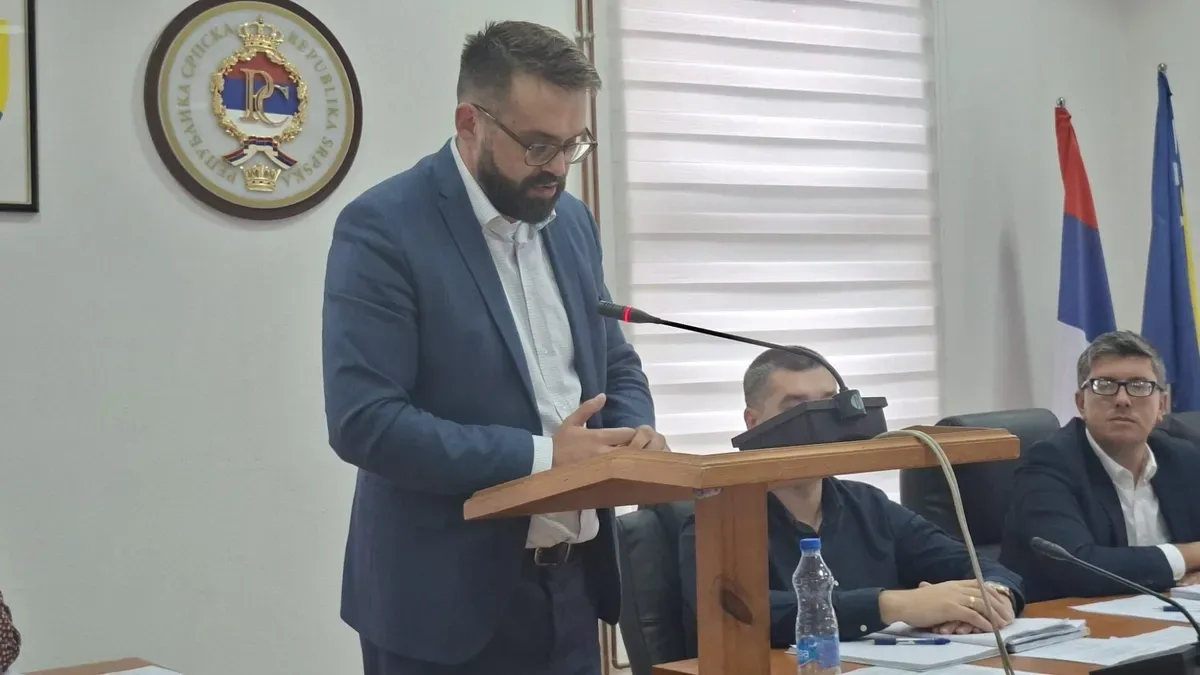
The fallout from the death of Ratko Mladic, who was buried on September 7 at Belgrade’s Topcider cemetery in the presence of officials from Republika Srpska and Serbia, has reached the local administration in Srebrenica. The Srebrenica Municipal Assembly dismissed Faruk Djozic, head of the General Administration Department, over his social media posts. On October 9 he announced an appeal and said the decision to remove him would end up before a court.
Who demanded the dismissal and what was said at the session
The initiative to remove Djozic came from representatives of the Organization of Families of Captured and Fallen Fighters and Missing Civilians of Srebrenica municipality. RTRS reports that they were not allowed to attend the session. The assembly justified the dismissal by citing inappropriate and insulting posts about the death of a convicted war criminal. At the session it was stated that Djozic, by referring to General Ratko Mladic in derogatory terms on social media, had also insulted the Serb people and must therefore face consequences.
Councillor Milos Milovanovic told the session what, in his view, the offending phrase was:
“Calling the commander of the Army of Republika Srpska a ‘dead dog’ is something the Serb people in Srebrenica could not forgive. Faruk Djozic said it in the crudest possible way.”
Councillor Radomir Pavlovic linked the decision to the wider dispute over wartime suffering after the vote:
“The message after this decision to dismiss the department head is that we should find a way to move forward into the future, given the demographic collapse Srebrenica has suffered. There are topics on which Serbs and Bosniaks cannot agree, and those are above all the topics of war crimes and suffering. Until the same yardstick is applied to everyone, you will have this same policy in Srebrenica, because Serb victims are not recognized and the continuity of the suffering of the Serb people goes on. That is why the policies remain the same.”
The statements available to the newsroom do not say how many councillors voted for the dismissal and how many against.
What does Djozic say in response to the dismissal?
Djozic argues that the decision is political and has no legal basis. “Here, I can freely say, this is political persecution, because I am a lawyer and I know what decisions were made, and that it has nothing to do with law or statute,” he said. He added that it was an attempt at “disciplining Bosniaks here in Srebrenica” and that he will not apologize for his view of a convicted war criminal.
According to him, the dismissal decision identifies no breach of work duties, and the disciplinary procedure required by the code the decision cites was never carried out, apart from sweeping accusations. He also announced his next step:
“I will continue my fight, especially after such a violation and such legal acrobatics and violence. Of course, I will file an appeal and my outcome, whatever it may be, will end up in court.”
Djozic also rejects the claim that he insulted the Serb people. “I have lived in Srebrenica for 15 years and there has not been a single incident, not the slightest interethnic incident. Now someone is imputing that I am calling out or attacking Serb victims, and I will really not allow that,” he said. He sees the dismissal as an inversion of responsibility: “If certain structures say for years that the genocide against Bosniaks is a ‘false genocide’, a ‘false narrative’ or a ‘myth of genocide’ and there are no sanctions for that, then the question is why I, as a Bosniak, immediately face sanctions.”
The post that led to his dismissal has not been removed from his profile, RTRS reports. According to that broadcaster, Djozic added that he does not believe he would change his view even if he could turn back time:
“I cannot turn back time but even if I could, I do not believe I would change my opinion of him.”
In a Facebook post carried by N1, Djozic wrote that as a surviving victim who lost 27 family members in the genocide, he had “a moral, human and civic duty to oppose a narrative that glorifies the architects and instigators of our suffering.” He ended the text with a question addressed to readers’ consciences:
“Did the finally convicted war criminal Ratko Mladic inflict a greater insult on me, by killing 27 of my relatives and thousands of my compatriots, or did I insult him by calling him a derogatory name in a Facebook post?”
Djozic is a lawyer and a father of three, and he returned to Srebrenica in 2011. “I returned to Srebrenica, I live and work here and I will keep living here,” he said, adding that he has no intention of giving up his life in the town.
What does the municipal leadership say and what is the background to the dispute?
Deputy Mayor Hamdija Fejzic believes the assembly’s decision sends a message that Bosniaks do not have the same rights as other citizens. “We do not expect a reaction from higher institutions in Bosnia and Herzegovina, because this is not the first time that dismissals aimed at Bosniaks have happened. I have had at least three dismissals similar to this one and nobody could do anything,” he said. He also warned about the consequences for returnees: “If we now have a situation where Mladic is protected and Djozic is dismissed, then the question arises what kind of society we are.”
Mladic, the former commander of the Main Staff of the Army of Republika Srpska, was finally convicted on June 8, 2021 and sentenced to life in prison, among other things for genocide in Srebrenica, persecution of Bosniaks and Croats, and terrorizing the citizens of Sarajevo. He died on August 27, 2026 in the detention unit of the International Residual Mechanism for Criminal Tribunals in The Hague. Several thousand citizens, veterans, police officers and members of right-wing organizations gathered at the funeral in Belgrade.