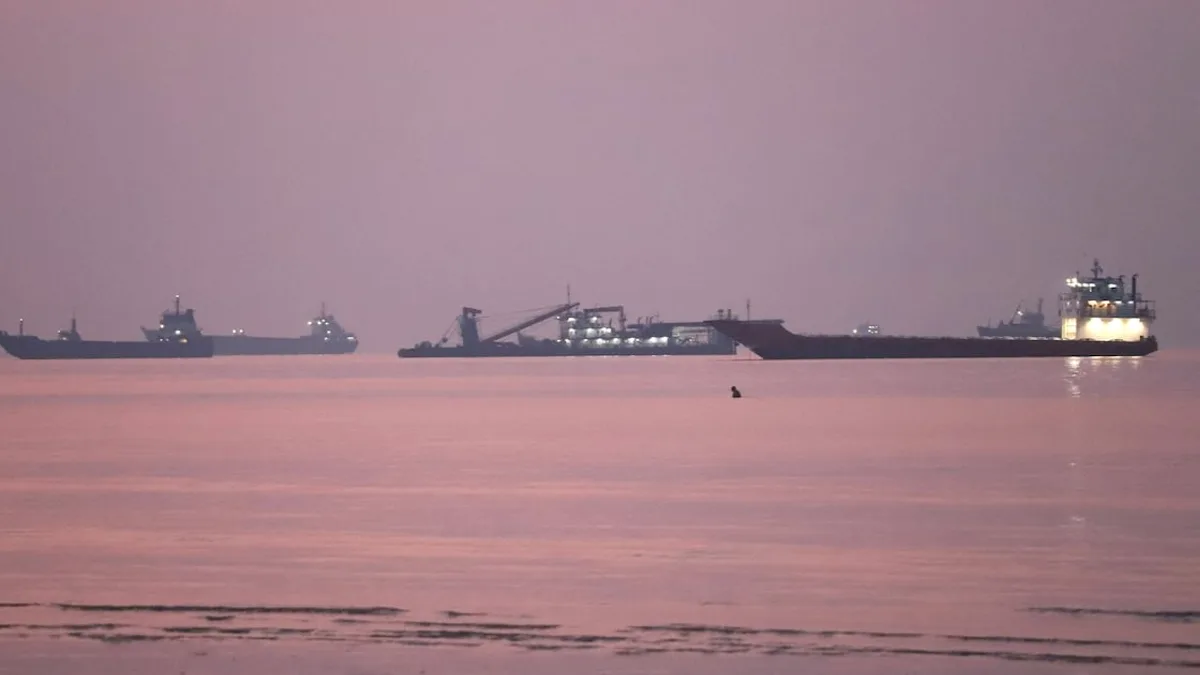
Fire at Aramco HQ in Dhahran as coalition hits Sanaa oil
Saudi Arabia's Energy Ministry confirmed a fire at an Aramco administrative building, while sources disagree on whether it was a direct hit or debris from an intercepted missile.
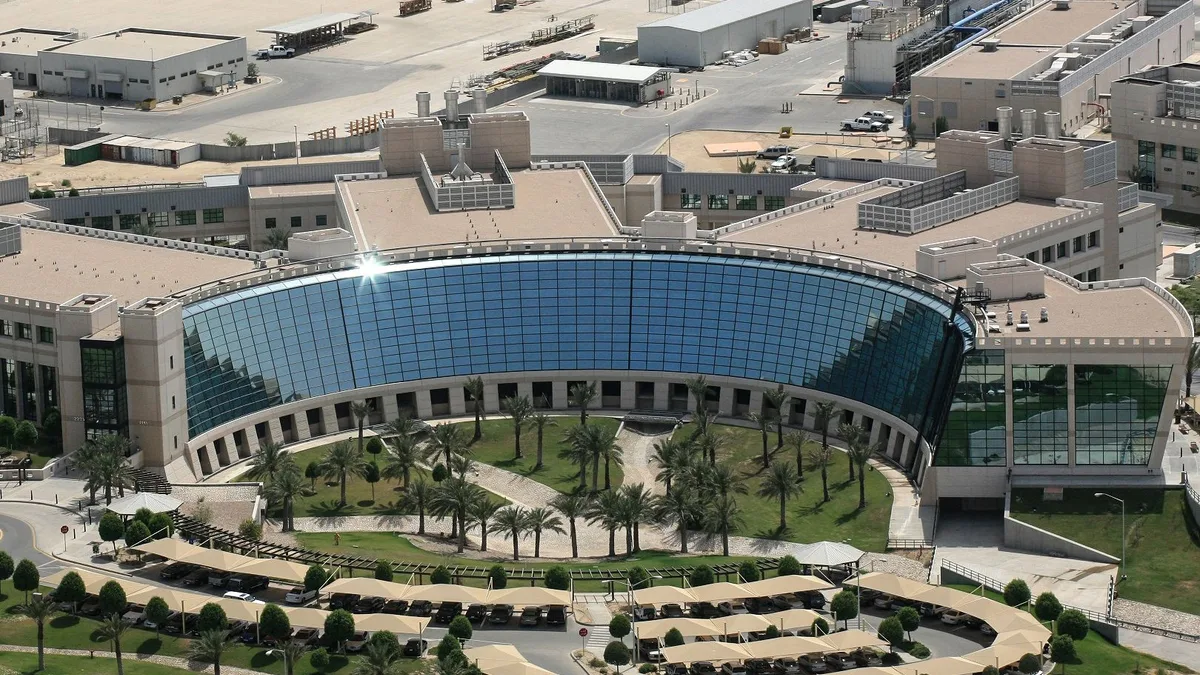
Brent, the benchmark oil price that also feeds into fuel prices in Serbia, rose 0.5 percent to $106.2 a barrel on Wednesday, October 14, and the reason is concrete: on Tuesday evening a fire broke out in an administrative building of the Saudi Aramco complex in Dhahran, in Saudi Arabia’s Eastern Province, while Yemen’s Houthis were firing missiles at the same region. The Saudi Energy Ministry said through the state news agency SPA that the fire was contained and that there were no injuries or deaths. Sources do not agree on what caused it.
Was Aramco’s headquarters actually hit?
Not established so far. People familiar with the matter told Bloomberg that the company’s headquarters was hit during a missile attack and that the fire has since been put out. The same agency adds that it could not immediately be determined what caused the fire, or whether the impact came from debris of intercepted projectiles. The extent of the damage was also unclear.
The Saudi-led coalition offered a third version. According to its statement, two Houthi ballistic missiles were intercepted and destroyed, one fired at Dhahran and the other at Harad in the same province, and fragments of an intercepted missile fell on a residential area of Dhahran. Al Jazeera writes that authorities responded to a fire “caused by an attack,” while the US network CBS reports only that a limited fire broke out in the building. For that reason this article does not claim a direct hit.
Dhahran is the heart of the kingdom’s oil economy: it is home to Aramco’s headquarters, a petroleum engineering university and a large air base, and Saudi Arabia’s biggest oil fields lie in the desert of the Eastern Province and in the Persian Gulf.
Sanaa came first
The sequence of events runs like this. On Tuesday the coalition ordered civilians to leave the central station of the Yemen Petroleum Company at al-Sabah in Sanaa, which the Houthis have held for more than a decade. Houthi military spokesman Yahya Saree immediately threatened a response on X:
“Any strike on the capital Sanaa will be met with a harsh and painful response in the capital of the Saudi enemy, Riyadh.”
Saree also urged employees and civilians near all Aramco facilities to evacuate, calling them legitimate targets, and named specific targets: the headquarters in Dhahran, King Khalid airport in Riyadh and an Aramco-linked refinery in Riyadh. Witnesses then heard explosions in Sanaa, and Houthi-aligned media reported that an oil facility in the al-Sabah area had been hit.
The coalition confirmed strikes on oil facilities in Sanaa, Dhamar and Saada. Its spokesman, Major General Turki al-Maliki, accused the Houthis of using al-Sabah and its underground fuel depots to store missiles and drones. According to Al Jazeera correspondent Yousef Mawri, tanks at the port of Ras Isa and an oil station in Hodeidah province were also hit. The Yemen Petroleum Company says its storage was empty and that the strike will not affect reserves or supply, but witnesses reported lines of cars at petrol stations in Sanaa amid fears of shortages.
Riyadh, airports and the casualty count
The same day, fragments of two intercepted Houthi missiles fell on residential neighborhoods of Riyadh. According to Saudi Civil Defense, four people were injured, including two women, a man and a child, and 15 houses were damaged. The coalition also said it intercepted three drones north of Riyadh.
In an earlier article on the attack on Riyadh’s airport we reported 12 dead. Al Jazeera and CBS now put the toll at 13 killed in Saturday’s strike on King Khalid airport, with more than 300 injured according to Al Jazeera. The overall toll of the wave of attacks differs from source to source: Bloomberg cites at least 18 dead and hundreds injured, while CBS counts at least 20 killed over the week.
The consequences are practical, too. King Khalid airport is closed until October 17, and the US State Department requires government employees to have special approval from the chief of mission to use any Saudi airport. Air France-KLM, Air India, Etihad, Lufthansa, Delta, Gulf Air and Qatar Airways have suspended flights to Saudi Arabia and neighboring countries. Two regional officials told the Associated Press that Riyadh is investigating why its defenses failed to intercept so many missiles and drones.
Washington, Ankara and the humanitarian cost
US President Donald Trump reacted on Truth Social: “The Houthis are behaving very badly.” Speaking to reporters on the South Lawn of the White House, before leaving for Alaska, he would not say whether the US would join Saudi strikes: “I can’t tell you that.” Asked whether he would ask Turkish President Recep Tayyip Erdogan to help Saudi Arabia, he said he might do so and added:
“President Erdogan would, I think, do what I ask him.”
Saudi Crown Prince Mohammed bin Salman spoke by phone with Erdogan the same day. According to a statement from the Saudi Foreign Ministry, Erdogan expressed condolences over the attacks on civilian targets. Ankara, Riyadh and Islamabad signed a joint defense agreement in August under which an attack on one country is treated as an attack on all. The Saudi government, headed by bin Salman, said the Houthis will bear “consequences,” and IMF Managing Director Kristalina Georgieva warned at a meeting in Bangkok that the attacks could have negative effects “everywhere.”
International Committee of the Red Cross President Mirjana Spoljaric said civilians across the region are bearing the brunt:
“In Yemen the scale of death, displacement and damage to civilian infrastructure, including Aden and Sanaa, is rising at an alarming rate. Across the Middle East, civilian infrastructure has been hit repeatedly and people have lost their lives.”
According to United Nations figures, at least 46 civilians have been killed in Yemen since August, more than 130 have been injured, and more than 200,000 people have been displaced since September.
What the market is pricing in
On the market, Brent rose to $106.2, and US crude WTI gained 0.6 percent to $94.7. Traders are weighing whether new attacks on Saudi targets would threaten production or exports, while the prospect of larger Russian diesel exports somewhat eases fears of a fuel shortage. The risk is not theoretical: Bloomberg points out that the refinery in Jazan in the west of the country has been shut since an earlier attack, that a key Red Sea export port was also targeted, and that the cross-country pipeline, Aramco’s main route for sending oil to the world market, was temporarily halted last month after an attack from Iraq.
The first date to watch is October 17: until then, under a decision by Saudi aviation authorities, King Khalid airport remains closed to traffic.