Glamocic Plans Subsidy Changes, Farmers Threaten Protests
Dragan Kleut of the Banat farmers' association says growers hit by drought cannot afford fuel, and the 17,000 dinar per hectare seed subsidy has not been paid.

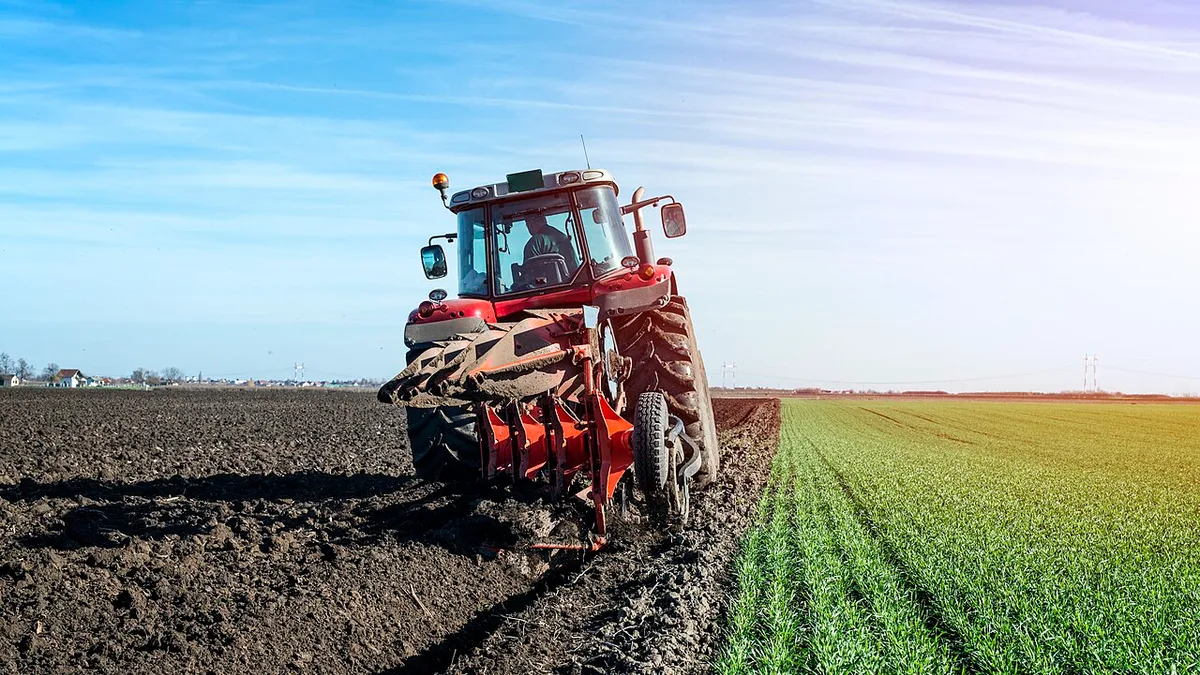
The seed subsidy of 17,000 dinars per hectare (~145 EUR) has still not been paid, and sowing has already begun, Dragan Kleut, president of the Banat Farmers’ Associations Union, said today. Kleut told the Beta news agency that farmers will take to the streets if Agriculture Minister Dragan Glamocic changes subsidy amounts outside the law. After a dry summer and poor yields, growers say they have no money even for fuel, and that the soil is dry and hard to work.
What did the minister announce about subsidies?
Glamocic said two days ago that the payment calendar for subsidies will be kept, but that not everyone in crop production will receive money in equal measure. Somewhat more will go to those growing more intensive crops, meaning fruit, vegetables, flowers and medicinal herbs, as well as to livestock farmers, while wheat and corn producers would get less. The minister justified this by saying “Whoever pays more tax, it is logical that they get more incentives,” but he did not explain how much each group would receive.
Kleut says this is a novelty introduced just as farmers are waiting to be paid. In his words, Glamocic “has again come up with new rules so that those who pay more tax get more.” Kleut sees the cause of this policy in the minister’s incompetence or bad intent, though he says he believes more in bad intent, because the minister cannot possibly be unaware of production costs.
What does Kleut tell the minister?
The president of the Banat union disputes the minister’s right to change amounts set by law:
“Who is Glamocic to change the amount of subsidies that are set by law. There is enormous dissatisfaction among farmers, who will organize protests in the streets if Glamocic carries out this idea illegally”
Kleut compared the situation with Croatia: farmers there received extra drought aid of 80 euros per hectare (~9,400 RSD), while in Serbia, he said, even the basic subsidies already provided for have not been paid. The optimal window for sowing wheat, he added, begins in these days and lasts until the end of the month.
How do producers from Macva and the Stig association describe the situation?
Goran Vasic, president of the Macva District Milk Producers’ Association, says he could not work the land for oilseed rape, and that meteorologists, by his account, are not forecasting rain for the next two months. Vasic is also angry about the 100,000 dinar (~853 EUR) incentive for first-calving cows, which the minister, as he puts it, scrapped of his own accord. According to Vasic, that measure was agreed two years ago, when Aleksandar Martinovic was minister and Milos Vucevic was prime minister, to support cattle breeding. Vasic also claims the Ministry tried to abolish it last year but backed down under pressure.
His main complaint is that the minister picks measures without asking producers:
“They talk about dialogue. Where is the dialogue. By what model will Glamocic pay out the subsidies. I farm 100 hectares of land, so surely someone should ask us too what agriculture needs, instead of Glamocic changing the adopted rules himself and then people asking why there are no results in agriculture”
Vasic also rejected the minister’s explanation for the fall in milk prices. In his telling, Glamocic says the same thing as the dairies, that the price is falling because there is more milk on the market than needed, and his answer is: “Well, let them reduce milk imports.” To the claim that livestock numbers are falling, Vasic replies that a cow needs three years to be raised, calve and start giving milk.
Nedeljko Savic, president of the “Stig” farmers’ association, gave up on oilseed rape because the soil is so dry that the seed would not sprout. He is preparing the land for wheat, but says it is going slowly, even though about nine liters of rain per square meter fell recently, which he considers insufficient. He took on debt for inputs and plans to repay it from products after the next harvest, which forced him to set aside a smaller quantity of wheat and sunflower as a reserve.
What comes next?
Kleut’s protest threat is conditional: the streets come into play only if subsidy amounts are changed outside the law. Glamocic has not specified how much farmers would receive compared with fruit, vegetable and livestock producers, so the amounts the associations cite are tied, for now, only to existing measures. We previously wrote about the tender for wells, in which the state pays up to 80% of the cost, with an October 16 deadline.