

Autumn Sowing: Kleut Says 90% of Fields Not Tilled
The head of the Banat farmers' association says sowing is late, the second part of the 17,000 dinar per hectare subsidy is unpaid, and disputes the statistical office's harvest estimate.
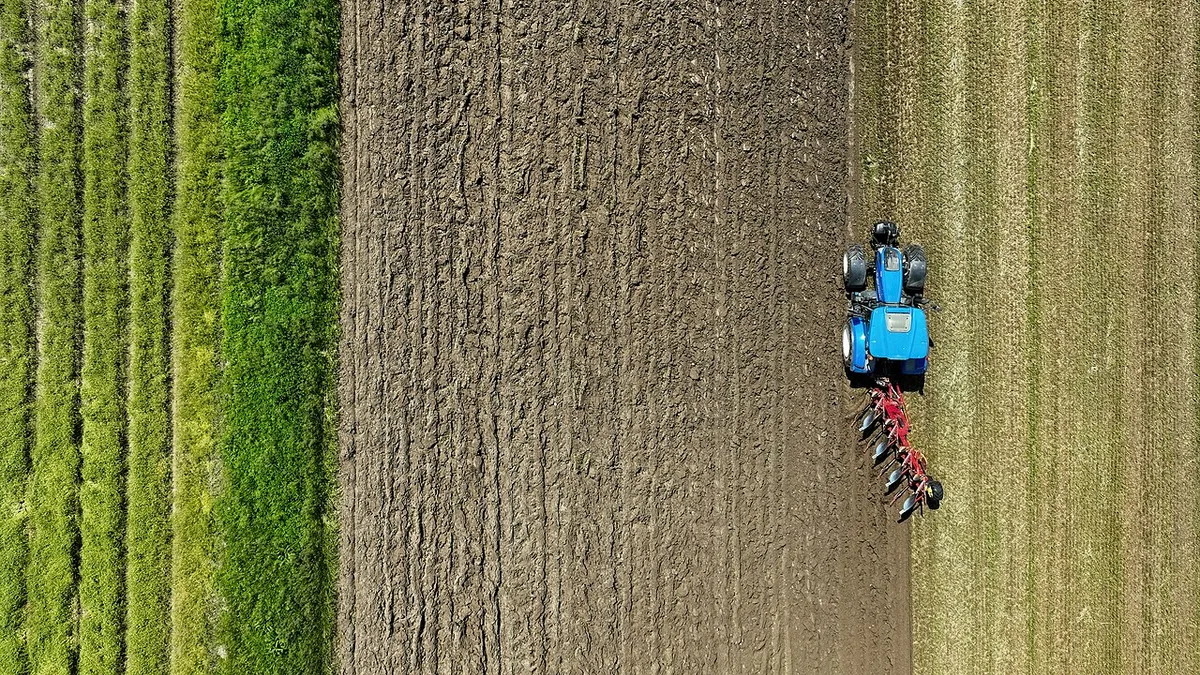
Dragan Kleut, president of the Association of Farmers’ Unions of Banat, says 90 percent of fields remain untilled ahead of autumn sowing, two weeks before the optimal window closes. He made the statements to Biznis.rs, which published them on October 11, 2026.
Kleut points to weather and money as the causes. “The optimal sowing window lasts until October 25, and the weather is not on our side because of a catastrophic drought,” he told Biznis.rs. He added that “we still haven’t had adequate rain before sowing, and we don’t have enough money to carry it out.” He described the state of the fields briefly: “The weather conditions are catastrophic too, 90 percent of fields have not been tilled and nobody is sowing anything.”
What about the second part of the 17,000 dinar subsidy?
Kleut says the second part of the crop production subsidy, 17,000 dinars per hectare (about 145 euros), has not yet been paid. According to him, the ministry is announcing a cut to that amount, which he assesses this way: “The minister is announcing a reduction of the second part of the 17,000 dinar subsidy, which directly threatens the country’s food security.” The Biznis.rs report does not name the minister, and it contains no confirmation from the ministry.
Miklos Nadj, president of the Union of Agrarian Associations of Vojvodina, mentioned a similar amount. On September 18 he told the Beta agency that Agriculture Minister Dragan Glamocic had not given a payment date for the 17,000 dinar seed subsidy, which under the payment calendar should arrive in September and October. “Glamocic said he would do everything to make the payment as soon as possible, but without a specific date,” Nadj said. The ministry did not answer Beta’s question about when payments begin, and Nadj’s statement says nothing about a cut. The two reports do not establish that they concern the same payment, so that is not claimed here.
How big is the harvest: the statistical office sees growth, Kleut a drop
The Republic Statistical Office (RZS) estimates, based on crop conditions on September 5, that wheat production will reach 3,966,000 tons, which is 7.7 percent more than last year and 31.8 percent above the ten-year average. For corn the office expects 4,760,000 tons, 12 percent more than in 2025 but 20.5 percent below the 2016 to 2025 average. Soybeans show a drop of 9.5 percent, and sugar beet a drop of 21.7 percent.
Kleut disputes those estimates. “As for wheat, it yielded 50 percent less this year than last year,” he said, adding that in his view the office’s statistics do not match the situation in the field. For sunflower the office calculates growth of 1.8 percent, while Kleut says the yield in Banat, Backa and Vojvodina is 30 to 50 percent lower, with planted area 10 to 15 percent larger. In September Nadj told Beta about a sunflower yield of 700 to 800 kilograms per jutro (about 0.58 hectares) in Banat. The two sources thus disagree on the harvest, and nothing in this report settles the dispute.
On fruit growing, Kleut says producers with irrigation “can produce something,” while for smaller operations without irrigation it is a “debacle.” “We haven’t had a proper rain since spring,” he said. For the same period the RZS estimates plum production will be up 109.2 percent and apples up 43.1 percent from last year.
Prices: wheat cheaper, fertilizer dearer
Kleut singles out costs as a second problem. Basic artificial fertilizer has, by his account, risen from about 60 to about 85 dinars per kilogram, an increase of around 42 percent. Diesel at the pump costs 237 dinars per liter, and farmers get rebated fuel at 175 dinars.
Wheat was bought this year at 20 to 21 dinars per kilogram, while 15 years ago, Kleut says, it reached 24 dinars, with fertilizer at about 40 dinars and a liter of diesel at about 75. By his figures, a kilogram of wheat once bought about 0.6 kilograms of fertilizer, and today it buys about a quarter of a kilogram. “It is impossible to survive in a production where all inputs get more expensive and your product gets cheaper from year to year,” he said.
For sunflower, producers have no final purchase price, and advance payments have ranged from 40 to 50 dinars per kilogram. “The price of sunflower in the region is 580 euros a ton, and nobody is offering that price yet,” Kleut said. That amounts to about 68 dinars per kilogram at an exchange rate of roughly 117 dinars to the euro. In September Nadj said the purchase price in Serbia was 48 dinars per kilogram and in Hungary 58.


