Gas at 76 euros, Serbia holds 707 million cubic meters
Markovic: gas is the most critical energy source, and power prices follow it. The minister cites a record 707 million cubic meters of gas in reserve.
Serbia is heading into winter with gas at about 76 euros per megawatt-hour, or roughly 780 euros per thousand cubic meters, two to three times the level before the energy crisis. Dubravka Djedovic Handanovic, the caretaker minister of mining and energy, said at a regional energy summit in Belgrade that the country also holds a record 707 million cubic meters of gas in reserve. Energy expert Zeljko Markovic gave RTS the price figures and the comparison with the crisis, while the volumes and the European winter were addressed by Jelica Putnikovic, editor of the Energija Balkana portal, and Nenad Radicevic, RTS correspondent in Germany.
These statements do not measure the same risk. The quantity of gas is one question, and the price at which it is bought, which also pulls electricity prices up, is another. The speakers differ precisely along that line.
Why does gas also set the price of electricity?
Markovic explains that gas-fired power plants, because of the cost of the fuel they burn, pull the price of electricity upward. In his words, gas is not yet at the record levels of 2022, but it is two to three times higher than before the crisis.
“Gas is the most critical, but consequently electricity then goes along with those high gas prices,” Markovic said.
Electricity prices in recent days look like this:
- on European exchanges, between 180 and 220 euros per megawatt-hour
- in Serbia, about 195 euros per megawatt-hour
- in the evening peak hours, 400 to 450 euros per megawatt-hour
Markovic also spoke about the CBAM tax, which hits electricity exports from Serbia to the European Union. There has been no significant progress on resolving it so far, he said. The only shift is that the calculation no longer relies on lignite-based generation alone but on the national energy mix, including hydropower plants. The tax remains high enough that exporting power is, in some situations, not economically viable.
How much gas does Serbia have in reserve?
At the summit, the minister put the reserve at 707 million cubic meters and added that it is rising. Serbia consumes 3 to 3.5 billion cubic meters a year, so by our calculation the reserve equals roughly a fifth to a quarter of annual consumption. The minister described the situation this way:
“The situation ahead of the winter season is extremely critical and strongly reminds me of 2022, at least when it comes to prices, or the rise in energy prices. We are witnessing gas going above 780 euros per thousand cubic meters, a barrel of oil costing around 100 dollars, and the price of electricity ranging between 180 and 220 euros per megawatt,” Djedovic Handanovic said.
Putnikovic told RTS that Serbia will not have a problem with quantities:
“We have full gas storage at Banatski Dvor and what has been booked in Hungary. The arrangement with Russia was renewed the other day, so gas will be delivered. We will not have that problem,” Putnikovic said.
For power generation, she added, the country has enough coal in its stockpiles, and not all the water from available hydropower capacity has been used. New gas routes for coming winters will also be discussed.
How full are European storage sites?
European storage is about 72 to 73% full, Markovic says, well below the usual level for this time of year, when it was close to 90%. Radicevic cites the same level of about 72% for the European Union.
For Germany the figures differ. Radicevic says storage there is about 58% full, while Markovic puts it at a little over 50%. They share the conclusion that the winter will decide. Markovic warns about a combination of factors:
“If poor hydrology, a cold and dry winter and poor gas stocks combine, there could be bigger problems supplying gas to customers in Western Europe,” Markovic said.
Radicevic adds that some forecasts point to a warmer and windier winter, which would bring more electricity from wind farms and lower gas use in power plants.
“Other forecasts say that if the winter is not that warm, Germany could be in trouble with gas in January,” Radicevic warned.
What about oil and diesel?
Oil costs about 100 dollars a barrel. The G7 countries agreed to release up to 100 million barrels of diesel and crude oil from strategic reserves over the next four months. According to Radicevic, Germany has already released about 20 million barrels of diesel and France about 15 million. One of the two RTS texts we draw on gives tonnes instead of barrels, but the unit is the barrel, as Markovic’s comparison confirms: that amount is roughly one day of world consumption.
“It can help, but we must be aware that it cannot solve the crisis,” Markovic said about releasing oil from reserves.
We previously reported that Serbia is among the regional leaders in oil stocks, but the fuel market remains tight. In Germany, diesel sells at filling stations for 2.30 to 2.40 euros per liter, and on highways for about 3 euros. About half of the diesel arriving in Europe by sea comes from the United States. The minister warned that diesel prices in the Mediterranean have reached 1,370 dollars per ton. Putnikovic says there are no major diesel shortages at the moment, but that prices will stay high, and that the decision on the Oil Industry of Serbia (NIS) license has been postponed from month to month.
Which new supply routes are coming?
Markovic stresses that for a country dependent on gas imports, the most important thing is to have more routes:
“We depend on gas imports and it is good to have as many possible supply routes as we can,” Markovic said.
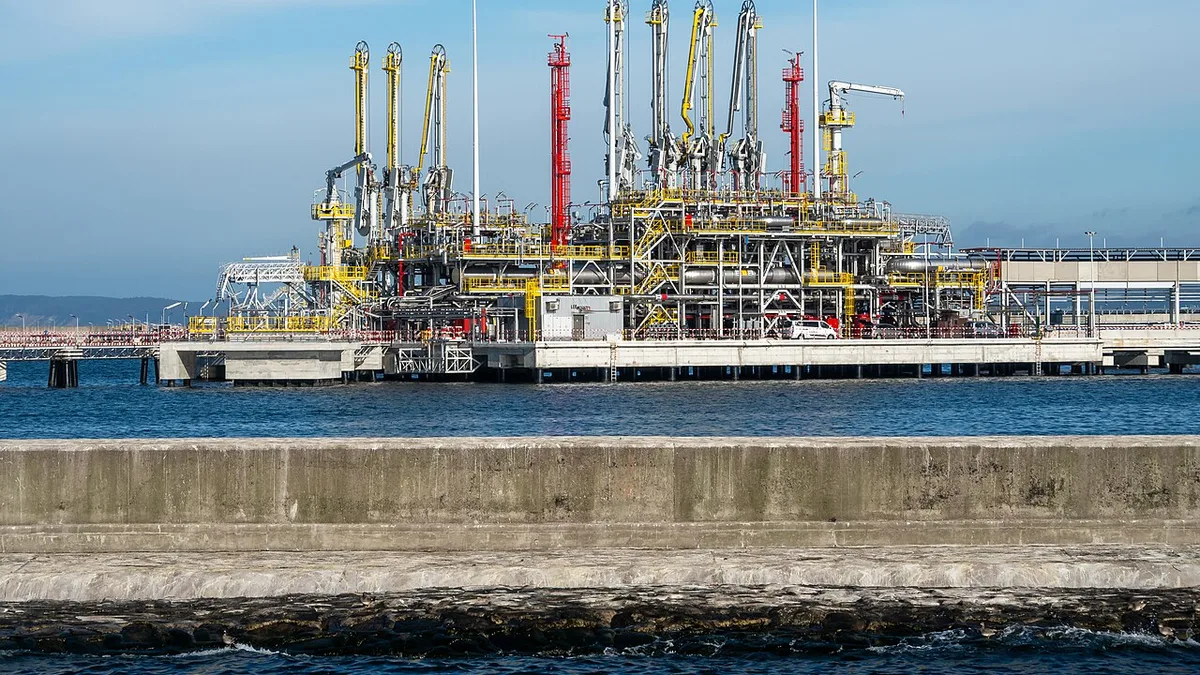
The link with Greece through North Macedonia, he says, opens access to liquefied natural gas from the terminal in Alexandroupolis, and gas can also arrive from the United States or North Africa, including Algeria. Markovic summed it up in one sentence:
“We have a choice of gas suppliers and therefore we do not depend on a single supplier.”
If the Greece and North Macedonia interconnector reaches the announced 9.5 billion cubic meters a year, that is many times Serbia’s annual consumption. The Serbian ministry said that this Greek export capacity is expected in 2027. Part of the gas could pass through Serbia to other European Union members, which would also bring transit revenue.
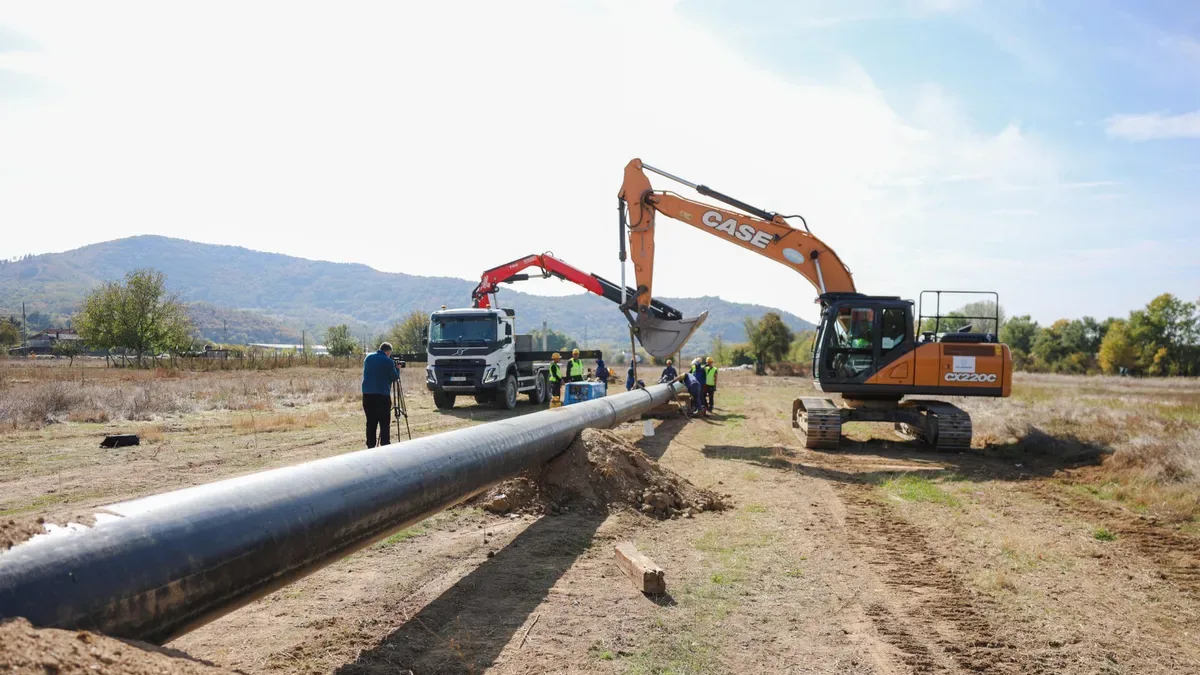
At the summit, Djedovic Handanovic announced that work on the interconnection with North Macedonia begins next week, near Vranjska Banja. The Serbian section should be finished in the first quarter of 2028, but that depends on expropriation, she said. North Macedonia plans to build its segment before the end of the same year. The Greek part of the corridor branch should be operating by the end of 2026 at the latest, and the North Macedonian link with Greece next year. North Macedonia currently has a gas interconnection only with Bulgaria.
Greek Minister of Environment and Energy Stavros Papastavru said Central Europe will need an additional 20 billion cubic meters of gas a year. Serbia and North Macedonia are also considering extending the pipeline from Thessaloniki to Skopje as far as Nis, and North Macedonian minister Sanja Bozinovska said her country is ready to take part in a feasibility study.