Anne Carson Wins the 2026 Nobel Prize in Literature
The Swedish Academy announced that Anne Carson, the Canadian poet, translator and university lecturer, is the winner of the 2026 Nobel Prize in Literature.
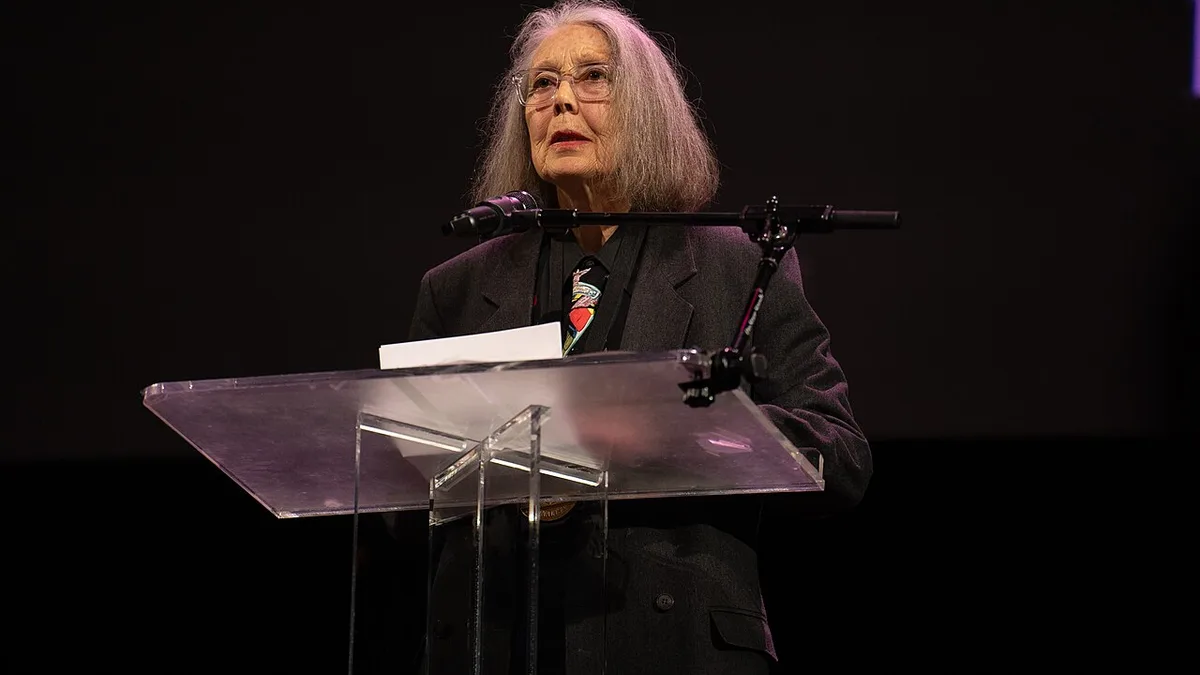
A Canadian author who has called etymology the starting point of all her work has received this year’s most important award in world literature. At a press conference on Thursday, October 8, 2026, at around 1 p.m., the Swedish Academy announced that the Nobel Prize in Literature goes to Anne Carson.
The Academy explained its decision in a single long sentence. Serbian media have rendered it with slightly different wording, so some write “new forms” and others “new shapes.” The Academy awarded the prize:
for a bold and innovative body of work that, in playful dialogue with the classical tradition, has created new forms for contemporary literature
Who is Anne Carson?
She was born in Toronto in 1950. Over her career she has written poetry and prose, worked as a translator and taught at several universities. Nearly everything she has written sits, as the descriptions put it, where a philologist’s obsession with words meets a poet’s drive toward new meaning, and she herself has named etymology as the starting point of her work. The Academy’s citation describes the same blend in other words, as a playful dialogue with the classical tradition.
The name did not come as a surprise. According to Danas, a few days before the announcement Carson was among the bookmakers’ favorites, along with the writers Can Xue, Haruki Murakami and Gerald Murnane. So the bookmakers got it right this time, which does not often happen with literary prizes.
What do we know about the prize and its laureates?
The Nobel Prize in Literature has been awarded since 1901, and nominations are kept secret for 50 years. The decision is made by the Swedish Academy, which has 18 members. Last year’s winner was the Hungarian writer Laszlo Krasznahorkai, honored, as the Academy put it at the time, for
his compelling and visionary oeuvre that, in the midst of apocalyptic terror, reaffirms the power of art
The two citations show how much the tone shifts from year to year: last year’s spoke of terror and of art as resistance, this year’s speaks of play and of a dialogue with tradition.
The youngest laureate so far is Rudyard Kipling, who received the prize in 1907 at the age of 41. The oldest is Doris Lessing, who was 87 when the prize was announced in 2007 and 88 when she received it. Sources disagree on her age, with some saying 87 and others 88, a result of the gap between the announcement date and the ceremony.