Nobel Chemistry 2026: Kagan and Soai for Mirror Molecules
A Frenchman and a Japanese chemist share a prize of 12 million kronor for work explaining how a chemical reaction can pick the left or right version of a molecule.
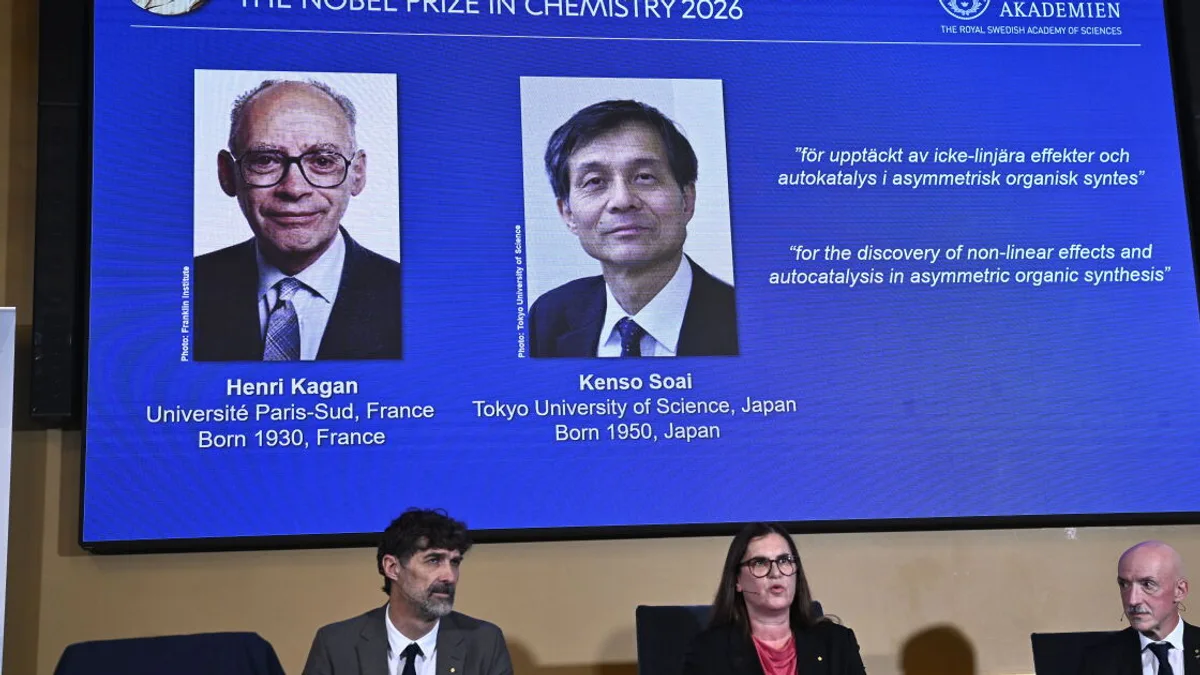
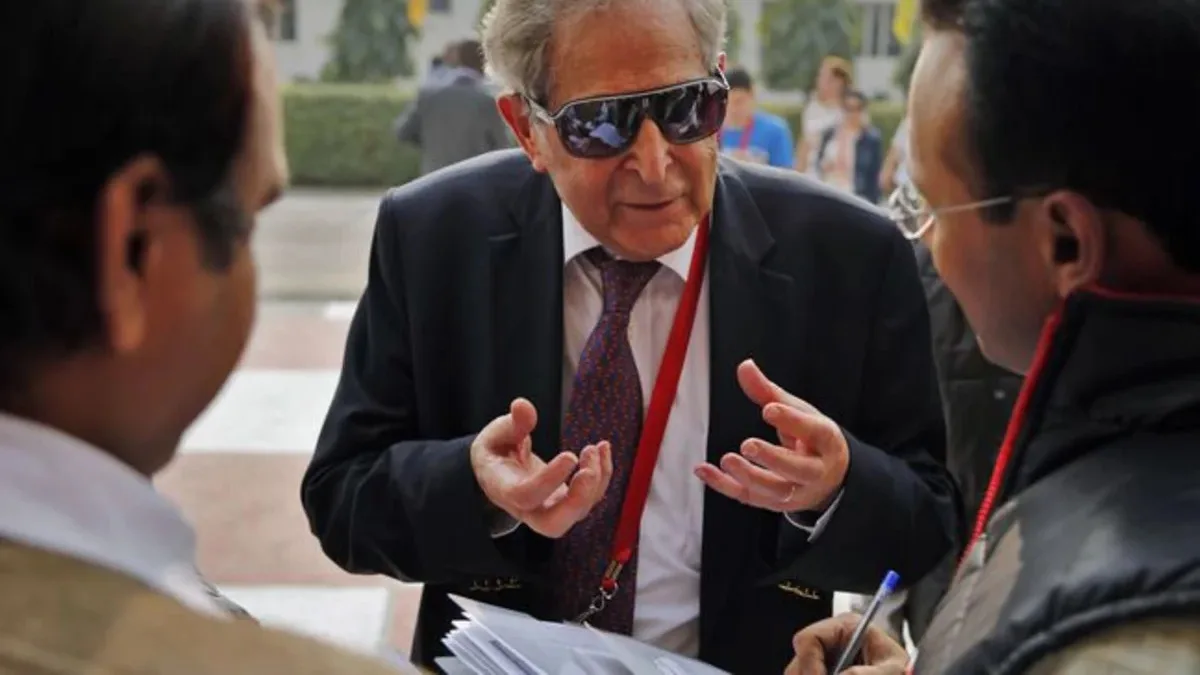
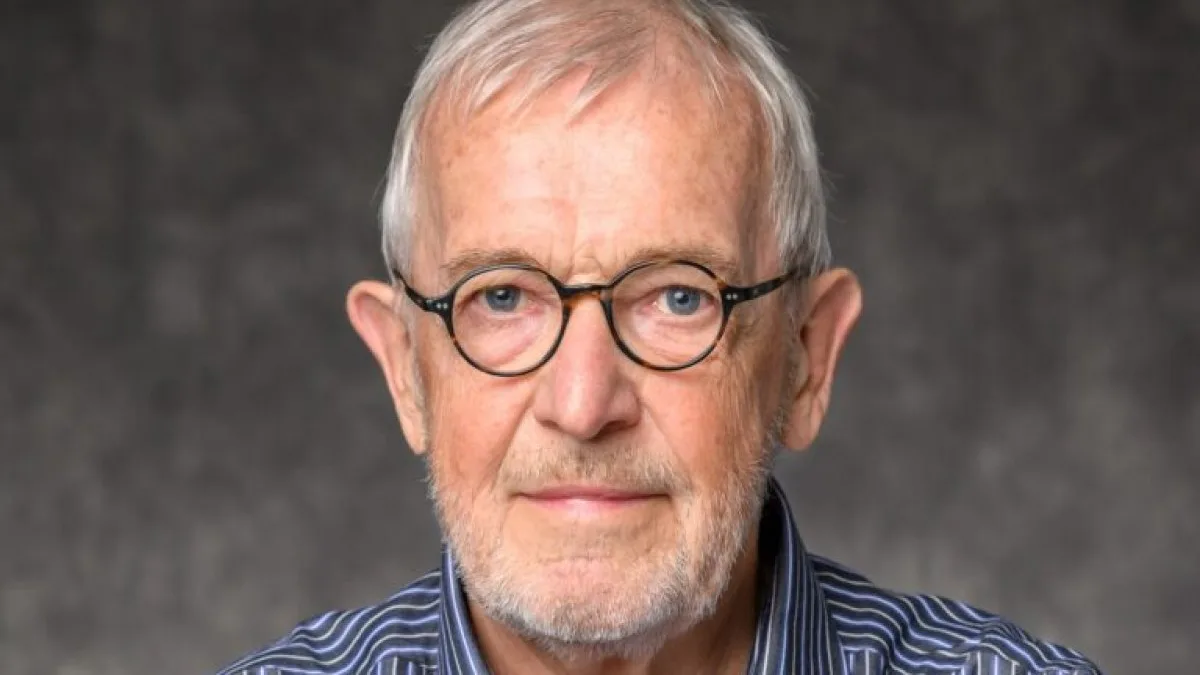
The 2026 Nobel Prize in Chemistry is shared by Henri B. Kagan of France and Kenso Soai of Japan. The Royal Swedish Academy of Sciences announced it in Stockholm on Wednesday, October 7, honoring the two chemists for discovering nonlinear effects and autocatalysis in asymmetric organic synthesis. Kagan is affiliated with Paris-Sud University in Orsay, and Soai with the Tokyo University of Science.
The prize is worth 12 million Swedish kronor, about $1.2 million, split between the laureates. The formal ceremony takes place on December 10. Chemistry is the third prize announced this week, after medicine and physics.
What is homochirality?
Many of the molecules of life come in two versions that relate to each other like a left and a right hand: they look the same, but they are not identical. Amino acids exist in both forms, yet the proteins in our cells contain only one. The other is rarely found in nature. This phenomenon is called homochirality, and the word chirality comes from the Greek word for hand.
You can even smell the difference. One mirror-image form of the compound carvone smells like spearmint, the other like caraway. When drugs are designed, it matters which version comes out.
The Academy says the puzzle is more than a century old. Heiner Linke, chair of the Nobel Committee for Chemistry, said in the Academy’s statement:
“Henri Kagan and Kenso Soai have offered a solution to a chemical mystery more than a century old: how homochirality can arise spontaneously. The chemical reactions they developed are spectacular.”
The same statement adds: “Their discoveries have been crucial for chemists designing reactions to produce drugs.”
What exactly did the two laureates do?
In the 1980s, Kagan showed that there might be a way to design reactions so that they yield more of one form of a molecule than the other. Years later, Soai built the first chemical reaction that produces only one of the two mirror-image versions. It is called the Soai reaction.
The Nobel Committee stated: “Apart from life itself, no one had achieved this before.” Committee member Peter Somfai told a press conference in Stockholm: “This is probably the coolest experiment in organic chemistry.”
Asked what this has to do with drugs, Somfai explained:
“It may be hard to say that this or that drug was developed with the help of this. I would say all of them, because we use this as a tool, as an understanding of how catalysts are developed and how they function.”
Rigoberto Hernandez, president of the American Chemical Society, said: “The drugs we have today would not be possible without this chemistry.”
The call from the Nobel Committee caught Soai shopping near his home. He told the committee and reporters by phone: “I am very excited to receive such wonderful news. Of course, this is one of the most exciting days of my life.”
What does this not tell us?
Neither the citation nor the statements from committee members tie the prize to one specific drug: Somfai said it is hard to single one out, because this chemistry is used as a tool in developing catalysts. Linke speaks about how homochirality can arise spontaneously, and the sources do not claim this settles how it arose in living organisms.
The laureates’ ages also call for care. The first version of the AP report attributed the age of 95 to Soai and was later corrected: Kagan is 95, while Soai was born in 1950 in Japan.
Literature is announced on Thursday, and the Nobel Peace Prize on Friday.