Halzen wins 2026 Nobel Physics Prize for IceCube neutrinos
The Royal Swedish Academy of Sciences honored the University of Wisconsin-Madison physicist for the idea of turning a cubic kilometer of Antarctic ice into a neutrino detector.
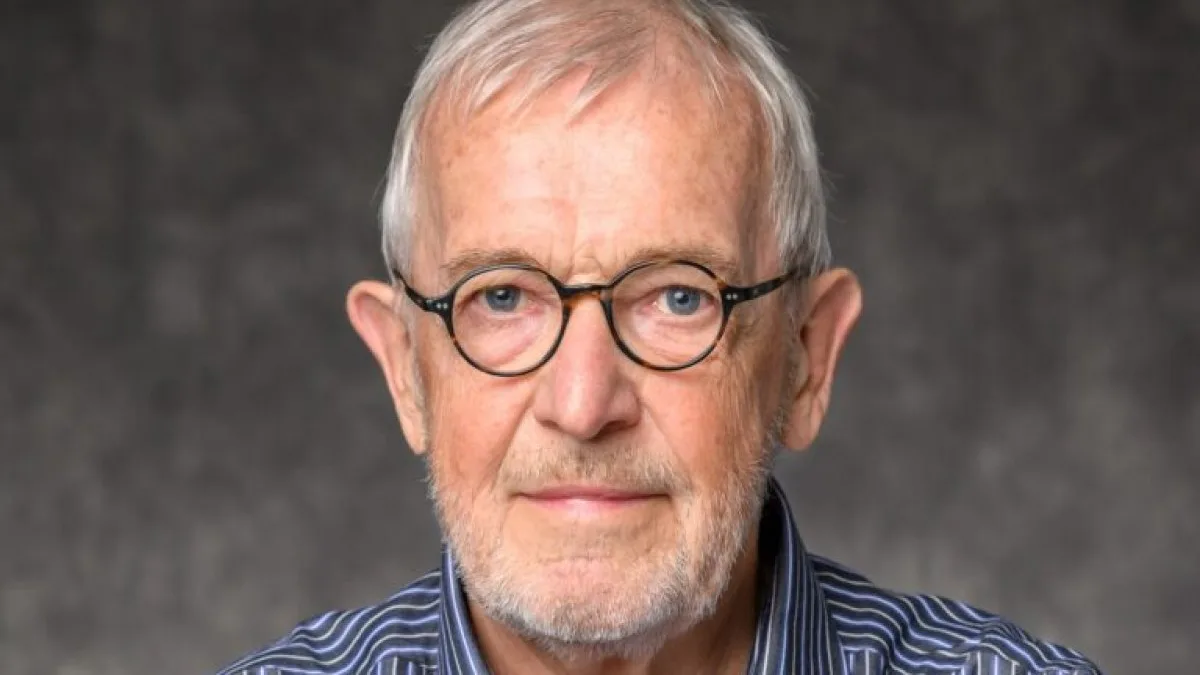
The 2026 Nobel Prize in Physics goes to Francis Halzen, a professor at the University of Wisconsin-Madison, who receives it alone, without a co-laureate. The decision was announced in Stockholm on Tuesday, October 6, by the permanent secretary of the Royal Swedish Academy of Sciences, Ellen Moons. According to the official citation, the prize recognizes his decisive contribution to the IceCube neutrino observatory and the discovery of high-energy neutrinos of astrophysical origin.
Moons said at the announcement: “This year’s prize in physics is about ghostly messengers from space.”
Who is Francis Halzen?
Halzen was born in 1944 in Tienen, Belgium, and earned his doctorate in 1969 at the Catholic University of Leuven (KU Leuven). The sources describe him differently: Croatia’s tportal calls him an American, Germany’s LKZ a Belgian-American particle physicist, and Scientific American notes his Belgian birth and his professorship in Wisconsin. Moons is also Belgian by birth. She took over as permanent secretary at the start of 2026, the first woman in that post since the Academy was founded in 1739. According to LKZ, it is the first time a woman has announced the laureates in physics, chemistry and economics.
How do you catch neutrinos in ice?
Neutrinos carry no electric charge, have almost no mass and interact very weakly with ordinary matter. According to LKZ, about ten billion neutrinos pass through every square centimeter of the Earth’s surface each second, and almost none leave a trace. Only occasionally does a neutrino strike an atomic nucleus, producing a flash of light that sensors can record in clear glacial ice.
Halzen put forward the idea in 1988. The ice at the South Pole, the Academy explains, is free of interference from other sources, and the area is geologically stable, with no earthquakes. A few years later came the first test runs of sensors in the ice. Cosmic neutrinos of extremely high energy are rare, so a large volume is needed to catch enough collisions: IceCube occupies a cubic kilometer of ice and was completed in 2011. Researchers soon detected the first high-energy neutrinos, and a few years later they reported that some of them must originate far outside the Solar System.
That is why neutrinos carry information other particles cannot provide. According to the Academy, they reach us without being deflected and without losing energy, so they tell us about natural accelerators in space that push particles to energies up to a million times higher than those reached in laboratories on Earth.
What did the Nobel Committee say?
The Academy stated in its announcement: “His vision and scientific leadership were fundamental to the IceCube Neutrino Observatory, a cubic kilometer of ice equipped with light sensors.” The chair of the Nobel Committee for Physics, Mark Pearce, added:
“Francis Halzen led an international team of researchers and engineers who gave us a fantastic instrument. His perseverance and scientific vision paved the way for a new kind of astronomy.”
The laureate received the news by phone while traveling. Halzen said it came as a big surprise: “Of course I didn’t expect it. I’m traveling through Italy to a board meeting.” He added that he hopes the prize will reflect the merits of the collaboration, and especially of those who made decisive contributions to the project over the years.
What comes next, and what does the prize leave unsolved?
Physics is the second prize of the week. Yesterday the medicine prize was announced, which we covered: it went to Karl Deisseroth, Peter Hegemann and Georg Nagel for optogenetics. Chemistry is due tomorrow, literature on Thursday, peace on Friday, and economics on October 12. The ceremony takes place on December 10, the anniversary of Alfred Nobel’s death.
Last year’s prize went to John Clarke, Michel Devoret and John Martinis for macroscopic quantum tunneling in an electric circuit. Since 1901 the physics prize has been awarded 119 times to 229 individuals, because John Bardeen won twice, in 1956 and 1972. Only five of them are women. Neutrinos are not new to this prize: Frederick Reines received it in 1995 for detecting low-energy neutrinos.
The prize money this year is 12 million Swedish kronor, a million more than in 2025, which depending on the exchange rate is about 1.2 million dollars, or about 1 million euros. The chief executive of the Nobel Foundation, Hanna Stjarne, explained the increase in September: “With the increase, we are strengthening the long-term significance of the Nobel Prize and ensuring that the financial part of the prize permanently retains its value.”
The Academy itself described the limits of this recognition. The prize confirms that neutrinos from space can be captured and that some originate outside the Solar System, but questions about the sources themselves remain open: what they are, where they are, and which processes take place inside them. The data IceCube keeps collecting, the Academy says, could bring new insights into extreme cosmic environments and reveal phenomena not yet known.