Congo Ebola Outbreak Tops 7,000 Cases, 3,398 Dead
Congolese authorities say the country's largest Ebola outbreak on record has reached 7,022 cases and 3,398 deaths, with the virus now reaching schools in Ituri.

The Democratic Republic of Congo has, according to the latest data from authorities in Kinshasa released on September 12 and 13, surpassed 7,000 registered Ebola cases for the first time, in an outbreak already declared the largest in the country’s history. The National Institute of Public Health in Kinshasa reported 7,022 cases since the outbreak began, 3,398 deaths, and 1,671 recoveries. The virus has since spread to a seventh province, and cases have also been confirmed in schools in Ituri province, where the outbreak began.
Congolese authorities officially declared the current outbreak in mid May 2026, though experts believe the virus had been circulating undetected for weeks or months before that. It is the seventeenth Ebola outbreak in the history of the Democratic Republic of Congo, a country that deals with the disease more often than any other in the world. The outbreak began in the northeastern province of Ituri, which still has the highest number of cases, then spread to eastern and northern areas affected by years of conflict, where state presence is weak and health infrastructure is inadequate. This week authorities confirmed the outbreak had reached South Ubangi, the seventh province affected, which borders the Central African Republic and the Republic of Congo.
Why do the reported numbers differ?
Both Congolese authorities and international agencies publish data on the outbreak, and the reports differ in detail. AFP, whose reporting was picked up by Medical Xpress and Pakistan’s Dawn, cites 7,022 registered cases, 3,398 deaths and 1,671 recoveries. The German press agency DPA, whose report was published by the American newspaper Spokesman Review, also cites 7,022 confirmed cases and the same number of deaths, but instead of a recovery figure reports that 837 people are currently receiving treatment or in isolation. The difference comes from the agencies drawing on different categories within the same report from the Congolese institute, not from conflicting figures. According to DPA, experts believe there is also a significant number of unreported cases.
Congolese government spokesman Patrick Muyaya said on Saturday, on X, that the outbreak may already be past its peak. “The peak was reached at the start of the third week of August,” Muyaya wrote. “All indicators point to a decline in the number of cases,” he added, noting that ten of the 61 affected health zones have not recorded a single new case in at least the last 21 days.
A similar signal comes from infectious disease expert Yap Boum, who has observed a slight decline in several hotspots in Ituri, the province with the highest number of cases. Optimism that the trend is turning was also voiced by the Africa Centres for Disease Control and Prevention (Africa CDC), despite data showing this is the fastest rate of case growth ever recorded in an Ebola outbreak. According to DPA, the growth in the number of deaths has also slowed, likely because more patients are seeking treatment earlier in the course of the disease. Mortality among those who never reach an Ebola treatment center remains high, the same report says.
What worries parents in Bunia?
Most cases remain in Ituri, where Ebola has been confirmed in schools after students returned from summer break, alarming parents and health workers. Angela Manjani, mother of a student in Bunia, the capital of Ituri, told AFP:
We are very worried because we do not know which child comes from which family, or what the health situation of that family’s members is. We are so scared, even though the school authorities are reassuring us about the measures that have been put in place.
Schools in Bunia have introduced strict measures, according to school official Roger Mungimbo:
There is a mandatory hand washing system with soap, and we have done everything possible to keep classes at no more than 30 students.
Mungimbo added that children are regularly reminded not to touch each other and to wash their hands often.
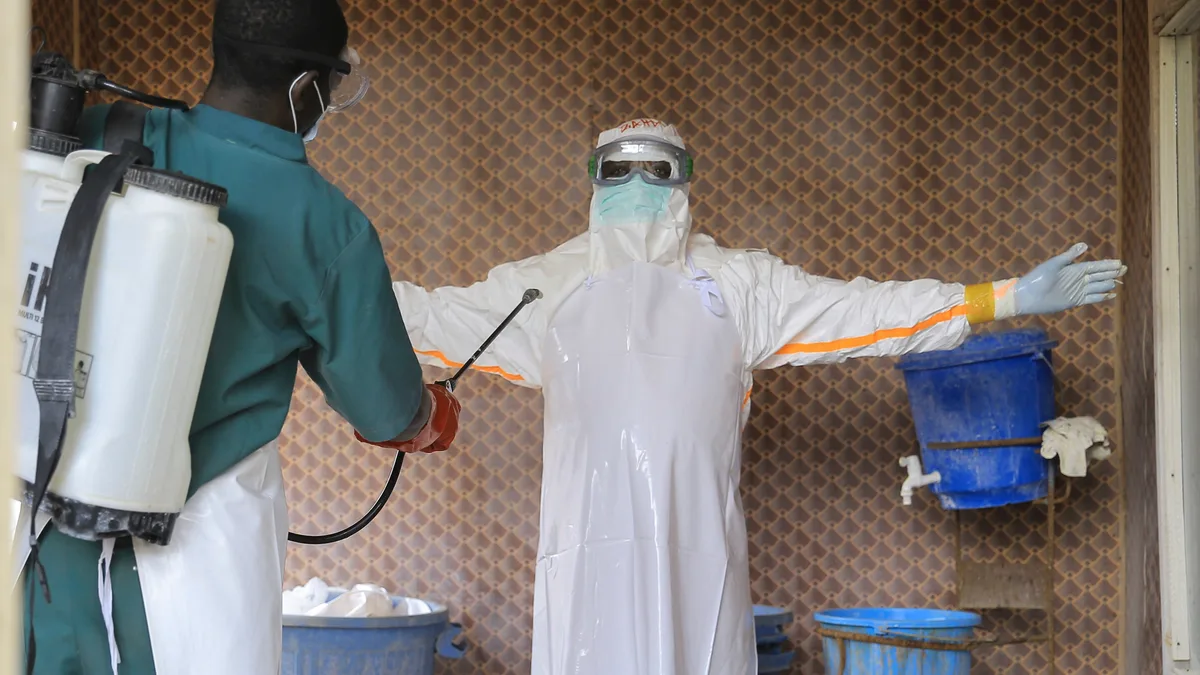
Ebola spreads through contact and bodily fluids and causes severe internal and external bleeding as well as organ failure. Over the past 50 years the disease has killed more than 15,000 people in Africa. The current outbreak is caused by the Bundibugyo strain, for which, unlike the Zaire strain, there is no approved vaccine or approved treatment. Several vaccines and therapies are currently in trials.
What the data does not show
The data released by Congolese authorities this weekend shows a trend, not the end of the outbreak. Ten health zones with no new cases in the past three weeks does not mean the virus has been stopped in the remaining 51, and the assessment that the peak is behind us rests on field team reports, not independent data analysis. The gap between the recovery figure cited by AFP and the current treatment figure cited by DPA also shows that the numbers themselves remain incomplete, and experts believe some cases are likely going unreported altogether. There is still no approved vaccine for the Bundibugyo strain, so even if the spread is currently slowing, the possibility of a new wave remains open while clinical trials continue.