Draconids 2026: peak on Oct. 9 under a moonless sky
The Draconid meteor shower is active from October 6 to 10, with the most meteors expected on the evening of October 8. No storm is forecast, but the sky will be dark.
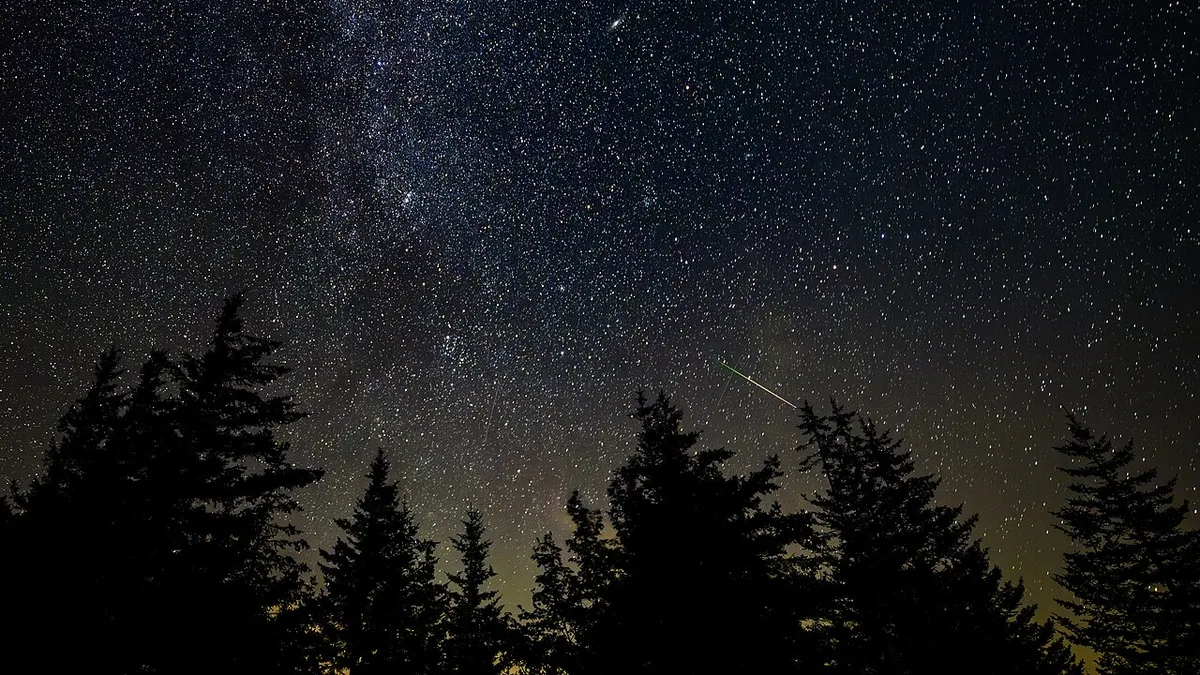
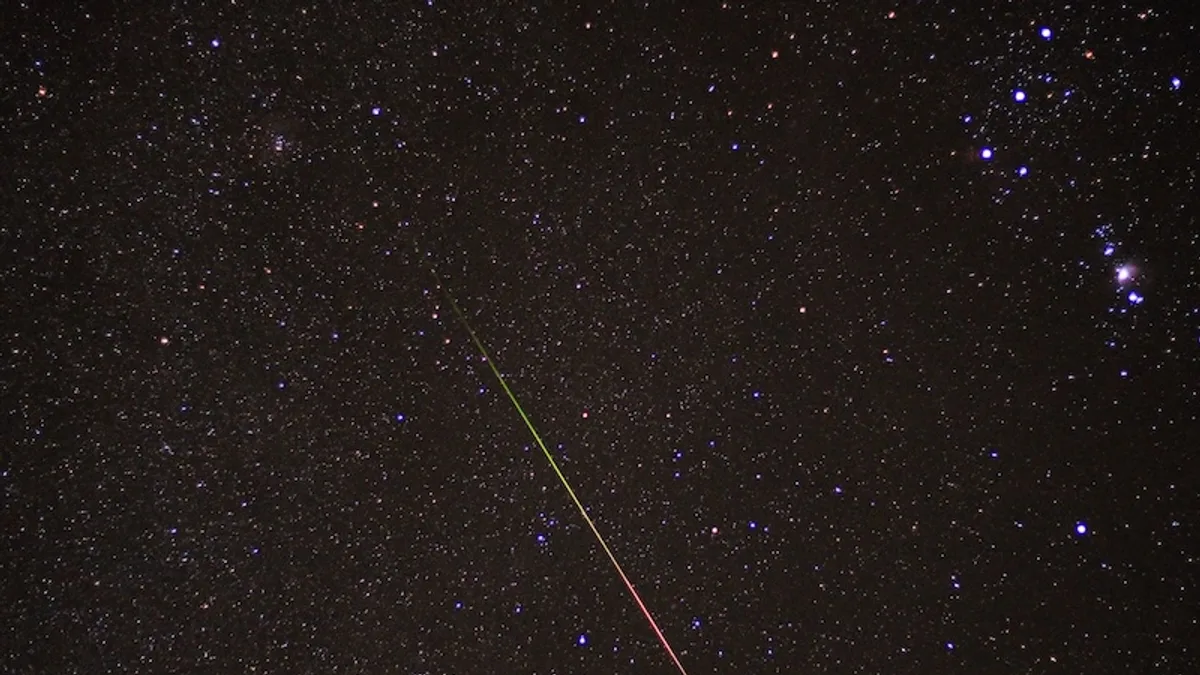
The Draconid meteor shower becomes active on October 6, 2026, and runs through October 10, with the most meteors expected in the night between Thursday, October 8, and Friday, October 9. The predicted peak is October 9 at 1:00 Universal Time (UTC), which is 3:00 a.m. Central European Summer Time. That hour comes from EarthSky, and shower peak predictions, which originate with the American Meteor Society, can differ.
Unlike most showers, which are best before dawn, the Draconids are best watched as soon as it gets dark. The radiant, the point from which meteors appear to emerge, lies in the head of the constellation Draco, near the stars Eltanin and Rastaban, and it stands highest in the northern sky in the evening. According to Star Walk, the viewing window therefore stretches from the evening of October 8 into the early hours of October 9. The shower is visible from the Northern Hemisphere, and the farther south an observer is, the lower the radiant sits and the shorter its time above the horizon.
How many meteors can you see?
Estimates differ. Star Walk reckons on a typical 5 meteors per hour this year, while EarthSky says that under a dark, moonless sky up to 10 meteors per hour could be caught. Both figures apply to ideal conditions, and actual counts are usually lower.
The sky is the advantage. New Moon falls on October 10 at 15:50 UTC, so on the night of the peak only a thin waning crescent hangs in the sky, and it does not interfere. Fainter meteors, which moonlight would normally swallow, will be visible this year. The Draconids are also unusually slow, which makes them easier to tell apart from other October meteors.
Why do we watch the Draconids even when they are weak?
The shower is born from dust shed by comet 21P/Giacobini-Zinner, which circles the Sun every 6.6 years. The comet was discovered on December 20, 1900, by Michel Giacobini at the Nice Observatory, and Ernst Zinner found it again on October 23, 1913. It last passed perihel, its closest point to the Sun, on March 29, 2025.
In most years the Draconids deliver only a handful of meteors per hour, but there are exceptions. In 1933 and 1946 there were several thousand meteors per hour. Stronger activity was also recorded in 1985, 1998 and 2018. For 2011, the sources disagree: EarthSky says European observers saw more than 600 meteors per hour, while Star Walk writes of about 300. For 2018, Star Walk reports about 150 meteors per hour over four hours.
The comet is again relatively close to Earth this year, so EarthSky leaves the question of a meteor storm open but rates it unlikely. Star Walk is explicit: no storm is expected. A model published in 2011 predicts a possible strong storm only in 2062.
Anyone who misses the Draconids has other chances in October. Star Walk lists eight showers in all, among them the Orionids in the night between October 21 and 22, with about 20 meteors per hour.
What does this forecast leave out?
Predictions of the peak and of meteor counts are estimates, not measurements, and they depend on the model and the source, as the gap between 5 and 10 meteors per hour shows. Strong activity in the past does not prove there will be any this year, and a comet’s closeness to Earth is no guarantee of a storm. The real count will also depend on the weather, light pollution and the patience of the observer.