Draconids meteor shower peaks at 3 a.m. Friday
The meteor shower from the constellation Draco is best seen Thursday evening under moonless skies, but no outburst is forecast for 2026.
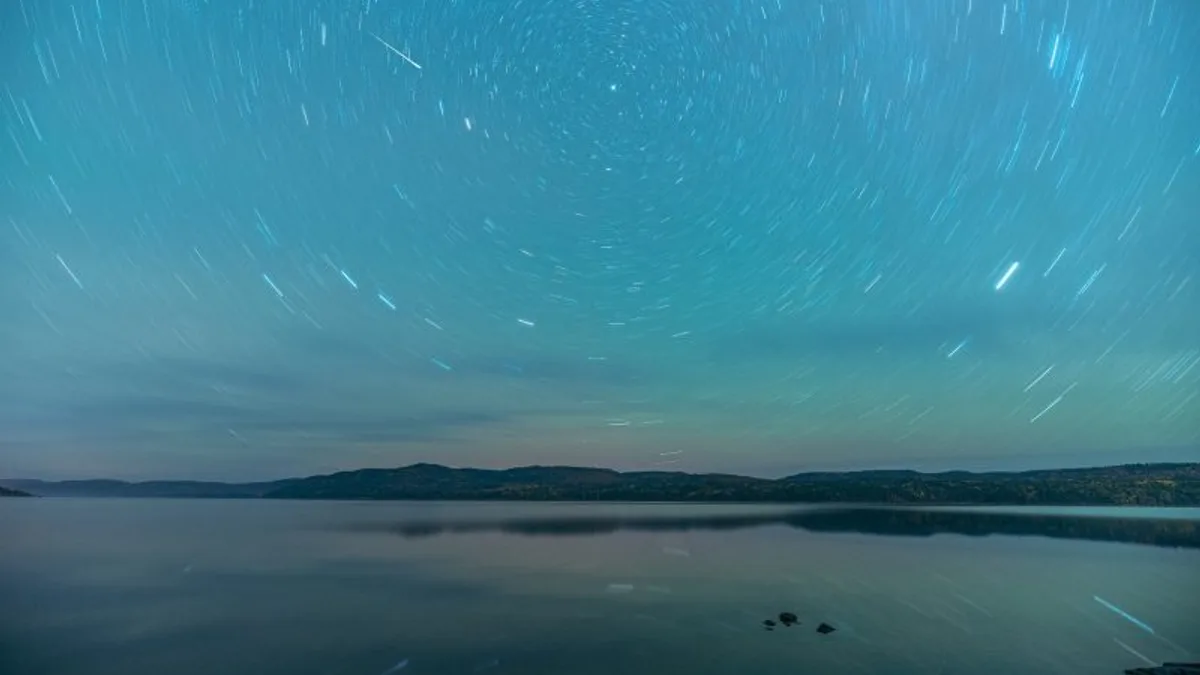
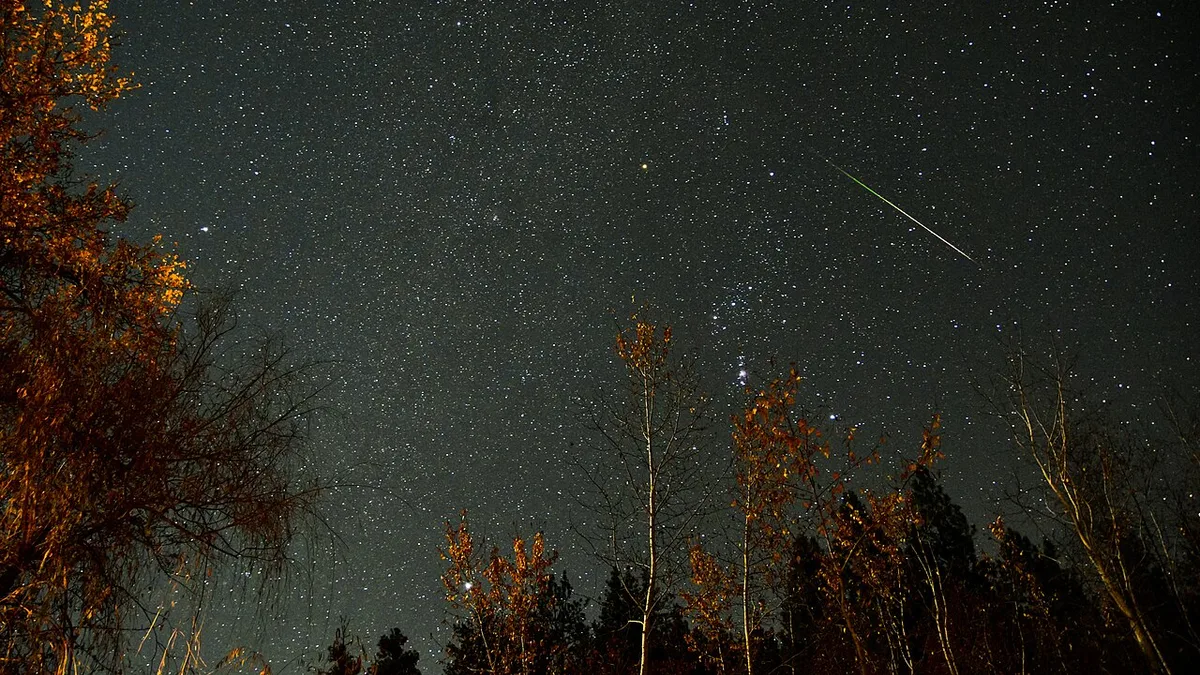
The Draconid meteor shower reaches its maximum in the night between Thursday, October 8, and Friday, October 9, 2026. The predicted peak is at 1:00 Universal Time on October 9, which is 3:00 a.m. Central European Summer Time. There is no need to wait that long, though, because this shower is easier to see in the evening than before dawn.
The shower is active from October 6 to 10. The best viewing starts as soon as it gets dark on Thursday and lasts into the early hours of Friday. The reason is unusual for a meteor shower: the radiant, the point in the sky from which the meteors seem to emerge, stands highest at dusk and sinks lower as the night goes on. That sets the Draconids apart from most showers, which are best just before sunrise.
The radiant sits in the head of the constellation Draco, near the stars Eltanin and Rastaban, so the shower is best seen from the Northern Hemisphere. You do not have to find the constellation, since meteors streak across every part of the sky.
How many meteors can you expect?
Sources disagree here. The astronomy site Star Walk gives about 5 meteors per hour, while EarthSky counts on about 10 per hour under a properly dark sky. Star Walk adds that these are estimates of the zenithal hourly rate, meaning the number of meteors visible in one hour under a perfectly dark sky with the radiant directly overhead, and that real counts are usually lower.
No enhanced activity is forecast for 2026. EarthSky says the chance of an outburst is uncertain, while Star Walk writes that none is expected and that you should plan for a modest, ordinary count. In most years the Draconids produce no more than about ten meteors per hour.
Why is the sky dark this year?
New moon falls on October 10 at 15:50 Universal Time, or 17:50 local time. A thin waning crescent therefore does not interfere with viewing. According to Star Walk, that is the main advantage this year: without moonlight, faint meteors are easier to spot. The same source notes that the Draconids are unusually slow, which makes them easier to tell apart from other October meteors.
What is comet 21P/Giacobini-Zinner, and why is the shower watched?
The parent body of the shower is a small periodic comet, 21P/Giacobini-Zinner. It comes about as close to the Sun as Earth does, then swings out just beyond Jupiter’s orbit and returns after 6.6 years. It last passed closest to the Sun on March 29, 2025.
The comet’s debris is not spread evenly along its orbit, and much of it is still bunched up near the comet itself. That is why the shower can turn into a meteor storm, as the historical record shows:
- In 1933 and 1946, observers counted several thousand meteors per hour
- In 1985, 1998 and 2018, activity was enhanced but there was no storm
- In 2011, observers in Europe counted more than 600 meteors per hour, according to EarthSky
For 2011 and 2018, Star Walk gives different figures: about 300 meteors per hour in 2011, and about 150 per hour over four hours in 2018. The gap between sources for the same year shows how imprecise such estimates are. The same source says a model published in 2011 predicts a possible strong outburst in 2062, but that this does not rule out an earlier one.
What comes after the Draconids?
The next big October event is the Orionids, peaking in the night between October 21 and 22. Star Walk estimates about 20 meteors per hour, with an entry speed into the atmosphere of 66 kilometers per second (about 148,000 miles per hour). The Moon will be waxing that night and will light the sky in the first half of the night, so it is better to wait until just before dawn. We wrote about the October sky earlier, when we reported when the Moon passes Mars and Jupiter.
All the figures above are forecasts, not measurements. The zenithal hourly rate describes ideal conditions, and city lights and clouds reduce the number of meteors you can see. Neither earlier outbursts nor the comet’s closeness to the Sun in 2025 prove that this year’s shower will be stronger than usual: neither of the two sources predicts it.