Crta poll: Student List 44.9 percent, SNS 35.7
A survey by Crta and Stanford's Democracy Action Lab puts the Student List almost ten points ahead of SNS, with trust in the presidency halved in three years.

- Among decided voters, the Student List stands at 44.9 percent, SNS at 35.7 percent and SPS at 3.8 percent, with all other lists below the threshold.
- Trust in the institution of the presidency has fallen to 35 percent, down from 60 percent in February 2023.
- Support for the protests has held steady at roughly 60 percent since April 2025.
- Fieldwork ran from June 10 to June 24, face to face, on a sample of 2,324 adults.
Crta and the Democracy Action Lab (DAL) at Stanford University published a joint opinion survey on July 15 showing the Student List on 44.9 percent among decided voters and the Serbian Progressive Party on 35.7 percent. The Socialist Party of Serbia sits at 3.8 percent, while every other list falls below the electoral threshold.
The survey covered 2,324 adult citizens of Serbia, interviewed face to face in the field between June 10 and June 24, 2026. Decided voters make up 70 percent of the sample. Twelve percent describe themselves as politically undecided, and nine percent say they would not vote at all.
The gap of almost ten points is not the only figure worth attention. Trust in the institution of the president of the republic stands at 35 percent. In February 2023 the same measure returned 60 percent. In three years, in other words, it has been cut roughly in half.
Institutional trust has been sliding for three years
The government is trusted by 34 percent of respondents and parliament by 31 percent. Against them stand institutions rarely treated as political actors in Serbian public life: state universities at 71 percent and the Serbian Orthodox Church at 64 percent. The spread between the universities and parliament is 40 points, and it may be the single most telling number in the study.
Support for the protests has held at around 60 percent since April 2025, an unusually long plateau for any civic movement. Concern over the use of police force against demonstrators is expressed by 62 percent of respondents. More than half of citizens name corruption as a serious problem.
What makes the electoral cycle unpredictable is the split over the democratic framework itself. Democracy is the best system of government for 85 percent of Student List supporters and for only 38 percent of SNS voters. That gap of 47 points means the two blocs are not merely choosing between lists, but between different ideas of what elections are for.
How durable is this finding?
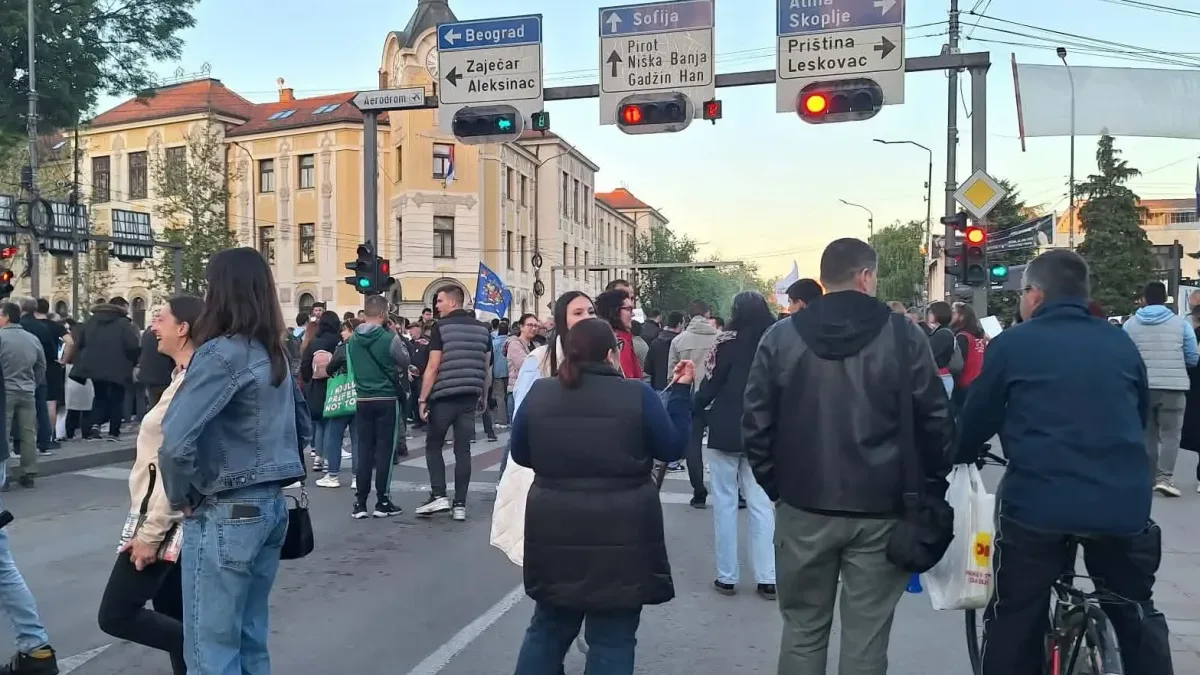
Two cautions apply. First, fieldwork closed on June 24, before the latest wave of blockades. Nothing that has happened on the streets since then is reflected in these numbers, and recent months have shown that sentiment can shift in either direction over short intervals.
Second, the pollster itself is contested. The government and pro-government media routinely dispute Crta as a non-governmental organisation close to the opposition and dismiss its findings as commissioned. Crta responds that it publishes its methodology, sample size and collection period, as it did in this case, and that the Stanford partnership is an additional quality check. No independent verification of this particular sample exists so far.
The study underlines one more thing. Citizens who get their news mainly from pro-government outlets, including the public broadcaster, hold almost diametrically opposed views on democracy, corruption and institutions to those who follow critically oriented media or use social networks. Two publics, two sets of facts, one electoral roll.
A poll is not an election result, and no measurement taken well before an official call to vote binds anyone. But the trend in institutional trust is not a one-off. It has repeated in Crta’s measurements since 2023, and party leaderships on both sides will find it hard to ignore.
Which surprises you more: the gap between the two lists, or the fact that twice as many citizens trust the universities as trust parliament?