Kurti Seeks Kosovo Candidate Status at Milocer Summit
Kosovo's prime minister told the Berlin Process summit it is time for candidate status and talks with the EU, while Marta Kos said the coming weeks and months are decisive for the region.
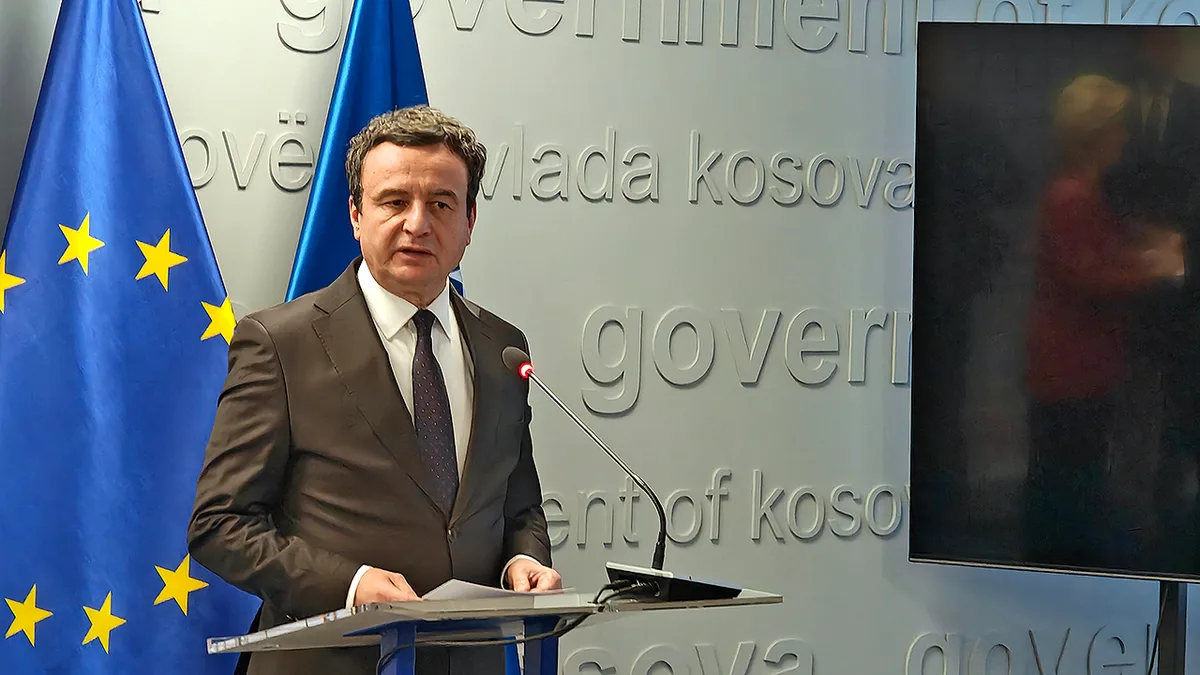
Kosovo Prime Minister Albin Kurti called on October 22, at the Berlin Process summit in Milocer near Budva, for Kosovo to be granted EU candidate status and to open accession negotiations. Kurti also said he would urge EU leaders to ask the European Commission for an opinion on the matter.
What did Kurti tell reporters?
Speaking to reporters, the Kosovo prime minister first described the state of the country he represents. “We have a functioning democracy, institutional stability, economic growth and full commitment to the European path,” Kurti said.
He drew his demand from that. “Now is the time for our country to receive candidate status and open accession negotiations with the EU,” he said, and then added: “That is why today and every day I will call on every EU leader to request the opinion of the European Commission on this issue.”
So Kurti is not saying he will ask for the Commission’s opinion himself. He is saying he will push member state leaders to do it. His words reach us in translation from Albanian, which is why the second sentence differs between outlets: Radio KiM has “today and every day,” while RTNK, which took the speech from the Mina agency, has “today, as on every following day.”
At the opening of the gathering, as reported by the Montenegrin portal Antena M, Kurti said: “We are optimistic about the time ahead of us, because we cooperate and do not sit with our arms folded.”
Why did he mention the 2018 London summit?
Besides the candidacy demand, the Kosovo prime minister looked back at earlier commitments. According to RTNK, Kurti expressed hope that the commitments made at the 2018 London summit, on justice for crimes committed during the war and on clarifying the fate of missing persons, can be renewed. He thanked Montenegrin Prime Minister Milojko Spajic for hosting and thanked Germany for staying committed to the initiative.
Before the summit, the Kosovo prime minister’s office announced that Kurti would represent Kosovo in Montenegro and that bilateral meetings were planned with heads of international institutions, senior officials and heads of state. The names of those he would meet were not published.
What did Marta Kos say?
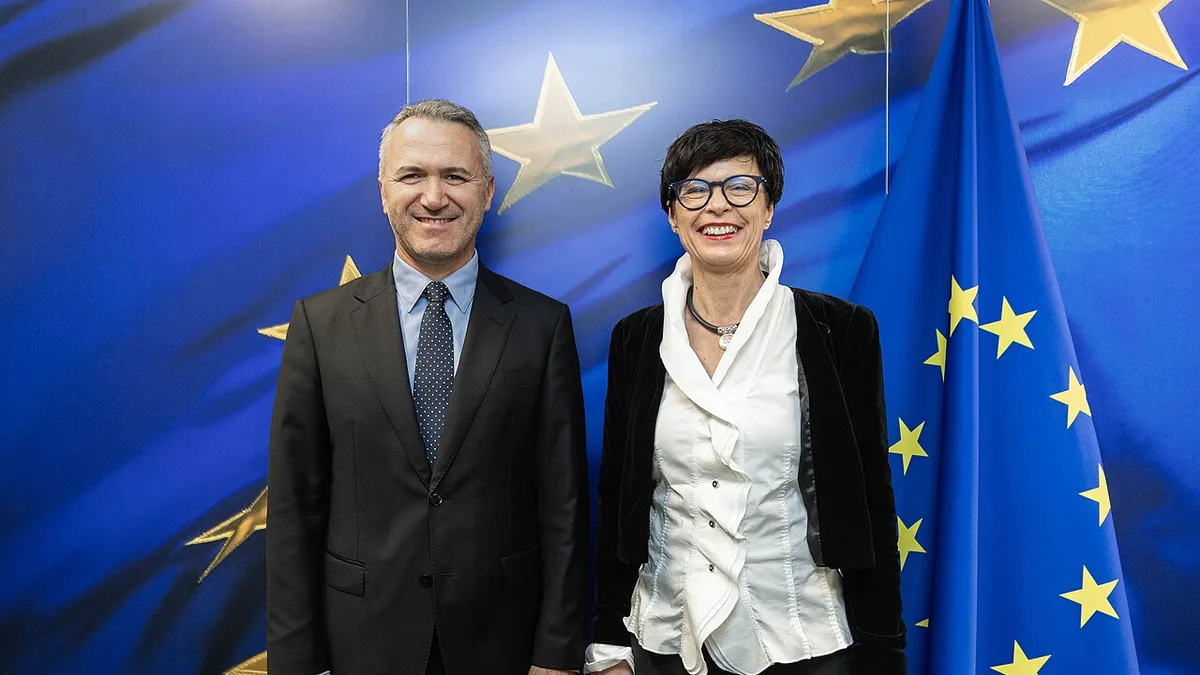
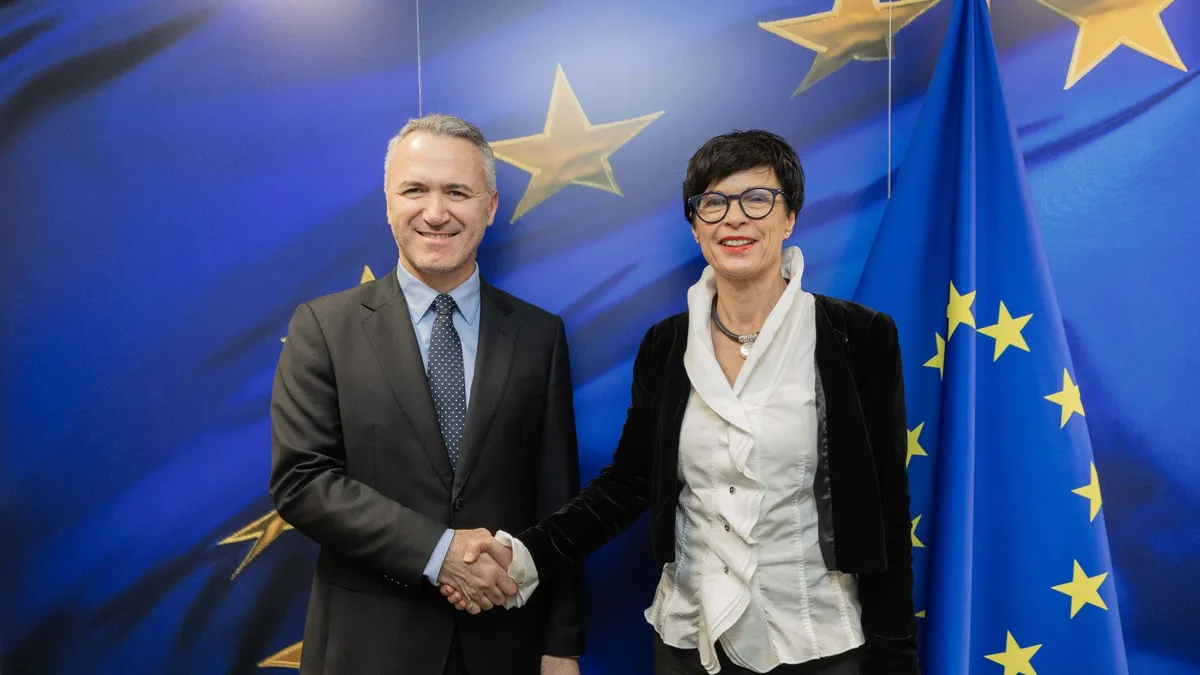
European Enlargement Commissioner Marta Kos is among the participants. Ahead of the summit, in Sveti Stefan, she said the countries of the region face weeks and months of decisive moments. In her words, Montenegro should bring its accession process to a close, Albania should keep its pace on the European path, and Kosovo should continue in line with international law and the rule of law. She reminded listeners that Serbia holds elections next week.
On the gathering itself, Kos said:
“That is why I think it is good that leaders from the region and participants in the Berlin Process are gathering here, in this beautiful country.”
The statements available from the summit do not include a specific answer to Kurti’s demand.
Where does Kosovo stand on the road to the EU?
Kosovo applied for EU membership in December 2022 and still has no candidate status. That is what Kurti is trying to change at the summit, and he is going through the leaders of member states rather than directly through the Commission.
The Milocer summit closes Montenegro’s one-year chairmanship of the Berlin Process. It was opened by Spajic and German Chancellor Friedrich Merz, and representatives of all six Western Balkan economies have confirmed their attendance. Serbia is represented by caretaker Prime Minister Djuro Macut and caretaker European Integration Minister Nemanja Starovic, whose trip to Milocer we reported earlier.
The topics are economic connectivity in the region, competitiveness, security and faster European integration. The German government named economic growth, competitiveness and security as its main themes, while Montenegro set the green and sustainable transition as its fourth priority during the chairmanship. The plenary session is titled “Region on the Move: The Western Balkans Shaping Europe’s Common Future.”
The Berlin Process was launched in 2014 on German initiative, under Chancellor Angela Merkel, to speed up European integration and deepen regional cooperation. Among the most important documents to come out of it are the 2022 mobility agreements, which allow travel within the region with only an ID card, and provide for mutual recognition of university diplomas and of the professional qualifications of doctors, dentists and architects.