Bosnia Election: 3.4 Million Voters, Fingerprint ID Debut
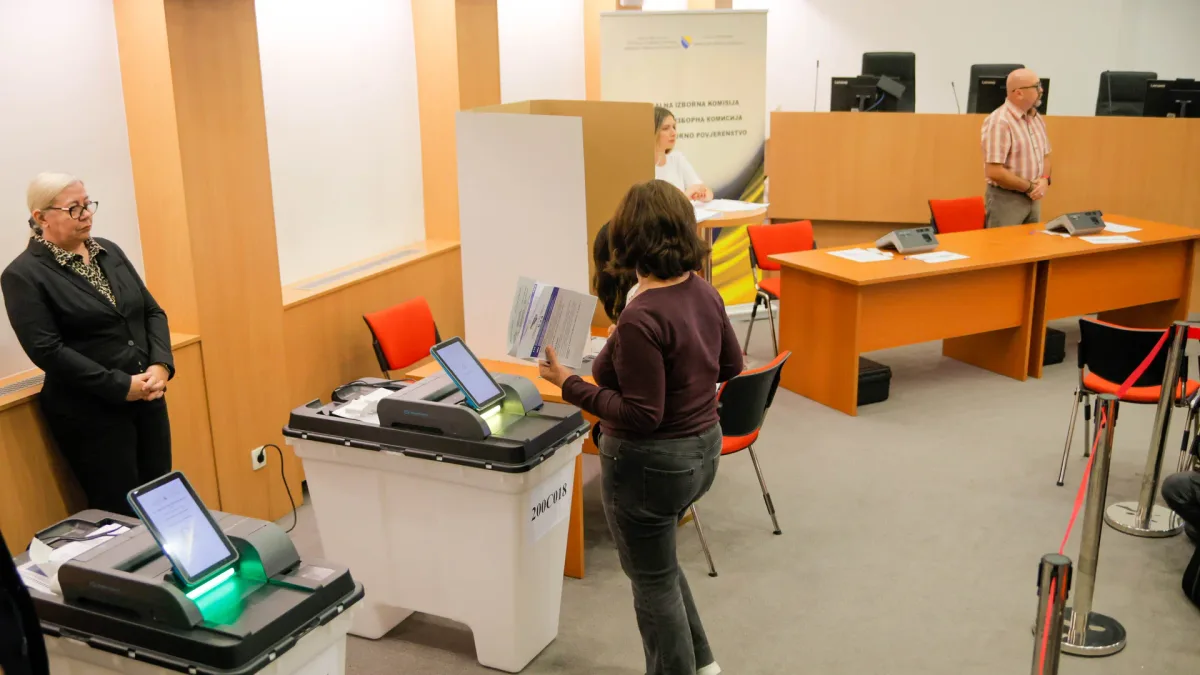
The Central Election Commission released final figures: 3,408,517 registered voters, 5,569 polling stations and 7,028 candidates for 518 seats, with ballot scanners and biometric identification.
Election silence began at 7 a.m. today in neighboring Bosnia and Herzegovina, and ahead of Sunday’s vote the Central Election Commission (CEC) has released final figures on the voter register, polling stations, candidates and observers. This is not a distant story for Serbia: the same general elections choose the president and vice presidents of Republika Srpska, along with deputies to its National Assembly, and all of it for the first time with biometric identification of voters.
What is banned until 7 p.m. Sunday?
Election silence lasts until polling stations close on Sunday, October 4, at 7 p.m. During that period political parties may not take part in public political activities, and media may not report on any activity related to the political or election campaign. Publishing the results of public opinion polls on voting and the elections has been banned since 7 a.m. yesterday.
Polling stations will be open on Sunday from 7 a.m. to 7 p.m. Voters must show one valid form of identification: an ID card, a driver’s license or a passport.
How many voters are there and how many seats are at stake?
The Central Voter Register, as of midnight on August 20, 2026, lists 3,408,517 voters. Of these, 48,078 vote from abroad: 45,457 by mail and 2,621 at diplomatic and consular missions. Voting abroad is organized at 20 missions in 13 countries.
Inside the country, 5,569 polling stations have been set up, 5,121 of them regular, and 385 mobile teams will operate alongside them. Some polling stations have been merged with others. Citizens elect members of the Presidency of Bosnia and Herzegovina, deputies to the House of Representatives of the Parliamentary Assembly of Bosnia and Herzegovina and to the House of Representatives of the Parliament of the Federation of Bosnia and Herzegovina, the president and vice presidents of Republika Srpska, the National Assembly of Republika Srpska and the cantonal assemblies in the Federation. In total, 518 mandates are up for election, contested by 7,028 certified candidates.
What is new in this election?
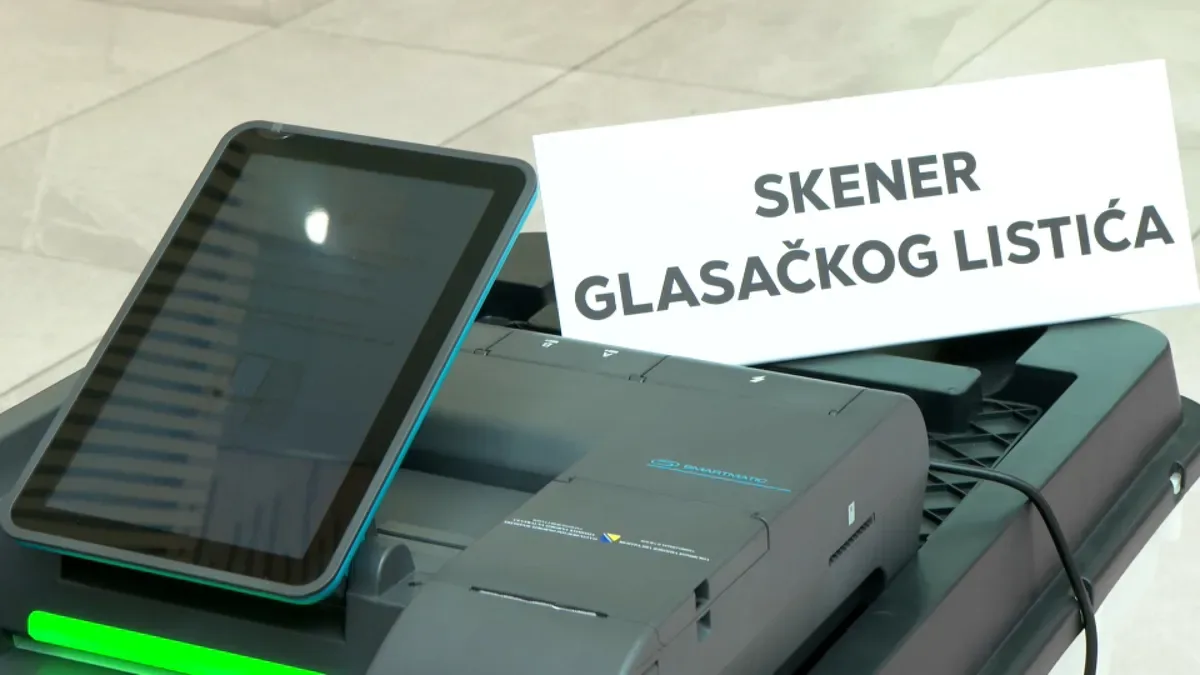
We reported earlier that the CEC had ruled that the technical conditions for using specific election technologies were met. Now it is clear what that means in practice: these are the first elections in Bosnia and Herzegovina with biometric identification of voters, ballot scanners and fast transmission of results. The commission says the secrecy of the vote is guaranteed.
The commission urged voters to find out in advance where their polling station is, who the candidates are and how voting works. Certified candidate lists and video instructions for voting in the Federation of Bosnia and Herzegovina, Republika Srpska and the Brcko District are available on the commission’s home page, together with educational materials for election administrators.
Who will monitor the vote?
So far the commission has accredited 2,432 observers: 1,557 from citizens’ associations, 756 international observers and 119 from political parties. Municipal and city election commissions have accredited about 25,000 more observers for political parties, so around 30,000 people are expected to monitor the elections in total.
The Central Election Commission has called on everyone involved in the election process to make sure Sunday’s voting takes place in a fair and honest atmosphere.