France school blockades: over 5,000 detained in five days
Prefects have closed more than 400 high schools, and Interior Minister Laurent Nunez says over 5,000 people have been detained since Monday. A new protest is set for Tuesday.
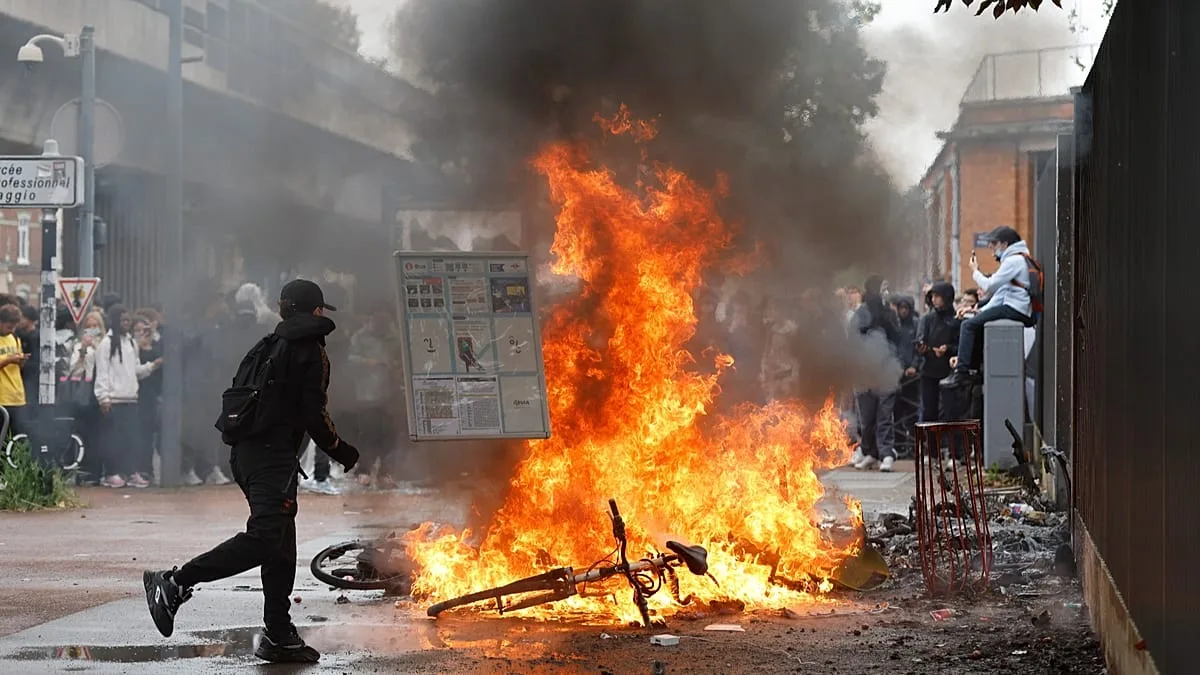
More than 400 French high schools were closed by prefect orders on Friday, October 2, and Interior Minister Laurent Nunez said over 5,000 people have been detained since Monday at and around school blockades. Classes at the closed schools are moving online, while student organizations plan to keep up the mobilization until a major national protest on Tuesday, October 6.
How many schools are affected by the blockades?
According to Education Minister Edouard Geffray, 735 institutions were disrupted on Friday, about 30 percent fewer than on Thursday. The day before, Interior Ministry figures showed the movement had reached 1,027 of roughly 3,700 French high schools, with blockades organized at 222. On Friday, 20 universities were also blocked. On Thursday, when university students joined in, the Student Union spoke of about thirty blocked campuses.
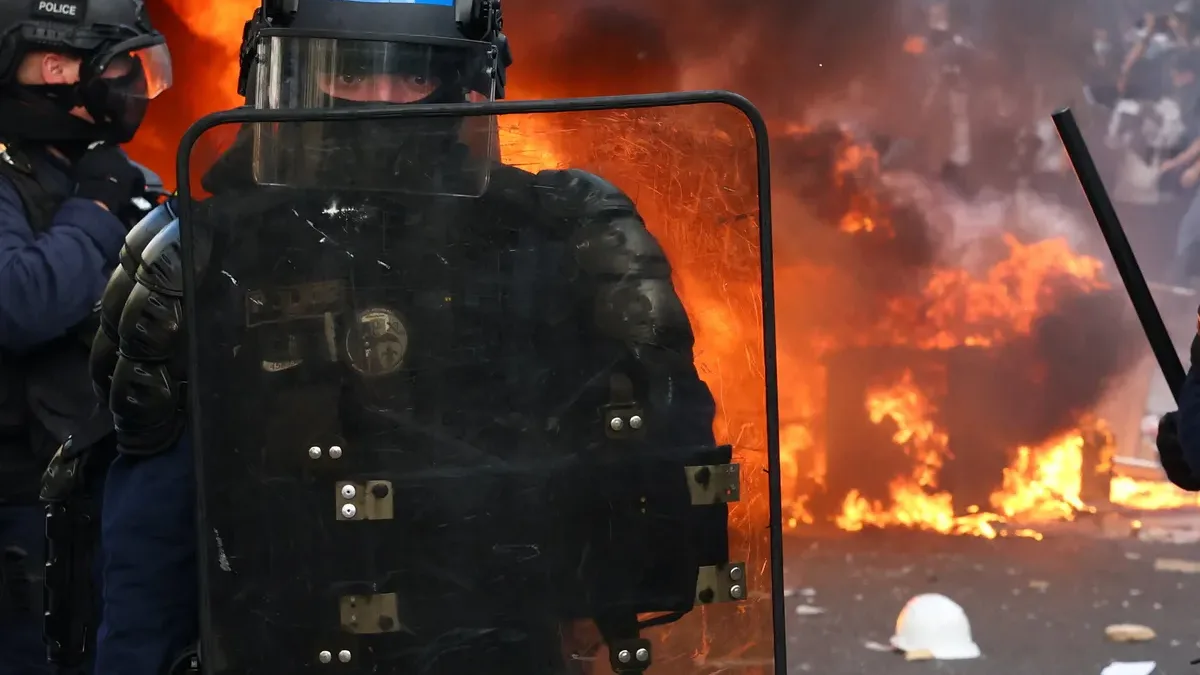
The number of people detained has grown day by day: 440 on Tuesday, 625 on Wednesday, 1,949 on Thursday and 1,747 on Friday. On Thursday evening, prefects issued orders banning gatherings near closed schools, but crowds assembled anyway. Tension was reported outside schools in Saint-Brieuc, Quimper, Dijon, Nancy, Metz, Besancon and Pau.
What happened outside the schools?
In Belfort early on Friday, near the Courbet high school, a group of attackers beat an off-duty police officer of about fifty. According to ICI, they knocked him down and kept hitting him as he lay on the ground, and he was hospitalized in Trevenans with facial injuries and bruises. The Belfort prosecutor’s office has opened an investigation into attempted murder by multiple perpetrators.
The Paris prosecutor’s office has opened an investigation over a video showing a police trainee, a lieutenant of the Paris police prefecture, being attacked in the 20th arrondissement. On Thursday, Nunez promised that the attackers would be found and brought to court.
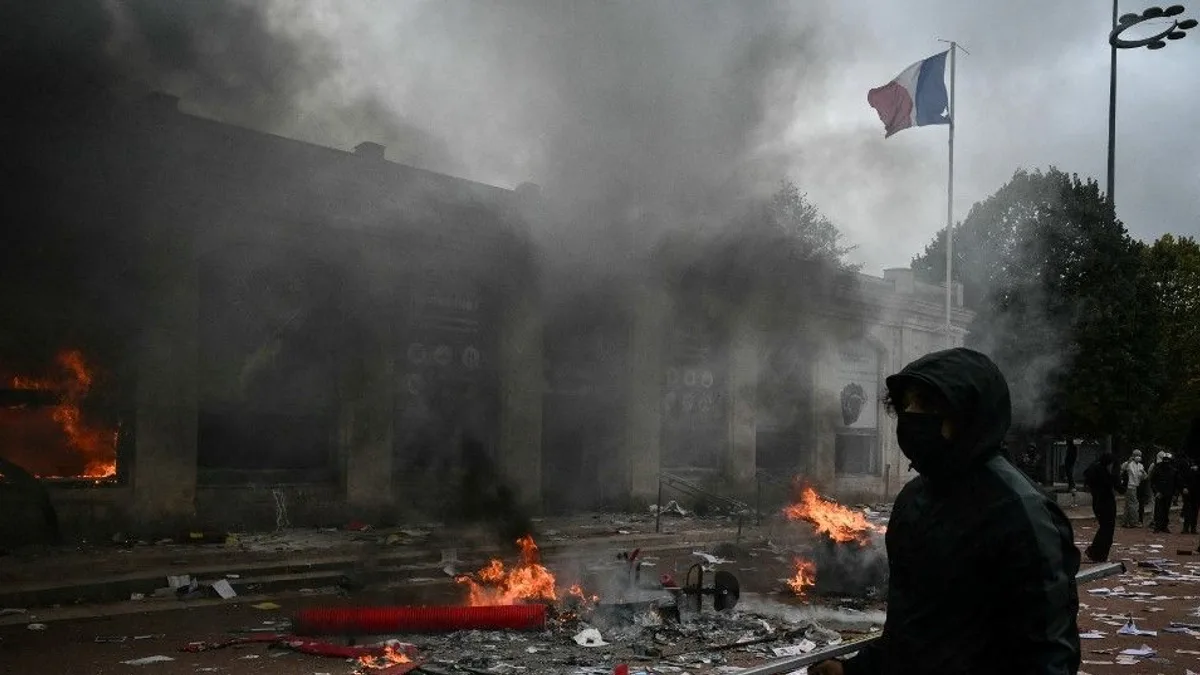
In Nantes on Thursday morning, the lobby of the Nelson Mandela high school was destroyed. Deputy head Gael Cordier describes a deliberate fire that spread to the facade, while testimony gathered by ICI Loire Ocean says a burning trash can set the building alight. The Provence-Alpes-Cote d’Azur region said that in Marseille, outside the Victor Hugo high school, the principal, his deputy, the general secretary and a team leader were attacked and doused with gasoline. In La Rochelle a bus was attacked, and firefighters treated the passengers.
How many people are injured, and why do the numbers differ?
The figures are not cumulative. They refer to different days and different sources. Nunez spoke of about 300 police officers and gendarmes injured on Thursday, and RTS, citing the Interior Ministry, reports 305. On Wednesday, according to the same minister, 83 police officers and gendarmes were injured.
On Thursday evening Geffray said 65 education employees and 170 students had been injured since the movement began. RTS adds that 40 principals are among the employees. The Magistrates’ Union, whose latest tally dates from Thursday, reports 119 injured students and notes that the police inspectorate IGPN has been alerted several times. On Friday, the minister said at a press conference, three people from schools were injured, compared with 31 a day earlier.
France’s Defender of Rights has opened proceedings over a 14-year-old injured on Monday at a blockade in Saint-Ouen-l’Aumone in the Val-d’Oise department. His lawyer says he has a double jaw fracture and broken teeth, and claims a police officer fired a shot at his head from a distance of one meter. IGPN is also investigating.
What do the students want, and what is the government offering?
Students are asking for more money for schools, replacements for absent teachers, smaller classes, repairs to dilapidated buildings and less pressure from the Parcoursup admissions system. The movement began last week in the Ile-de-France region, and some students have been mobilized since September 17.
After a meeting with Geffray, the organizations concluded there were no “concrete measures.” The president of the High School Students’ Trade Union, Riyad Rani, said:
The High School Students’ Trade Union calls for the mobilization to continue, for demonstrations to go on, and for everyone to join the movement’s third act on Tuesday.
Geffray promised a plan for faster teacher replacement, with priority for final-year classes, and 300 additional posts for school nurses, psychologists and social workers in the 2027 budget. On school schedules he announced “thorough work,” but admitted he would not be able to decide in time for the start of the 2027 school year. He blames the violence on small groups:
The high school movement has been taken hostage by ultra-violent groups.
Carole Zerbib, head of a Paris school and a member of the leadership of the SNPDEN Unsa union, called the situation “paradoxical”: students point to decrepit buildings, yet schools are attacked and wrecked, and “the way of acting is not acceptable.” A first-year student from Villefontaine, Lili, told ICI Isere: “Smashing equipment, and we don’t have any as it is.”
A political fight over who is to blame
The office of Prime Minister Sebastien Lecornu accused the France Unbowed party (LFI) and “its far-left intermediaries” of organizing the movement. LFI coordinator Manuel Bompard replied that the prime minister’s office is “sinking into conspiracy theory.” Justice Minister Gerald Darmanin gathered 36 chief prosecutors by video link on Thursday to prepare a tougher criminal response, and on Friday he told radio RTL that parents should be held civilly liable for damage. On the same radio station he said an “active and violent minority” is taking part in the protests, and added: “We are not quite sure they are even high school students themselves.”
The Magistrates’ Union responded with a statement titled “Let’s stop silencing young people with repression,” calling for an end to the “brutalization of the high school students’ social movement.”
How much damage has been done, and what comes next?
The president of the Ile-de-France region, Valerie Pecresse, put the damage to high schools there at seven million euros. The president of the Auvergne-Rhone-Alpes region, Fabrice Pannekoucke, cites 25 to 30 million, but his estimate includes the surroundings of schools and damaged vehicles, and the region has more than 300 high schools. The president of the Grand Est region, Franck Leroy, speaks of a bill of almost one million euros.
Some high schools in the Nantes metropolitan area, in Clermont-Ferrand and in the Loire department will stay closed on Monday and Tuesday. On Tuesday, October 6, the third act takes place, a national demonstration that the education inter-union organization will also join.