Republika Srpska signs $750,000 deal with DCI Group
A US foreign agents filing lists the agency hired by Banja Luka as distributor of a website calling for sanctions on the former High Representative.
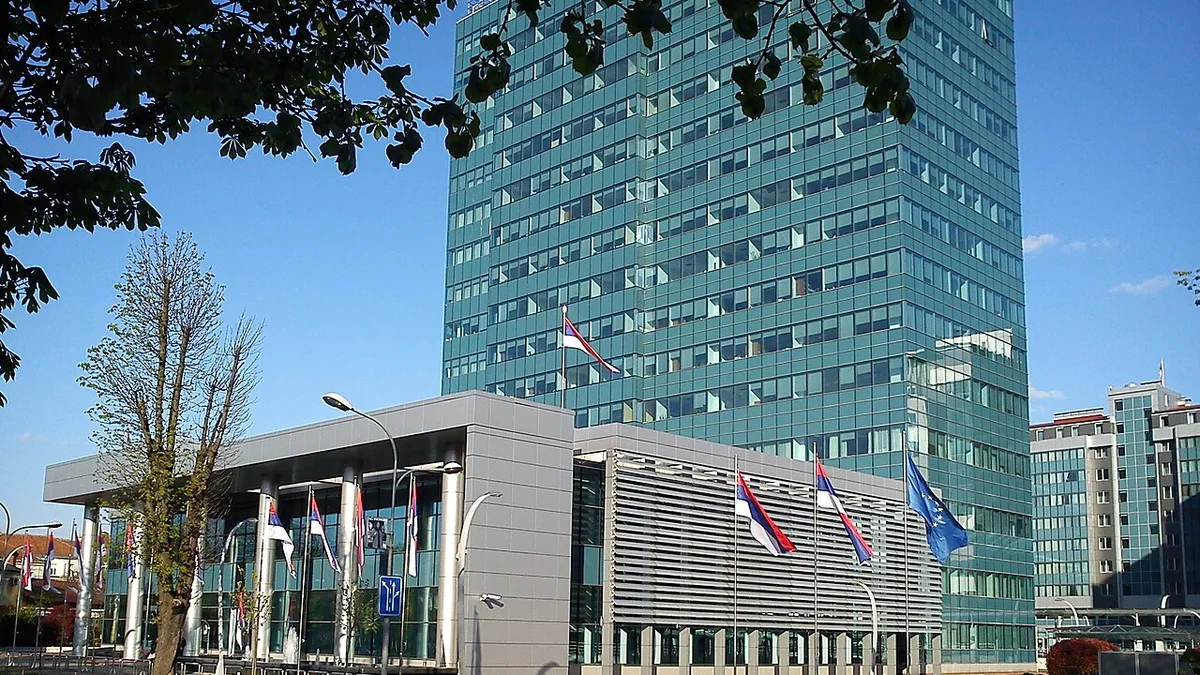
How the government of Republika Srpska spends money on its presence in Washington matters to Serbia too, because this is a neighboring entity whose moves toward the United States are closely watched in the region. An investigation by the Sarajevo outlet Detektor, published on October 5, links Banja Luka’s contract with the US agency DCI Group to a website calling for sanctions on the former High Representative in Bosnia and Herzegovina, Christian Schmidt.
What the US foreign agents registry says
The contract with DCI Group AZ, LLC was signed on behalf of the Republika Srpska government by Nemanja Kovacevic, assistant minister for international cooperation. The document is available in the US Foreign Agents Registration Act registry, known as FARA, and its value is $750,000, or about 1.2 million convertible marks. The contract runs from February 2026 to December 31 of the same year.
Its stated purpose is to help with communications efforts aimed at building stronger relations with the United States. The sources we reviewed give the value of the contract, not the amount actually paid so far, and that distinction should not be blurred.
On its official website, DCI Group describes itself as a public relations agency working in communications and strategic advice, and says it is made up of “seasoned political operatives, communications strategists, industry experts and creative professionals with a reputation for winning the toughest battles.”
What does the agency have to do with the sanctions website?
Detektor found that the registry lists DCI Group as distributor of the content of Sanctionchristianschmidt.com, on behalf of Republika Srpska. The domain was registered on September 16, 2026, during the election campaign in Bosnia and Herzegovina.
The site says Schmidt ruled BiH “with unlimited powers, even though he was never approved by the UN Security Council,” and that he used the powers of the Office of the High Representative “to advance the interests of Muslim Bosniaks at the expense of Bosnian Serbs.” It also claims he “unlawfully removed the democratically elected president of Republika Srpska, Milorad Dodik.” The court record tells a different story: the Appellate Panel of the Court of BiH upheld the verdict sentencing Milorad Dodik to one year in prison for failing to comply with the decisions of the High Representative, after which he lost his mandate while remaining head of the SNSD party. According to the verdict, he carried out the acts for which he was convicted from July 1 to 9, 2023, in Banja Luka.
The site also makes claims about election legislation: that the new voting machines have been linked to election fraud in Iraq, the Democratic Republic of Congo and the Philippines, and that the changes threaten the secrecy of the vote.
According to the same site, US Congresswoman Celeste Maloy called on the US Treasury Department to examine whether Schmidt and members of the BiH Central Election Commission committed acts subject to sanctions under the Global Magnitsky program, in connection with Dodik’s removal from office. Detektor relays that claim from the site and has not independently confirmed that such a letter exists. The same outlet writes that Dodik and Zeljka Cvijanovic, a member of the BiH Presidency, met Maloy in February 2026. Detektor did not contact Maloy through her official accounts.
What the interviewees and the contracting side say
Harun Iseric, an assistant at the Faculty of Law of the University of Sarajevo, told Detektor that the move is part of a broader narrative promoted by the Republika Srpska leadership. He said:
“The racist and undemocratic narrative being promoted aims to undermine ‘democratic and fair elections,’ as well as to discriminate against Muslims, that is, Bosniaks, as a constituent people.”
Iseric recalled that the Central Election Commission has previously penalized those who spread falsehoods about election technologies. On the congresswoman’s letter, he said its weight is reduced by the fact that only one member of the House of Representatives signed it and that her position has no broader backing, but he added:
“Although, one should never underestimate even such ‘minor’ steps that are the result of lobbying activities.”
Kovacevic told Detektor that he cannot disclose whether the website is part of the contract signed with the agency, because “all contracts carry a secrecy label.” Iseric described that as a practice that does not contribute to the transparency of government, and he described the contracts this way:
“Contracts like these, for which RS has a history of abuse aimed at eroding constitutional values and the BiH Constitution, should not be hidden and unavailable to the public. Defenders of the constitution must always look for ways to access the contracts and challenge them before the Constitutional Court of BiH.”
Detektor sent requests for comment to DCI Group, the Central Election Commission and the Office of the High Representative, but had received no reply by the time of publication.
Not the first time Banja Luka pays lobbyists
The same outlet previously published an investigation finding that Republika Srpska authorities spent about ten million marks of budget money on lobbying in the United States. An analysis of the financial reports of US lobbyists showed, as Detektor writes, that part of the money went to pay for lunches and apartments in Banja Luka.
Detektor also recalled the decision of the Constitutional Court of Bosnia and Herzegovina banning budget financing of lobbying from Republika Srpska. The Republika Srpska government described that decision as politically motivated. According to the registry, the contract with DCI Group was signed in February 2026, and whether its subject also covers the Schmidt sanctions website remains without an official answer for now, since the government shields it with secrecy.