Starlink Speed Cap in Ukraine Cancels Drone Missions
An adviser to Ukraine's president says Kyiv got no warning about the speed limit, while frontline units report dropped connections during drone flights.
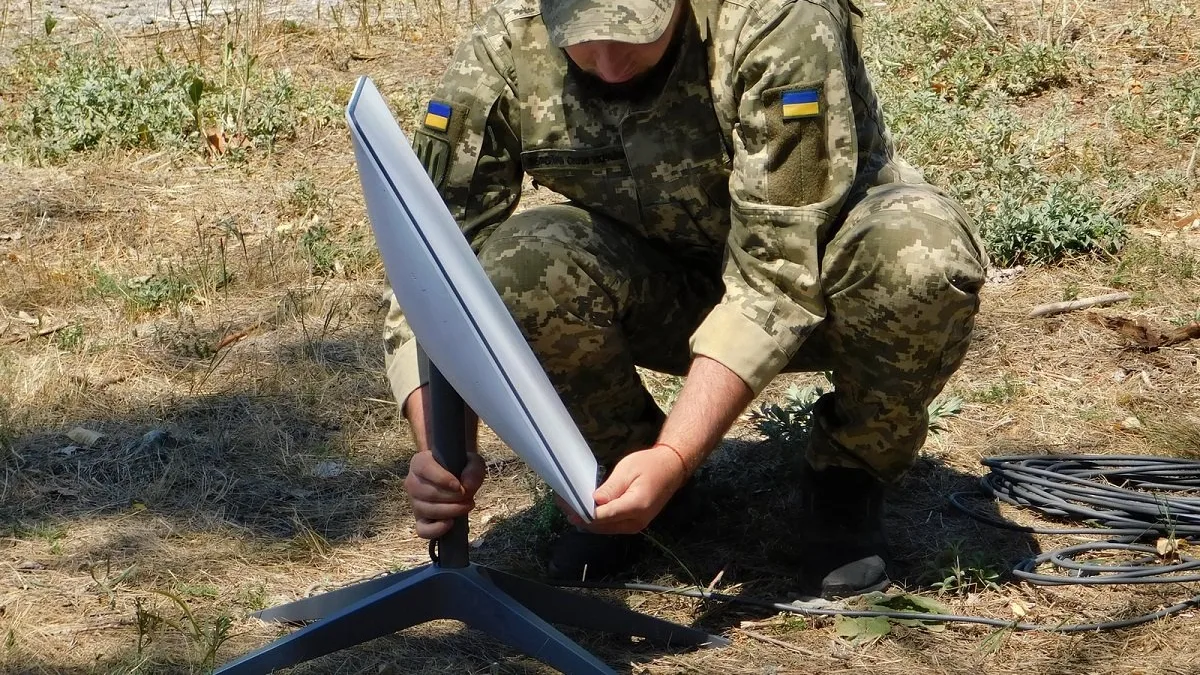
Since the night of October 13 to 14, Starlink in Ukraine has been cutting the connection to terminals that move at high speed, and the Ukrainian military, which relies on the network to control drones, was not told. SpaceX, the company led by Elon Musk, did not respond to a request for comment, and Ukraine’s Ministry of Defense is looking into the cause.
The restriction was first made public by Sergiy Beskrestnov, technology adviser to Ukrainian President Volodymyr Zelensky, in a Telegram post on Wednesday, October 14. “Tonight SpaceX introduced a speed limit for Starlink terminals in motion,” he wrote. He then spelled out what that means on the ground:
“Our defense forces were not warned about this restriction, which led to the disruption of several missions.”
Beskrestnov added that the move “clearly cannot be a coincidence and is connected to the current political situation.” He did not name anyone.
What exactly changed on the front?
That night SpaceX capped the military Starshield service, so the connection drops above 160 kilometers per hour (100 miles per hour). Units in the field, however, describe dropouts at much lower speeds.
The Seventh Rapid Reaction Corps of Ukraine’s Armed Forces, deployed in the southeast, told Reuters that the link disappears for 10 to 20 seconds at speeds of 110 to 120 kilometers per hour. “The drones kept moving, but these interruptions made them harder to control,” the unit said. An unmanned systems unit on the front near Hulyaipole cancelled part of its missions that day.
A third figure came later. Activist Sergii Sternenko reported on October 14, citing military accounts, that the link drops at just 60 to 70 kilometers per hour. That figure has not been officially confirmed, so the gap between 160, 110 to 120 and 60 to 70 remains unexplained for now.
A senior Ukrainian official, whose name was not published, told AFP that the disruption “primarily limits logistics.” According to him, some restrictions were reported as early as the previous evening, so everything coincided with the Russian ballistic strike in the morning.
Why are interceptor drones hit hardest?
Ukraine uses Starlink terminals as an alternative to radio control of drones. Beskrestnov warned that the restriction also affects Starlink-linked interceptor drones, which he called the most successful defense against jet-powered Shaheds. Russian strikes on energy infrastructure were under way during those very hours.
How do Kyiv and Warsaw read it?
Kyiv ties the move to political pressure from Washington. U.S. President Donald Trump called for a pause in attacks on energy infrastructure while easing sanctions on Russian diesel. In a post on Sunday he wrote: “An ENERGY CEASEFIRE in the war between Russia and Ukraine takes effect immediately. Both sides have agreed. Do not violate it!” There is no sign that either side is ready for such a truce: Kyiv reports that a Russian missile hit a power plant in the capital on Tuesday evening. Washington is also pressing Kyiv to stop striking Russian refineries.
Polish Foreign Minister Radoslaw Sikorski also reacted, asking Elon Musk on X whether he is again conducting politics through his products. He ended the message with the line: “As your European customers, we are watching you.”
Not the first time Starlink has changed the rules
SpaceX has imposed speed limits before. In late January, at Kyiv’s request, it capped terminals in Ukraine because Russian forces had mounted Starlink on strike drones. The exact figure was never established: independent reports put it at 75 to 90 kilometers per hour. The difference from October is in the procedure, since the January measure came at Ukraine’s request, while this one arrived without warning.
Zelensky said in August that Kyiv is working on an alternative to Starlink with a European country he did not name. Until that happens, Ukrainian units depend on a network whose owner, according to France 24, has changed his stance toward Ukraine several times since the Russian invasion began in 2022.