Tirana Riots: Four Ministries Attacked, 35 Detained
A student protest in Albania turned into clashes that lasted more than eight hours, and the number of injured police officers ranges from 14 to 51, depending on the source.
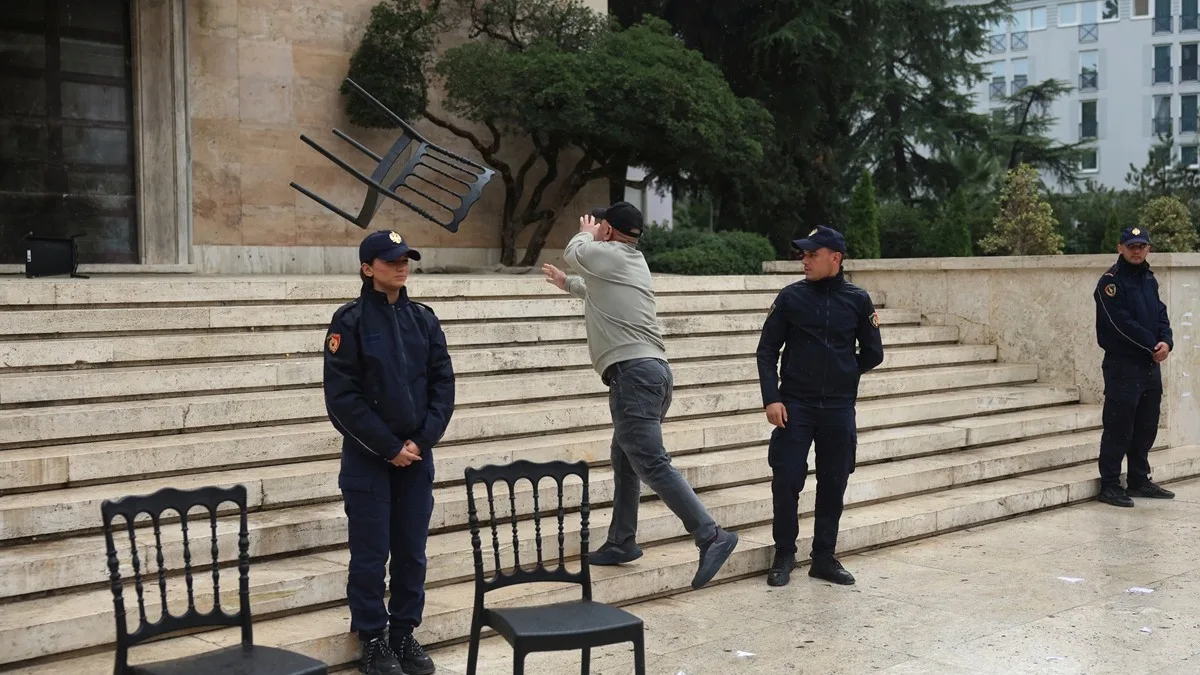
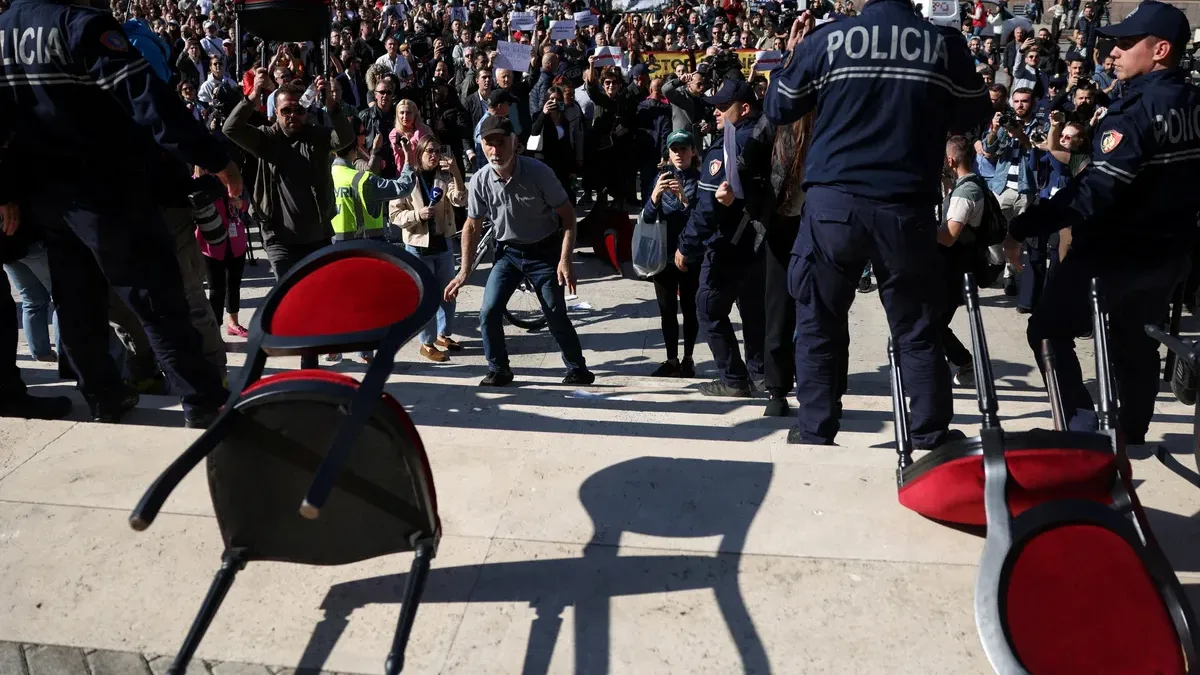
Albania, which like Serbia is waiting for European Union membership, saw more than eight hours of rioting in central Tirana on Wednesday, October 14. According to the AP news agency, buildings housing at least four ministries, several banks and shop windows were attacked, and demonstrators tried to storm a police station. Police detained 35 people.
The riots grew out of a student protest demanding better conditions at universities, lower tuition fees and the resignation of Prime Minister Edi Rama. In written answers to Reuters on Thursday, Rama said he will not resign and that violence will not be allowed to push Albania off its path to EU membership. We covered the first night of clashes, with 16 arrests, in an earlier article on the Tirana protest.
Which buildings were attacked in Tirana?
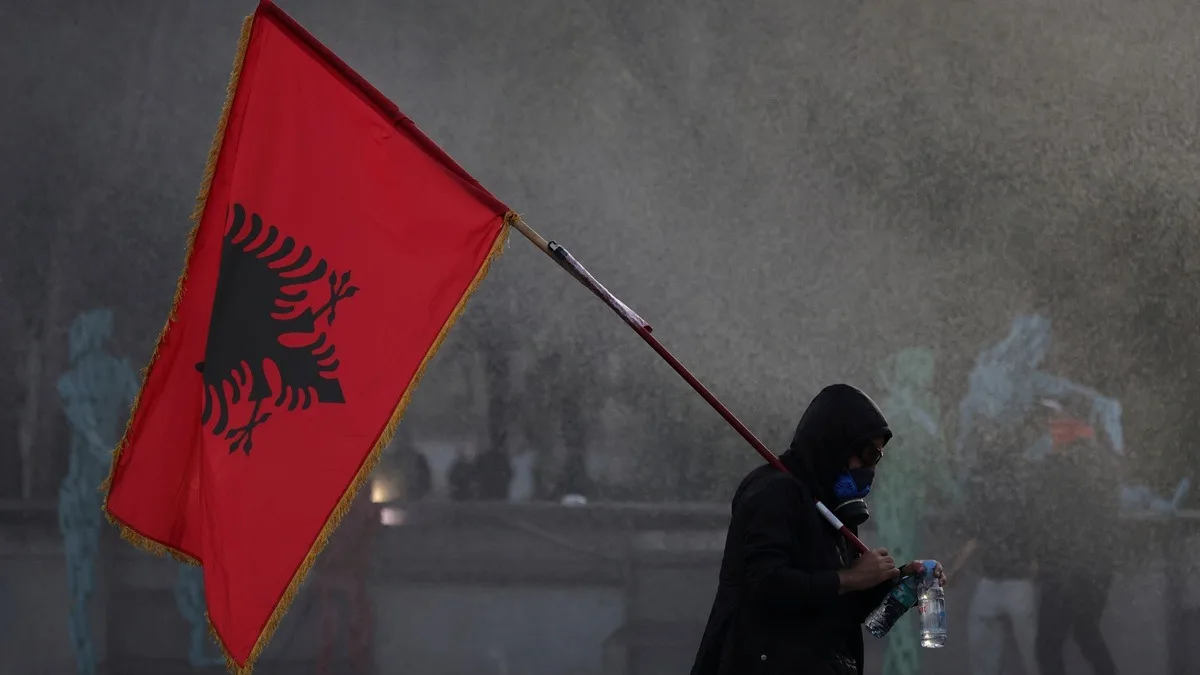
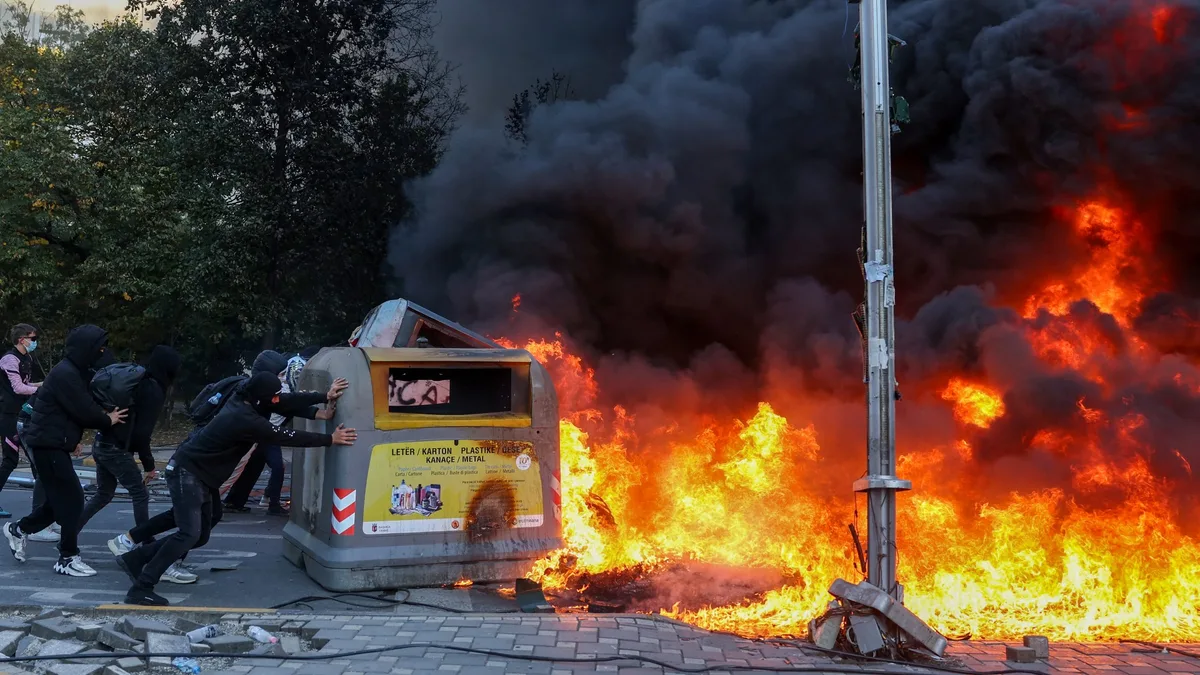
During the day, demonstrators threw paving stones and Molotov cocktails, set dumpsters on fire and built barricades out of street fences. Police responded with tear gas and water cannon. According to reports from AFP and other sources, these ministries were targeted:
- Ministry of Justice: windows were smashed and one floor was set on fire, and firefighters brought the blaze under control after police pushed the demonstrators back.
- Ministry of Finance: fences were used to break windows and doors, and some demonstrators briefly got inside the building.
- Ministry of Education: AFP journalists saw two people climb over a wall and throw flares into the building, after which thick black smoke poured out of a window and firefighters put out the fire.
- Ministry of Economy: attacked with stones and fire, according to Montenegrin public broadcaster RTCG.
The crowd then moved toward the government building and the prime minister’s office, where stones and Molotov cocktails were thrown. Police used a water cannon, and a tree next to the entrance briefly caught fire before firefighters put it out. According to RTCG, pupils from a Tirana high school who were boycotting classes joined in, and some briefly blocked a street near their school with garbage containers they had set alight.
How many police officers were injured in the Tirana riots?
The sources disagree here. Late on Wednesday, police said 14 officers were injured, according to AFP. According to AP, authorities say 23 officers and six other people are being treated for injuries, which makes 29 injured in total. Interior Minister Ervin Demo posted the highest figure on social media:
“During today’s violence, 51 officers of the State Police were injured. Some of them are currently in the Military Hospital, where they are receiving the necessary medical care.”
According to RTCG, Demo visited the injured officers at the Trauma Hospital and said that violence against police officers cannot be justified under any circumstances. Health Minister Klodiana Spahiu also visited the injured and called the violence “unacceptable.” None of the sources explains the gap between the figures. For comparison, on the first night police reported six injured officers and 16 arrests.
What are the government and the opposition saying?
Demo acknowledged that students have reason to be dissatisfied, but blamed the violence on “malicious hands from outside.” He also addressed those setting buildings on fire:
“To everyone who is currently burning and destroying public and private property, I say: withdraw before it is too late. While individual responsibility before the law may be delayed amid the destructive frenzy of a masked mob, it will never be forgotten.”
Deputy Prime Minister Albana Koçiu called on students on Facebook to distance themselves from the violence:
“Protest is a legitimate right, but it must not be an excuse for violence, for destroying the city, or for ugly brawls in the middle of the road. I call on the students and every honest citizen who believes in the right to protest: distance yourselves from violence and vandalism!”
President Bajram Begaj condemned the violence and appealed for calm, adding: “The constitution and the law must remain the limits for everyone, without exception.”
Sali Berisha, leader of the opposition Democratic Party of Albania, sided with the students and demanded the prime minister’s immediate resignation:
“We will support this protest and these students with all our capacity. Edi Rama will face not only the students, but the entire opposition and all citizens. We will not abandon the students, we will support them in every way and within all our means.”
Why have Albanians been protesting for four months?
The student demands build on months of anti-government protests known as the “Flamingo Revolution.” The movement got its name because demonstrators carried signs with a pink bird on them. It began with protests against a tourist complex in a protected area in southern Albania, which has been linked to Jared Kushner, son-in-law of US President Donald Trump.
Besar Likmeta, editor of the Balkan Investigative Reporting Network in Albania, told Al Jazeera that this protest followed four months of daily rallies on the capital’s main streets. As he put it, the discontent has spread to broader demands for more opportunities and a fight against corruption, which is “a sign of growing alienation” among the younger generation of Albanians.
The sources count the days differently: AP and AFP write about a second consecutive day of rioting, while Reuters and Al Jazeera speak of a third day of protest, and Al Jazeera says fierce clashes began as early as Monday.
What is the European Union saying?
The EU delegation in Albania commented on the violence and on organizers’ claims of excessive police force against demonstrators and journalists. It called for a proportionate response from the authorities and for tensions to ease on all sides, and according to AFP it also demanded an urgent investigation of those claims.
“We express concern over the violent escalation at the protest in Tirana. Freedom of assembly and expression are fundamental rights and core European values.”
In a statement, police said they are continuing to identify and detain people who committed violence and wore masks during the protest.