Tirana: Rama Sets Concrete Chairs, About 1,000 Police
The prime minister replaced the wooden dialogue chairs that protesters smashed with concrete ones, and the ombudsman reported findings on eight minors.
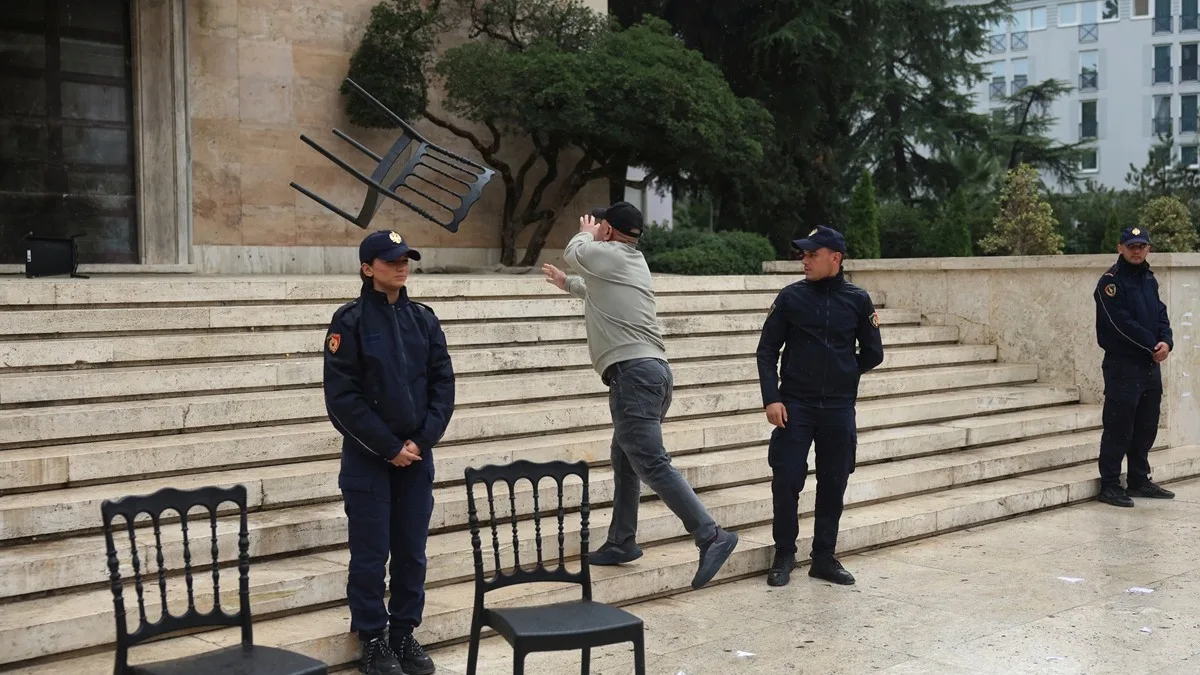
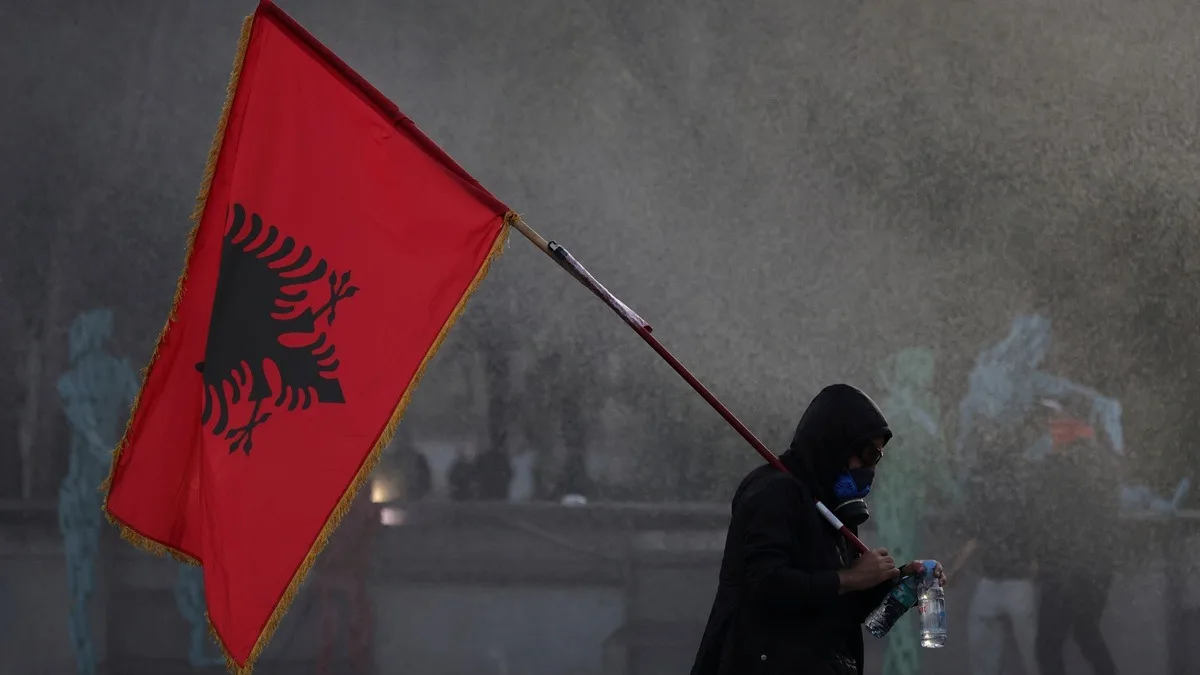
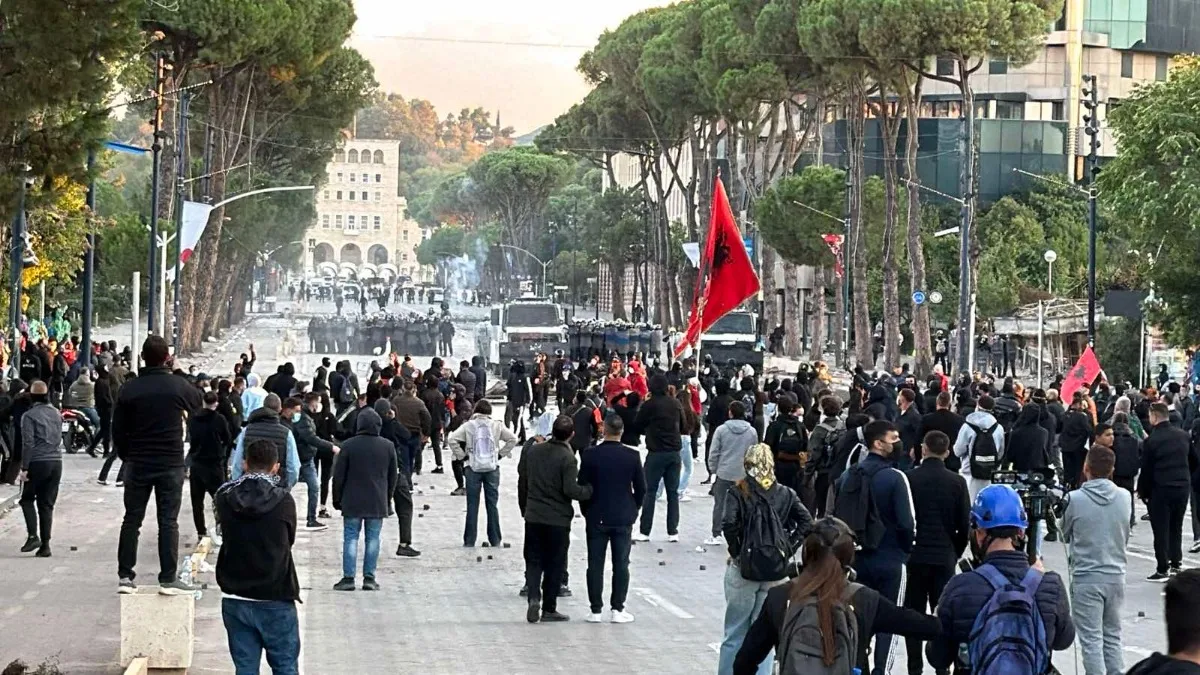
Students in the Albanian capital have been protesting since October 13 over the cost of studying and the state of education, and this morning the protest gained a new symbolic twist: Prime Minister Edi Rama put concrete chairs where wooden ones, smashed by demonstrators the day before, had stood, while about 1,000 police officers and two water cannons were deployed outside parliament. The story matters to readers in Serbia because it is unfolding in a Western Balkan neighbor, and because the dispute over tuition costs is now being framed as a question of the prime minister’s resignation.
What did Rama put in place of the smashed chairs?
Rama posted a video on his Facebook profile with a short caption, “Good morning,” and an Albanian flag. According to RTCG’s description, the footage shows concrete chairs where wooden ones stood until yesterday, and the invitation to dialogue still stands.
The sources describe the new seats differently. RTCG’s headline speaks of stone chairs while its text says concrete, and Kurir reports concrete blocks placed instead of chairs, bearing the word “Dialogue.” The fate of the old ones is also told two ways: RTCG says demonstrators smashed them, Kurir says they were overturned. Kurir adds that over the previous two days the prime minister had put out chairs holding papers with the word “Dialogue” on them.
What is the security presence outside parliament?
Outside the parliament building, ahead of the student protest and a plenary session scheduled for 10 a.m., there are about 1,000 police officers, two water cannons and members of the Rapid Intervention Forces (FNSH), Kurir reported, citing Albania’s Euronews.
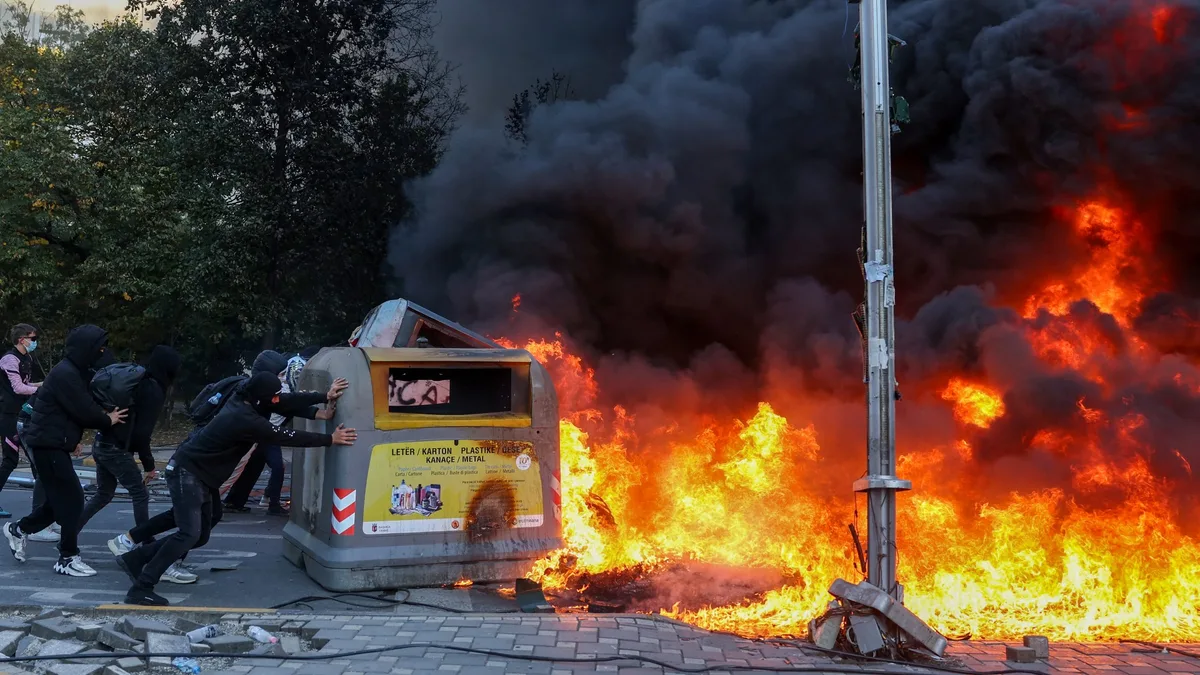
The day before, according to RTCG, which cites Anadolu, the gathering began peacefully outside the Government building. Demonstrators marched to the Ministry of Education, then came back and began throwing cobblestones and Molotov cocktails at the building and at security forces. The Molotov cocktails started a small fire that firefighters quickly put out. Kurir says the water cannons were on standby but were not used, and that police issued no call to the demonstrators. After several hours the protest ended with a march to Skanderbeg Square.
How many people are injured, and what does the ombudsman say?
According to Albania’s Ministry of Health, 320 people have been injured since October 13: 192 police officers, 92 demonstrators and 36 bystanders. Six of the bystanders are media representatives, one of them a foreign national. Eight people sought help the previous day at the University Trauma Hospital and the “Mother Teresa” University Hospital Center, and the trauma hospital is still treating nine people injured in earlier protests: four demonstrators, one police officer, one media representative and three bystanders. One person has had surgery, which health authorities say was completed successfully.
The ombudsman’s office warned of possible violations of the rights of detainees. During visits to police stations and medical facilities, it recorded complaints of excessive use of force, unlawful detentions and inadequate conditions in holding rooms. Eight minors say they were subjected to physical and verbal violence, and preliminary findings show signs of injury on two of them. The ombudsman called on the authorities to ensure that the rights of detainees, minors above all, are respected, and to investigate the allegations of police violence.
What do the students demand, and how long have the protests lasted?
The students demand lower tuition costs, higher spending on education and action against corruption in the education system, and increasingly they demand Rama’s resignation, which he refuses. The union of university academic staff has announced a boycott of classes at universities across Albania.
The sources also disagree on how long the protests have run: in one text RTCG writes of the ninth day and in another of ten days, while Kurir mentions ten days in one paragraph and nine in another. If October 13 is counted as day one, October 22 is the tenth.