Serbia Truckers Protest August 31, Threaten Border Blockade
The Pumedtrans carriers' association has called a protest outside the EU Delegation in Belgrade for August 31, and warns of a border blockade from September 14 if there is no response.

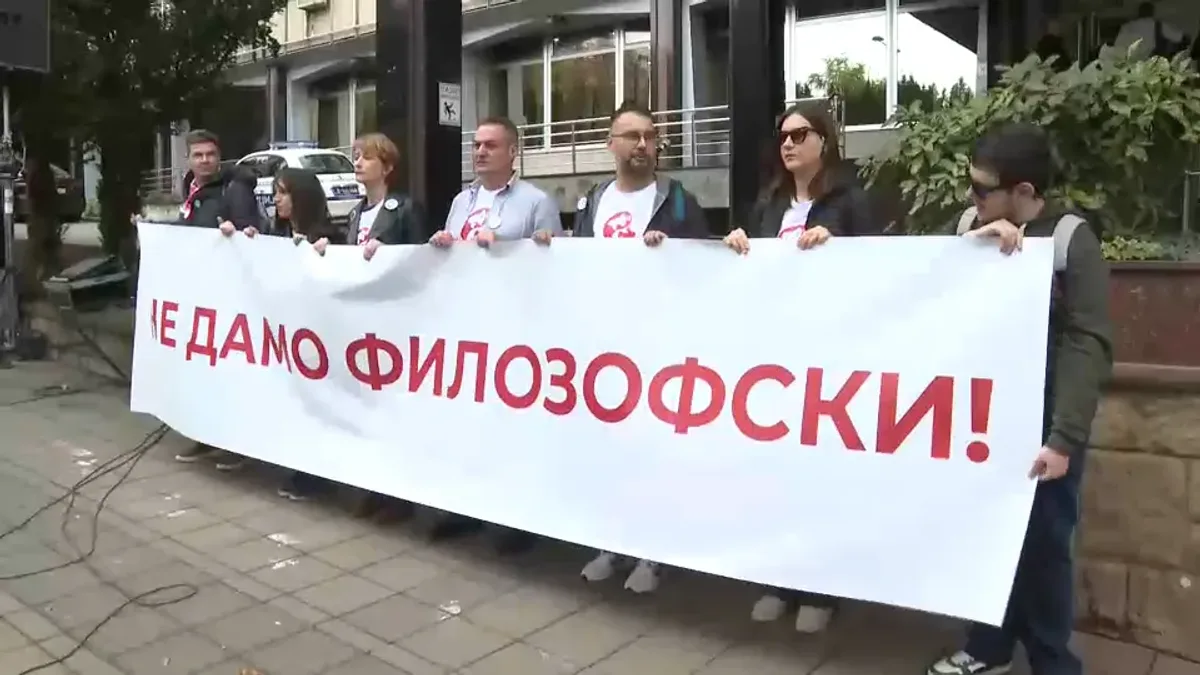
The International Transport business association, known as Pumedtrans, has called a rally outside the headquarters of the Delegation of the European Union to Serbia for Monday, August 31, from noon to 2pm. The address is Vladimira Popovica 40/V, in the Airport City complex in New Belgrade. If there is no progress by mid-September, the carriers say they will blockade every border crossing toward the European Union on September 14, together with counterparts from Bosnia and Herzegovina, Montenegro and North Macedonia.
Organizers describe the rally as the last step before wider action at the borders. In the call for the gathering, Pumedtrans labels it “a final appeal to reason addressed to the European Commission,” and says a formal petition will be handed to EU representatives at the Delegation’s address. The invitation extends to all carriers, employees of companies that handle international freight and passenger transport, and their families and supporters. Similar gatherings are scheduled the same day outside the EU delegations in Podgorica, Sarajevo and Skopje.
What Are the Carriers Demanding?
At the heart of the demand is the legal status of professional drivers in the Schengen area. Under the rule currently in force, professional drivers from the Western Balkans may stay in Schengen countries for 90 days within any 180-day period. After day 91 comes arrest, deportation and entry bans. Pumedtrans says in its statement that a draft Schengen visa strategy already recognizes this category of drivers as needing a longer stay than the current 90-in-180 rule, but that no concrete proposal or deadline for a fix exists.
“If a professional driver from the Western Balkans is safe for the EU for 90 days, why does day 91 turn him into a threat to the EU, subject to arrest, deportation and a ban on entering Schengen?” the association said in its statement.
According to Pumedtrans records, more than 50 Serbian drivers have been turned back from Schengen borders in the past week alone, most of them at crossings into Hungary and Romania.
The Drivers’ Association 381, led by Srdjan Tosic, is also involved in preparing the protest. Speaking on the TV program “Redakcija,” he explained that drivers are not asking for European regulations to change, but for an exception for their own category.
“We respect their rules, we just want them to make an exception for us and recognize our working status,” Tosic said.
Tosic adds that drivers should not be treated as tourists or illegal migrants, and that their status should be handled as an economic and transport issue rather than a migration one. He says the system that tracks days spent in the Schengen area does not work correctly either: a driver returning from Schengen is sometimes shown fewer or more remaining days than he actually has, an irregularity that, Tosic says, the European Commission has itself acknowledged.
The Deadline Is September 1
A European Commission session where the question of professional drivers’ stay is expected to come up is scheduled for September 1, two days before the Belgrade protest. Tosic says the negotiating channels so far have delivered answers “on and off,” with no concrete measure beyond the draft visa strategy, whose completion date remains unknown.
A similar flare-up has already played out once before: according to Tosic, about two weeks ago tensions peaked on the Croatian side of the border, when roughly ten drivers were turned back over two to three days. The situation then calmed down temporarily, but he says checks have continued in a milder form since, with verbal warnings given to drivers.
If no agreement is reached by September 14, the association says transport will be suspended at every Western Balkan border crossing into the European Union, a measure that, given the volume of freight moving through these crossings, would hit supply chains inside the EU itself, not only the carriers behind it.