Serbia fuel reserves: 45 to 50 days, rules require 90
An Energy Community statement puts three countries at 45 to 50 days, while Biznis.rs reports 51 for Serbia. None of the eight markets has the required 90 days.

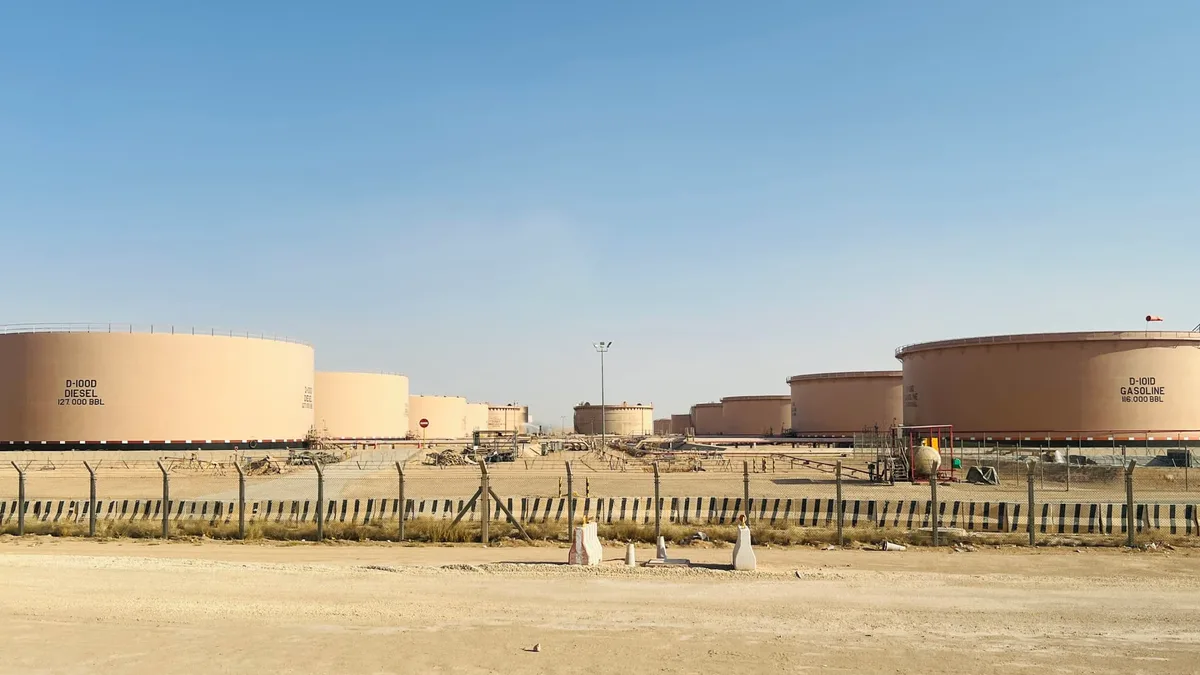
Fuel stocks in Serbia cover 51 days of net imports, according to Biznis.rs, citing data from the Energy Community Secretariat. The required level is 90 days. The Secretariat presented its 2026 oil market report on October 7 at the Oil Forum in Belgrade, and in a statement the same day it put coverage for Serbia, Montenegro and North Macedonia together at 45 to 50 days.
The two figures do not match exactly. Biznis.rs says it saw data from the report, which is due to be published next week, so the 51-day figure for Serbia rests on that account until the full document is out. The Secretariat’s statement contains no figures for individual countries.
Where does Serbia stand against the region?
The report covers eight markets: Albania, Bosnia and Herzegovina, Georgia, Kosovo*, Moldova, Montenegro, North Macedonia and Serbia. Ukraine will be included in the final version. According to Biznis.rs, none of the eight has reached 90 days, and Serbia is the best supplied. North Macedonia, the portal writes, holds stocks for 45 days, while Montenegro keeps slightly under 40% of the required level. Those two values come from different measures and should not be reduced to the same denominator.
Moldova, Albania and Bosnia and Herzegovina do not yet have strategic reserves, but they are building them. Georgia and Kosovo have not adopted the rules either, Biznis.rs states.
Preet Enok, an oil expert at the Secretariat, said at the Forum, in a statement carried by Balkan Green Energy News:
“None of the countries covered by this report yet holds full 90-day reserves.”
Enok added that three countries have set up the mandatory reserves in line with the Directive: Montenegro, North Macedonia and Serbia.
What did the Danube do to imports?
Low water on the Danube in July 2026 cut fuel imports to Serbia by river to 30 to 40% of the usual level, according to data from July 23. In Moldova, barge capacity fell from 2,000-2,500 tons to about 900 tons.
During the 2026 disruption Serbia approved the release of diesel from state reserves, and when the water level cut imports in July, it allowed companies to use mandatory operational reserves, Biznis.rs writes.
The markets are linked. In 2024 Serbia supplied about 15% of oil product imports to Bosnia and Herzegovina. That same year North Macedonia re-exported about 330,000 tons to neighboring markets, and Albania supplied an estimated 50 to 60% of Kosovo’s fuel during the 2026 disruption. The VARDAX Thessaloniki-Skopje pipeline has been running again since March 2026, and the contract to build a Hungary-Serbia oil pipeline was awarded in 2026 and would open a new import route.
What is the Oil Coordination Group?
At the Forum the Secretariat announced that it is setting up a regional Oil Coordination Group. It will include the contracting parties from the Western Balkans, Ukraine, Moldova and Georgia, nine in total. The group monitors the market, exchanges data on supply, demand and emergency stocks, and can be convened at short notice when a disruption hits or looms.
Predrag Grujicic, head of the Gas Department at the Secretariat, said in the statement, in our translation:
“Crisis mitigation is not solely a domestic matter. Only through collective action can we fight a global crisis. The Energy Community offers an effective and well-established framework for that.”
Enok warned that the platform is not finished: it is not easy to set up a flexible and comprehensive data exchange platform overnight, and expertise and trust have to be built first. On the Strait of Hormuz he said:
“No country can cope with the closure of the Strait of Hormuz on its own.”
On the broader point of supply security, Enok said: “The Secretariat sees oil supply security as one of the foundations of support for the energy transition.”
The legal framework in the region is shifting. Moldova adopted its mandatory reserves law in June 2026, North Macedonia adopted a funded action plan for 2026 to 2030 in June, and Montenegro passed a crisis plan in May. A draft law in Albania has reached parliament. We previously reported that Serbia is among the regional leaders in oil stocks. The full report, once published, will show whether the 51-day figure holds.