Serbia Among Regional Leaders in Oil Stockpiles
Priit Enok of the Energy Community Secretariat names Serbia, Montenegro and North Macedonia as leaders in oil stocks, two days before the Oil Forum in Belgrade.
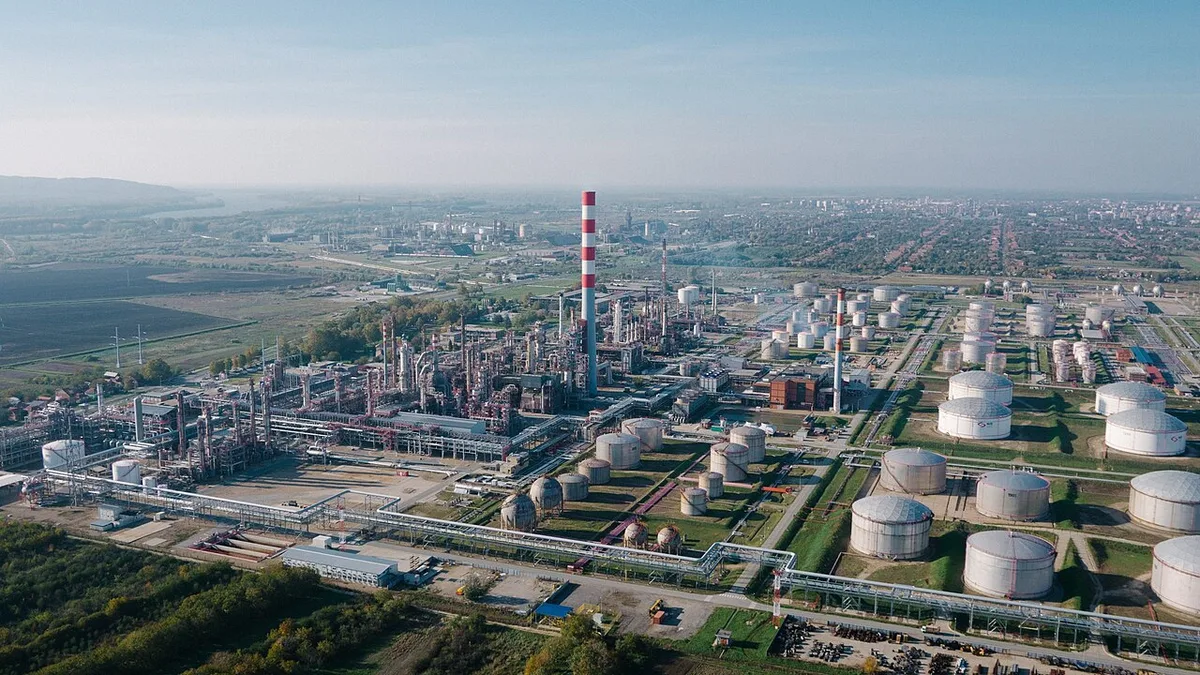
The Energy Community Secretariat published a conversation on October 5 with Priit Enok, an oil expert at the body, and Ian Moore, founder and director of The Oil Market Journal. Enok says Serbia, Montenegro and North Macedonia lead the region in oil stocks, because all three have adopted legislation and already built up physical reserves. The conversation appeared two days before the 18th Energy Community Oil Forum, which takes place on October 7 at the Metropol hotel in Belgrade.
What does Enok say about oil stocks in the region?
Enok does not say how many days of consumption those stocks cover. All he says is that the volumes are solid when measured in days of coverage, and none of the sources gives a specific figure. His assessment reads:
“All three countries have legislation in place and have already built physical stocks, with solid volumes expressed in days of coverage. Unfortunately, building oil stocks is relatively expensive and requires budget allocations or good financing models.”
Enok describes the other members differently. Moldova has made good progress on legislation but now needs faster implementation. Albania has drafts ready and, in his words, little left to do. In Bosnia and Herzegovina, a law at the state level has not been adopted yet, but the Federation has invested in storage facilities and physical stocks. For Moldova and Albania, Enok speaks only about legislation and says nothing about their stocks.
He also explained what makes the whole effort harder. Some countries, he says, had tenders for buying oil planned for the start of 2026, and then a market shock hit and the funds were no longer enough to complete the tenders. He did not name the countries.
Why are oil stocks a question for the whole region?
According to Enok, oil behaves differently from electricity and gas:
“Oil supply is very different from electricity supply, and even from pipeline gas. Oil is largely market driven. It goes to whoever bids the most.”
From that he concludes that no member can protect itself alone, since, as he put it, there is no Moldovan or Armenian oil market:
“Crisis management is not a domestic issue. Having a few thousand tonnes to supply your own firefighters at home is only a micro layer. This is really about solidarity: only by acting together can we cope with a global crisis.”
The Secretariat’s introduction says the attack on Iran in February and the disruption of flows through the Strait of Hormuz brought the sharpest oil supply shock in more than half a century. Enok confirms this in his own words: “We have not seen a year like this in the last 50 years and more, with a real supply shock and geopolitical events constantly affecting markets, governments, policies and consumers.”
What does Moore expect from the winter?
Moore says that after the attack by Israel and the United States on Iran, about 21 million barrels a day were at times missing from the Strait of Hormuz, around 20% of global supply. In his assessment, the market reacted sharply, but less than expected. He sees the reason in China, which used the surplus from the second half of 2024 and from 2025 to fill its own stocks, so it could buy less in the second and third quarters.
That option has run out, Moore warns: US strategic reserves are largely depleted, and China has probably used up a good part of its own. We previously reported that the International Energy Agency (IEA) released 325 million barrels from strategic reserves, and Moore now estimates that China is returning to the market ahead of winter, which would push prices up. He lists these risks for the winter:
- the US elections in early November
- the refinery maintenance season, with US refineries running at 98% utilization
- the switch to heating oil demand
- a shortage of Russian diesel, because of Ukrainian attacks on Russian refineries
Moore says:
“Our fear is that we could see new price spikes, and quite dramatic ones.”
On diesel, he adds that because of the ban in Europe, Russian diesel is not delivered to regions outside it, so “those countries are bidding for the same cargoes as we Europeans.”
Oil Coordination Group and the Belgrade forum program
The Secretariat is setting up an Oil Coordination Group, modeled on the European Union group of the same name. Its tasks are market monitoring, data exchange and aligning members when supply is disrupted. Enok says the group would provide a platform for a more current picture of supply and demand, since formal statistics tend to lag. The Oil Stocks Directive, he reminded readers, requires contracting parties to have emergency plans as well, not only reserves:
“Crisis preparedness is more than holding oil reserves. The Oil Stocks Directive requires Energy Community contracting parties to have emergency plans.”
The Belgrade forum is expected to host Minister of Mining and Energy Dubravka Djedovic Handanovic and Secretariat director Artur Lorkowski, along with representatives of the European Commission, the IEA, national institutions and energy companies. Topics include the resilience of the oil market and supply chains, the impact of geopolitical tensions on the European market, and protecting critical energy infrastructure from physical, cyber and hybrid threats. The conversation was published in English, so the quotes here have been translated.