NOAA forecasts G2 geomagnetic storm for Friday, October 9
NOAA expects a G1 to G2 storm when a plasma cloud from an M1.4 flare arrives. The ejection is slow, so G1 is the likelier outcome.

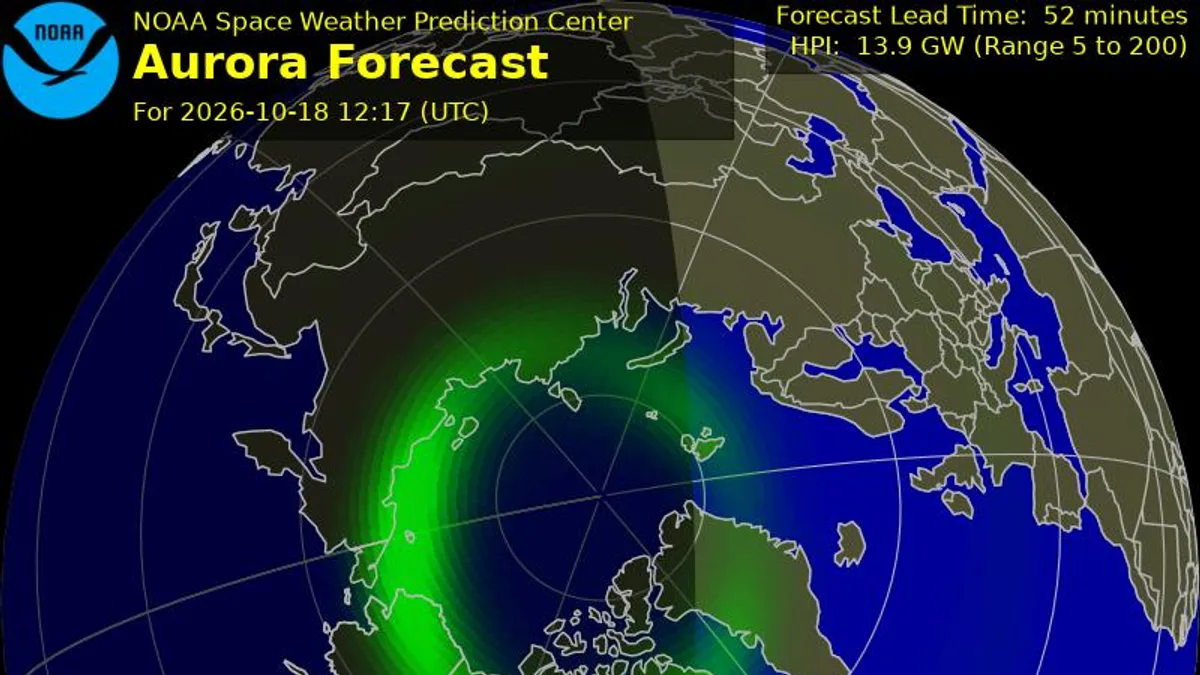
The Space Weather Prediction Center (SWPC) of the US agency NOAA issued a forecast of a geomagnetic storm for Friday, October 9, on Tuesday, October 6, 2026, at 16:40 UTC (18:40 Serbian time). The expected storm is G1 (minor) to G2 (moderate) on a scale that runs to G5. This forecast is separate from the storm we reported on earlier.
In its official forecast, SWPC states:
“G1 (Minor) to G2 (Moderate) geomagnetic storms are likely on 9 October with the arrival of a coronal mass ejection that was associated with an M1.4 flare from Region 4549 on 6 October. A high chance for additional M-class activity from Region 4549 will persist over the next few days.”
A coronal mass ejection is a cloud of charged particles the Sun throws into space, and a geomagnetic storm happens when such a cloud reaches Earth’s magnetic field and disturbs it.
What sent the cloud toward Earth?
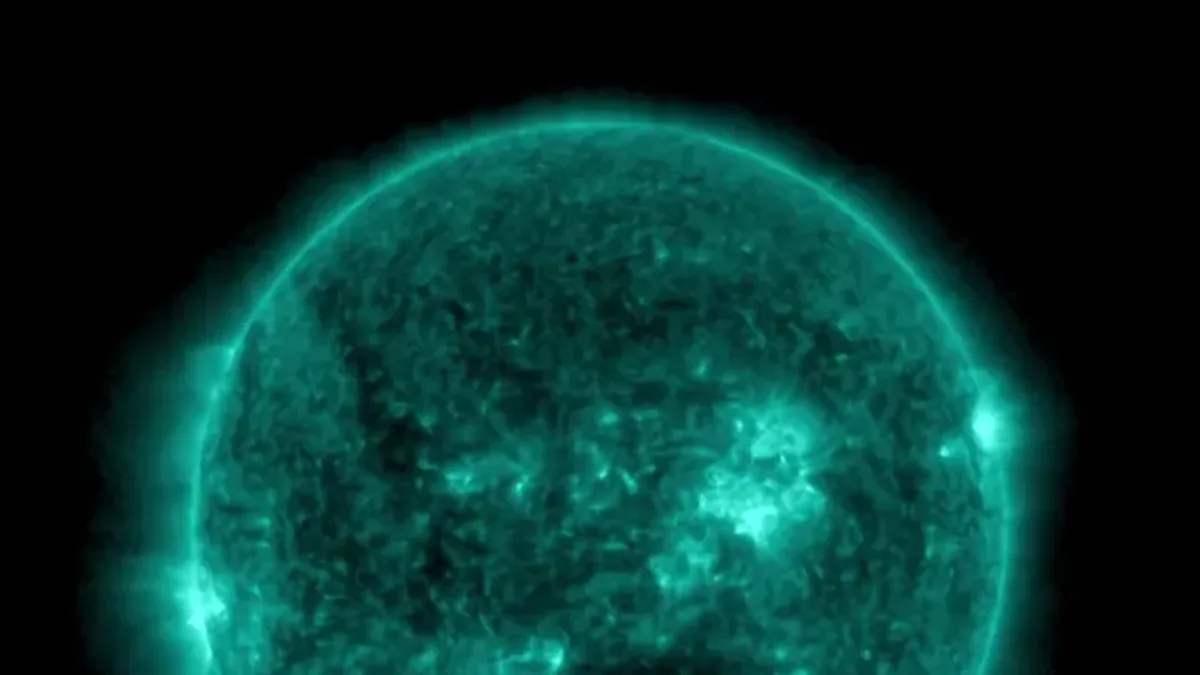
The cause is an M1.4 solar flare from active region 4549, recorded on October 6. According to SpaceWeatherLive, the ejection left the Sun around 07 UTC (9:00 Serbian time) and is a weak full halo event. That means the cloud expands around the entire Sun and has a component pointed at Earth. SpaceWeatherLive takes the speed of about 560 kilometers per second from the Belgian center SIDC.
What does the three-day forecast say?
On October 7, SWPC also issued a three-day forecast for October 7 to 9. It reads:
“The greatest expected 3 hr Kp for Oct 07-Oct 09 2026 is 5.67 (NOAA Scale G2).”
The three-hour breakdown puts the highest values on October 9: Kp 5.00 (G1) between 03 and 06 UTC and Kp 5.67 (G2) between 09 and 12 UTC. Over the previous 24 hours, the highest measured three-hour Kp was 3, below the storm threshold.
The same document gives a 45 percent chance of further M-class flares (radio blackouts R1 to R2) through October 9, mostly from region 4549 and possibly from region 4545. The probability of a proton event above 10 MeV is 10 percent.
Where do the sources differ?
SWPC’s forecast names only October 9. The headline of a Space.com article mentions October 8 and 9, but we did not have access to the body of that article, so we do not rely on it.
The SpaceWeatherLive editors are more cautious than the agency itself:
“A moderate G2 geomagnetic storm might be an optimistic expectation given the low speed of the ejection.”
In their assessment, G1 is the more likely outcome.
What does this forecast not tell us?
The forecast is a prediction, not a measurement. The exact moment the cloud arrives and the actual strength of the storm are not known in advance, and SpaceWeatherLive advises following developments on Friday. None of the sources says anything about whether auroras would be visible from Serbia or the Balkans, so there is no basis for claiming anything on that point. The forecast also does not show what effect the storm might have on satellites, power grids or radio links, apart from the possible R1 to R2 radio blackouts SWPC lists for M-class flares.