Geomagnetic Storm G1 on October 20: NOAA Expects Kp 5
NOAA forecasts a minor geomagnetic storm on Tuesday between 5 and 8 a.m. Serbian time, driven by fast solar wind from a coronal hole. Sources do not assess visibility in Serbia.
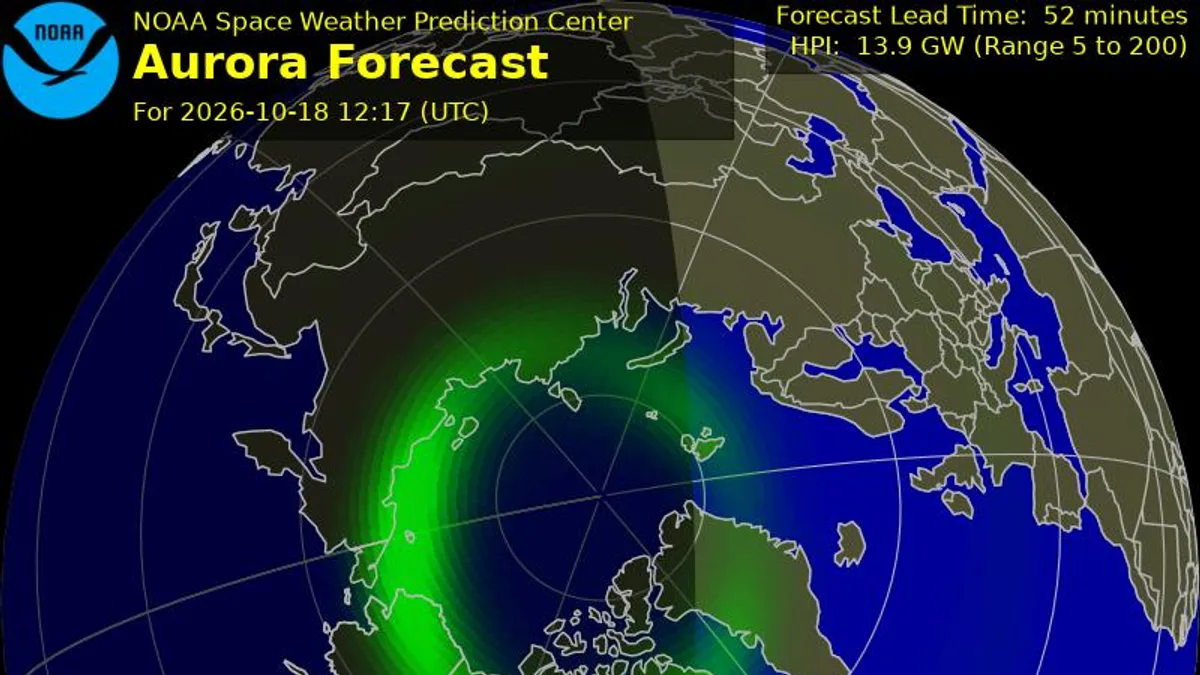
The Space Weather Prediction Center of the US agency NOAA has forecast a minor G1 geomagnetic storm for Tuesday, October 20, between 5 and 8 a.m. Serbian summer time. The forecast was issued on October 18, 2026, at 00:30 UTC, and the cause is a fast stream of solar wind arriving from a coronal hole on the Sun.
What exactly does NOAA predict for October 20?
Disturbance of Earth’s magnetic field is measured by the Kp index, a three-hour scale from 0 to 9, and a G1 storm begins at a value of 5. In the three-day forecast, the only interval marked G1 is 03 to 06 UTC on October 20, when Kp 5.00 is predicted. That corresponds to 5 to 8 a.m. in Serbia.
Other values for the same day stay below the storm threshold: 4.00 between 00 and 03 UTC, 4.33 between 09 and 12, and 3.67 between 18 and 21. Sunday, October 18, should pass quietly, with Kp between 1.33 and 1.67. The disturbance only starts to show on October 19: from 15 UTC, Kp rises from 3.33 to 4.00 by the end of the day. Over the previous 24 hours, the highest measured three-hour Kp was 4, below NOAA’s storm threshold.
Where does the disturbance come from?
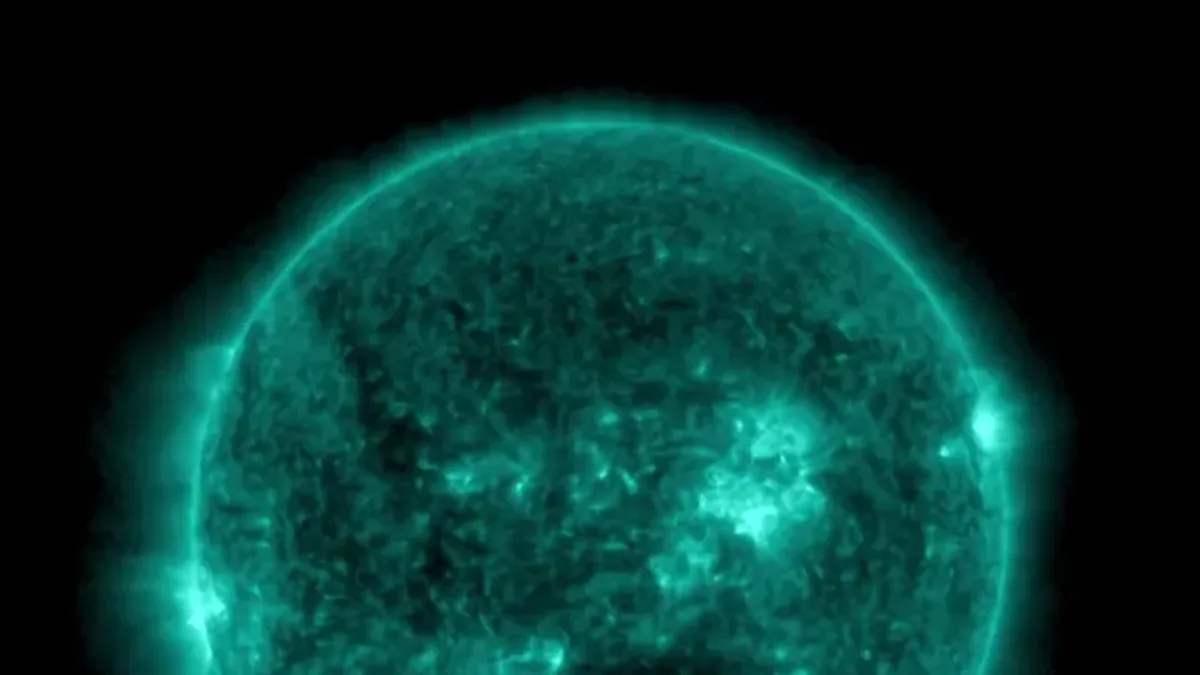
A coronal hole is a region of the Sun’s corona with an open magnetic field, through which solar wind escapes faster than from the rest of the Sun. NOAA says the stream from a positive-polarity hole will become geoeffective late on October 19 and last through October 20.
At the moment, Earth is under the tail end of an earlier stream from a negative-polarity coronal hole. Over the past 24 hours, solar wind speed ranged from 401 to 514 km/s, the total interplanetary magnetic field (Bt) stayed between 4 and 8 nT, and its southward component (Bz) briefly reached -7 nT. NOAA expects conditions to return to background values on October 18. Spaceweather.com records a reading from October 18 at 10:49 UTC: 479.6 km/s, 2.8 protons per cubic centimeter and Kp 2. The same site says an advisory has been issued for a possible G1 storm when the stream arrives on October 20, with a chance of aurora at high latitudes.
What does the forecast leave out?
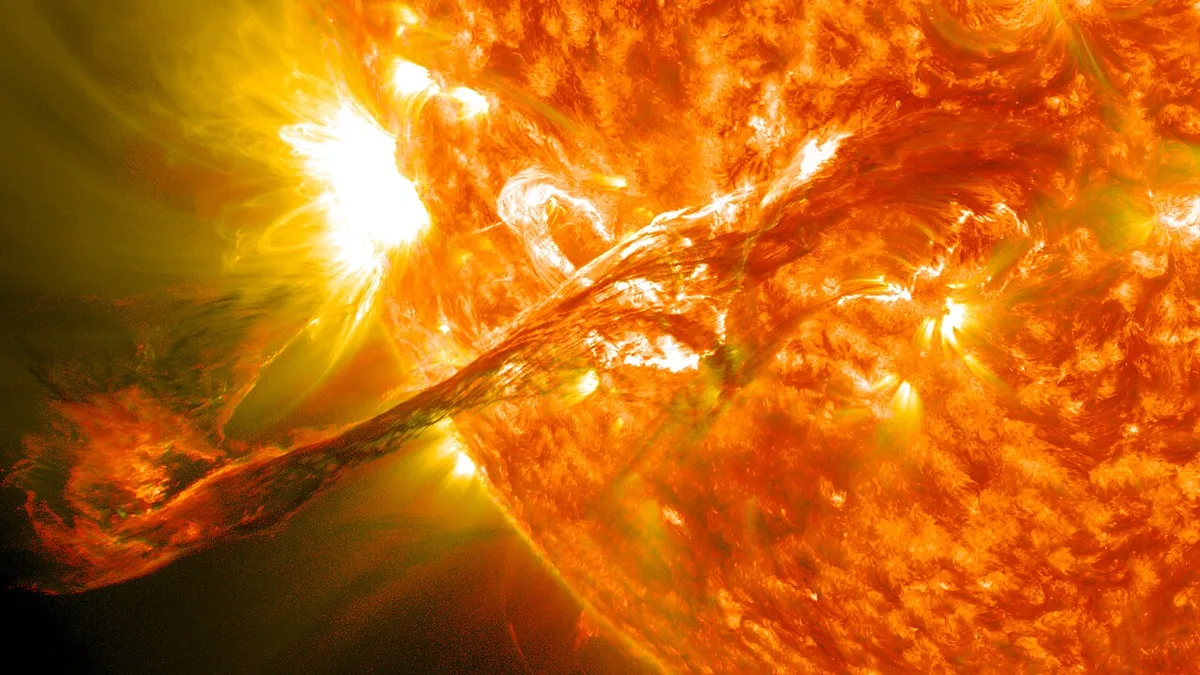
NOAA sees no coronal mass ejection directed at Earth in the available coronagraph imagery. Solar activity is low. The largest active region on the disk is 4551 (S15W32, beta-gamma magnetic class), which has weakened somewhat, while region 4557 (N17E01, beta class) continues to grow. Because of these two regions, NOAA gives a 20 percent chance of an M-class flare through October 20.
The probability of an R1 to R2 radio blackout is 20 percent on each of the three days, and 5 percent for R3 or stronger. A radiation storm of level S1 or stronger has a 5 percent daily chance, and NOAA says it does not expect one. The last R1 radio blackout was recorded on October 16 at 15:42 UTC.
Limits of the forecast
This is a forecast issued two days ahead, not a measurement, and it covers the weakest level of NOAA’s storm scale. The strength and exact timing of the disturbance will only be confirmed by the actual Kp reading on October 20. The sources we reviewed do not assess whether aurora could be seen from Serbia, so no claim about that can be drawn from this data.