Geomagnetic storm brings auroras to the US and New Zealand
Earth has been inside a stream of fast solar wind from a coronal hole since the weekend. The geomagnetic field reached storm level, and sources differ on its strength and cause.
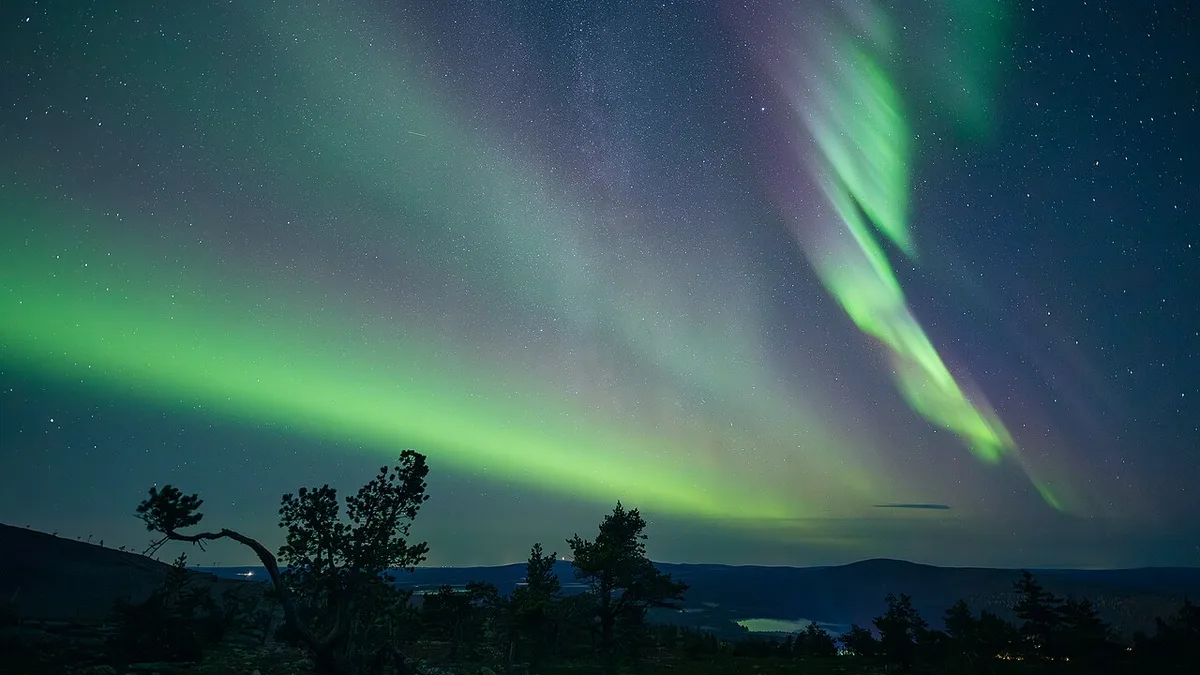
Earth has been inside a stream of fast solar wind since the weekend, and in the 24 hours up to the morning of Monday, October 5, the planet’s geomagnetic field reached storm level. As a result, auroras were photographed far south of the polar circles, in the United States and in New Zealand.
What caused the geomagnetic storm?
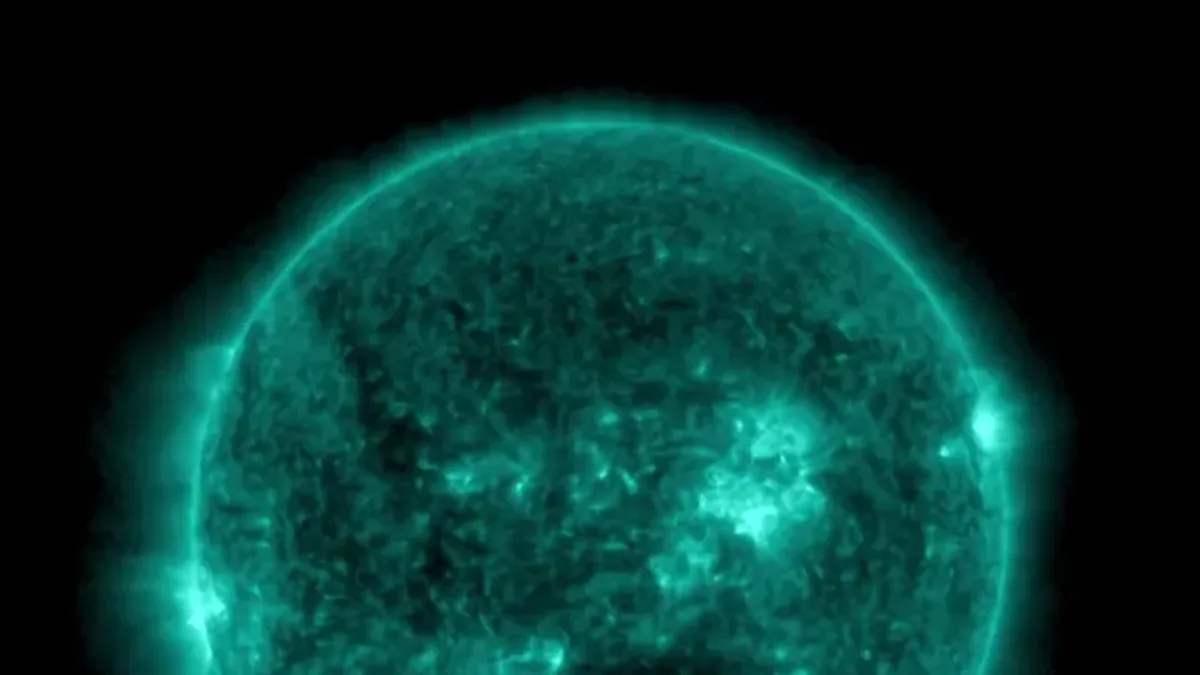
The American site EarthSky says the stream of fast solar wind comes from a coronal hole, a region of lower density in the Sun’s outer atmosphere from which particles escape into space more easily. It is a hole of positive polarity on the equator of the Sun’s disk. EarthSky adds that observers found no coronal mass ejection aimed at Earth in the available coronagraph images.
Spaceweather.com, run by Tony Phillips, describes a different sequence. According to that site, a coronal mass ejection hit Earth on October 3, and a stream of solar wind arrived on October 4. The site speaks of a “double hit” and a two-day storm at levels G1 and G2.
How strong was it?
The two sources do not give the same answer. EarthSky writes that the geomagnetic field reached level G2, a moderate storm, and that the Kp index ranged from 2 to 5, with three separate G1 storm periods (Kp 5). Kp is a scale from 0 to 9 that measures disturbance of Earth’s magnetic field. On the scale used by the US agency NOAA, level G1 corresponds to Kp 5, while G2 begins at Kp 6. A peak of Kp 5 therefore does not fit the G2 that the same text cites.
Spaceweather.com records a peak of Kp 5.67 in the past 24 hours. On October 5 at 12:45 UTC, that site measured a solar wind speed of 549.1 kilometers per second and a density of 3.8 protons per cubic centimeter. The current Kp index at that moment was 3.33, so the disturbance was already fading.
Where was the aurora seen?
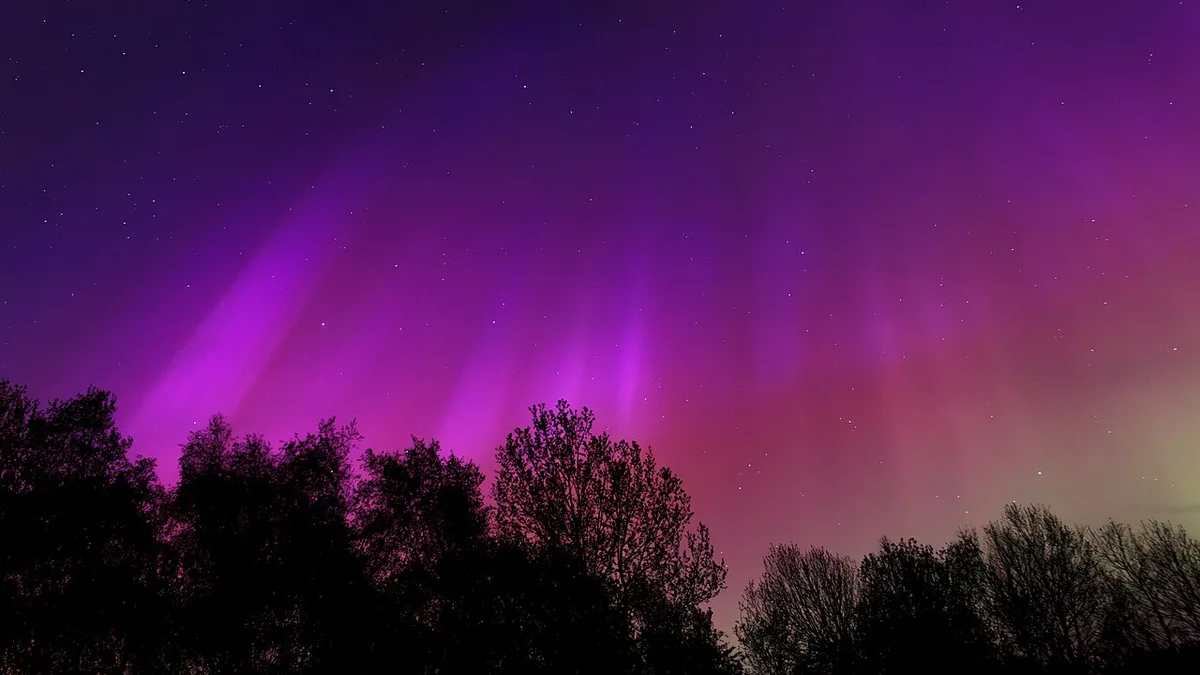
A photograph of the aurora in green and pink-purple was taken at Lake Vermilion in Minnesota on October 4 at 10:43 p.m. local time. Spaceweather.com says the lights were also seen elsewhere in the US, from New York to Iowa, and that the best display was recorded in New Zealand.
What else was happening on the Sun?
Flare activity was low. EarthSky records six B-class flares, the weakest of the classes that are tracked at all. The strongest, B9.6, came from active region AR4545 and peaked on October 5 at 6:01 UTC. Slightly earlier, at 5:47, the same region produced a B7.9 flare. Five numbered sunspot regions are on the Sun’s disk, all small and magnetically simple, and no new ones appeared.
For the coming days, EarthSky forecasts the following:
- October 5: still active early, up to level G1, with aurora possible only at the most northern latitudes
- October 6: unsettled to active
- October 7 and 8: mostly quiet, with the solar wind returning close to usual values
The probability of C-class flares through October 8 is estimated at 35 percent, with a small chance of an M-class flare. Because all the sunspot regions are magnetically simple, EarthSky considers larger flares unlikely.
What do these data not tell us?
Both sources are daily space weather summaries, not peer-reviewed studies, so this is a status report, not a discovery. The disagreement over the cause remains unresolved: one source knows only of the coronal hole stream, the other also of the mass ejection from October 3. The sources also disagree on the strength of the storm, from G1 to G2.
Neither source mentions an aurora sighting in Europe or at the latitude of Serbia, so nothing can be concluded from them about whether it was visible there. The forecast runs through Wednesday and may change if the solar wind speed departs from what is expected.