RIK Delays Decision on New Voting Booths
Serbia's Republic Election Commission postponed a decision on August 19 on the design of new voting booths, and CRTA warns that a new booth will not fix polling station irregularities.

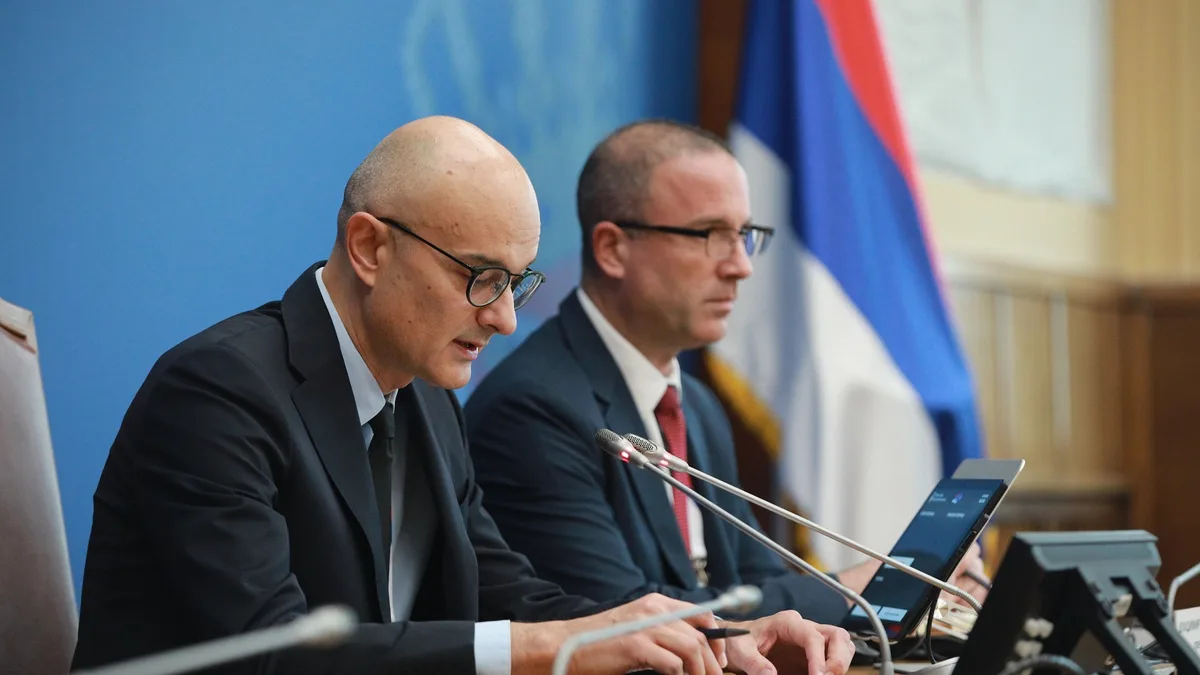
Serbia’s Republic Election Commission (RIK) backed away at its August 19 session from voting on a proposal that would change the design of voting booths at polling stations, after commissioners failed to reach agreement. RIK chairman Vladimir Dimitrijevic proposed that the issue first go to one of the commission’s working groups, and a day later, on August 20, the election watchdog CRTA weighed in, arguing that changing the shape of the booth does not solve any real problem at the polling station.
The session’s agenda included a proposed amendment to the Instruction on Uniform Standards for Election Material. According to the description carried by Nova.rs, the new booth would be an aluminum structure two meters tall, closed on three sides, with a curtain hanging at the back and an LED strip inside. Tanjug, citing Dimitrijevic’s own words, offers a somewhat different picture: a booth closed on all four sides, with the front closed off by a curtain. The two sources, in other words, disagree both on how many sides the booth would be closed on and on exactly where the curtain would hang.
The goal of the proposal, according to RIK, is to guarantee the secrecy of the vote one hundred percent and thereby fulfill a recommendation from the Office for Democratic Institutions and Human Rights (ODIHR) of the OEBS. Serbian President Aleksandar Vucic, commenting on the issue, said, according to Nova, that buying new booths would cost seven to eight million euros and that it is ODIHR itself that is asking for them to be introduced.
At the RIK session itself, the commission’s deputy chairman Marko Jankovic said ODIHR had asked for booths closed on all sides, a claim other commission members pushed back on. Dimitrijevic explained the reason for postponing the decision in simple terms.
“What matters is that consensus is reached on important issues,” Dimitrijevic said at the session, according to Tanjug, proposing that the debate move to a RIK working group.
What the opposition objects to
The Kreni-promeni movement had already warned on August 18, a day before the session, that a fully enclosed booth opens the door to abuse that the current booths do not allow.
“It will be much easier to photograph the ballot behind a closed curtain,” the Kreni-promeni movement said in a statement published on its website on August 18.
As a solution, Kreni-promeni proposes that phones and other recording devices not be allowed into polling stations at all, paired with individual lockers with keys placed in front of the voting area and metal detector gates at the entrance.
Students in blockade go a step further, arguing that the design of polling stations is being changed precisely to make it easier to photograph ballots, pressure voters and swap votes, not to prevent it. According to figures cited by Nova, more than 26,000 citizens are currently going through training to become election observers, which students say is exactly why a new booth design is arriving now, just as the number of people ready to monitor polling stations is growing.
CRTA: the problem is not the booth
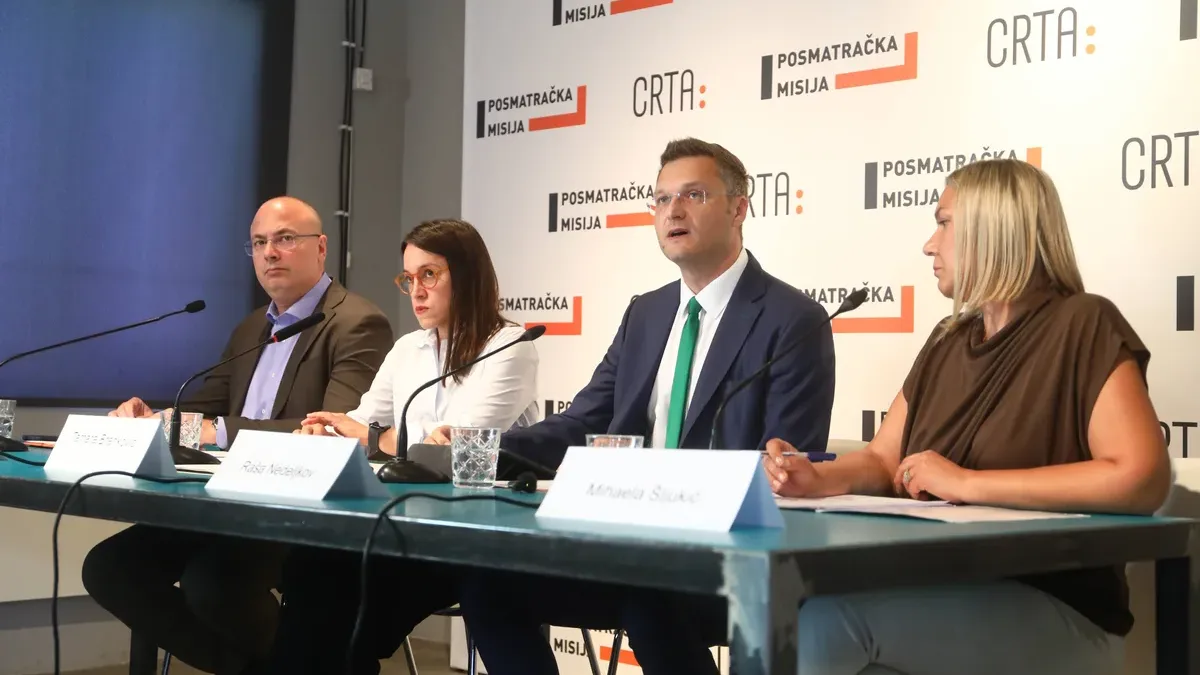
A day after the RIK session, CRTA also spoke up. Pavle Dimitrijevic of the organization told the Beta news agency that a technical change to the booth does not touch the substance of the problem.
“If a practice of impunity exists and protects a sprawling network of clientelism and pressure, there is no booth that can fix that,” Dimitrijevic said.
In his view, irregularities at polling stations are not solved by changing the construction, but by better work from election boards and conscientious conduct by voters themselves.
RIK has not yet said when its working group will take up the proposal, nor when a final decision might be reached, leaving the design of the booths voters will encounter at the next election an open question for now.