Kosovo Assembly Exits Blocked, Presidential Deadline Nears
After a first reading passed with 91 votes, the Not in My Name protest became a blockade, the rules require 72 hours before a second reading, and the presidential deadline expires tomorrow.
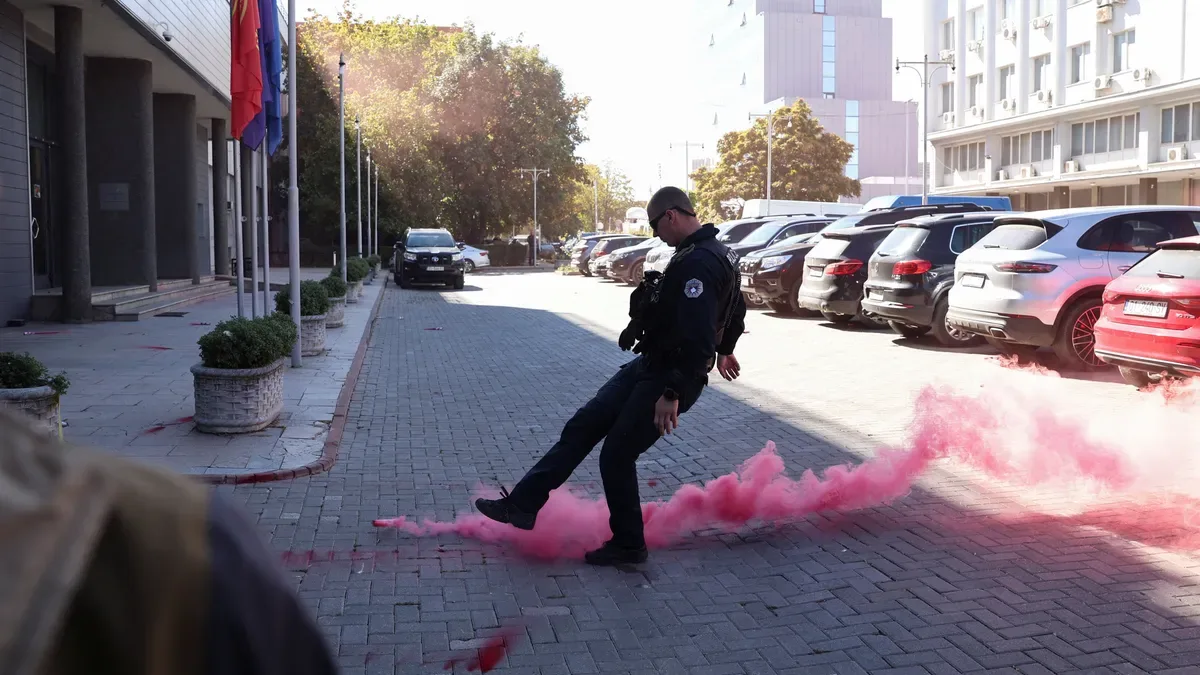
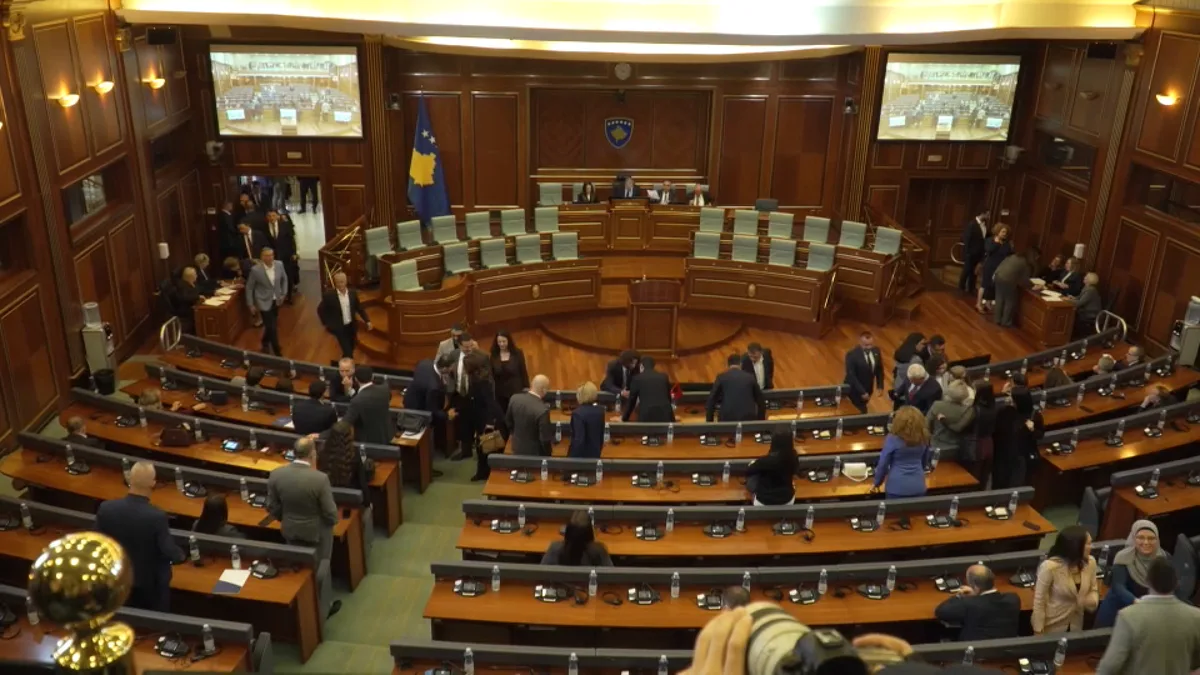
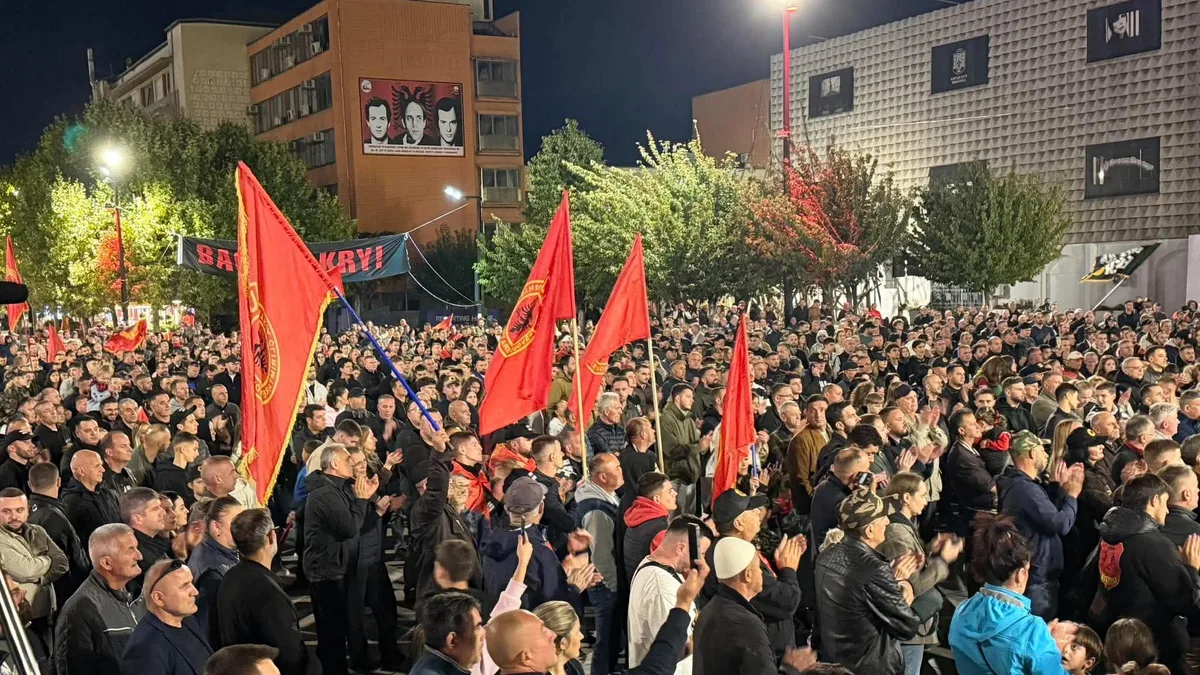
Protesters demanding that the Kosovo Assembly pass the amendments to the Law on the Specialist Chambers in a second reading blocked the exits of the parliament building in Pristina on Monday, October 5, while lawmakers continued their session. Some of those gathered threw fireworks at the building, a window on the second floor was broken, and police, according to a video published by N’Demos, were deployed between the protesters and the exits.
The amendments passed the first reading with 91 votes in favor, none against and no abstentions. Kosovo Online, citing Ekonomia Online, reports 90 votes, while other sources say 91. Lawmakers of the Serbian List were not in the chamber, and the Democratic League of Kosovo (LDK) did not take part in the vote. The deadline that Kosovo Liberation Army (KLA) veterans set for Sunday has thus expired, and we have reported on their ultimatum before.
What happened outside the building?
The protest, called “Not in My Name,” has been running since September 16, when the Specialist Chambers in The Hague handed down a first-instance conviction of four former KLA leaders. N1 and KoSSev report that last night was the 19th in a row, while Kosovo Online says Monday is the twentieth day of protest. Some demonstrators spent the night outside the building, and the KLA War Veterans Organization moved today’s rally from noon to 9 a.m., the hour of the extraordinary session. Before the plenary session, the Legislation Committee backed the proposal with nine votes in favor.
According to Koha reporters, the detonations grew louder during the speech by Arberie Nagavci of Self-Determination and continued while Bedri Hamza spoke. Police urged the crowd not to aim fireworks at the building, but some kept going, and, according to the same report, the fireworks were thrown by a group of four to five people. N1 and KoSSev write of one broken window, while Kosovo Online says windows were smashed in several offices and that some protesters climbed over the safety barriers. The sources also disagree about the cordon at the entrance: gledaj.rs says police formed it, Kosovo Online says protesters did.
There was also a physical incident involving Self-Determination lawmaker Sami Kurtesi. In footage published by Pristina media, one of the demonstrators grabs Kurtesi by the arm, he pushes the hand away, and police then lead him off. Justice Minister Donika Gervala Svarc was met with shouts and insults as she entered the building, and fireworks were thrown at her. RTK also reported that Jeton Sopa, a journalist for the portal Kosova News, was hit on the head near the Assembly building.
After the vote, demonstrators took up positions at every entrance and exit. Besijana Musmurati, deputy mayor of Pristina, explained why, and KoSSev carried her words:
“At all the entrances and exits of the Assembly there are citizens standing nearby who are not letting the lawmakers leave, because we want the law to pass the second reading too.”
Footage also shows food being delivered to lawmakers from outside. Assembly Speaker Albuljena Hadziju responded from the rostrum: “Violence harms the cause we want to defend, the KLA and our liberators,” she said, adding that the right to protest is guaranteed by the constitution.
Protest organizer Cljirim Haziri said they would not back down:
“We will not give up. The first reading has passed, but we will stay here until the second reading passes too. Our demand is that the law be adopted in full.”
Veterans’ leader Hisni Gucati went further than most: “Not 91 votes, it should get 100 votes,” he said at the protest.
Why does the 72-hour rule complicate a deal?
The Assembly’s Rules of Procedure require at least 48 hours between distributing the materials and the first reading, and at least 72 hours between the first and second readings. Lawyer Ardijan Bajraktari warned that the Constitutional Court could strike down the law if that deadline is skipped, while Eugen Cakolli of the Kosovo Democratic Institute said that, if the deadlines are respected, the second reading could come on October 8 at the earliest.
That is later than the deadline for electing Kosovo’s president. The Constitutional Court determined that the sixty days began running on August 8, when the Assembly was constituted, so the deadline expires on October 6. If a president is not elected by then, the Assembly is dissolved and new elections follow.
The Democratic Party of Kosovo (PDK) is making its 22 votes for president conditional on the law being adopted in both readings. Ahead of a meeting of the parliamentary group and the PDK Presidency, Hamza set out the order of steps the party wants:
“That the law be adopted in both readings, then that a name be proposed for president and that the president be elected.”
On October 3, Prime Minister Albin Kurti proposed a different order: first reading, then the election of the president, then the second reading. Hamza rejected it. During the debate in the chamber, Kurti said the KLA war was a war of “liberation” but that the amendments had been launched in haste, and he tied the law to the presidency: “We need a law for the Court in The Hague, but also a president for Kosovo. One cannot do without the other.”
A new meeting between Kurti and Hamza was announced for 12:30 in the Assembly building. Its outcome had not been published in the sources we read.